
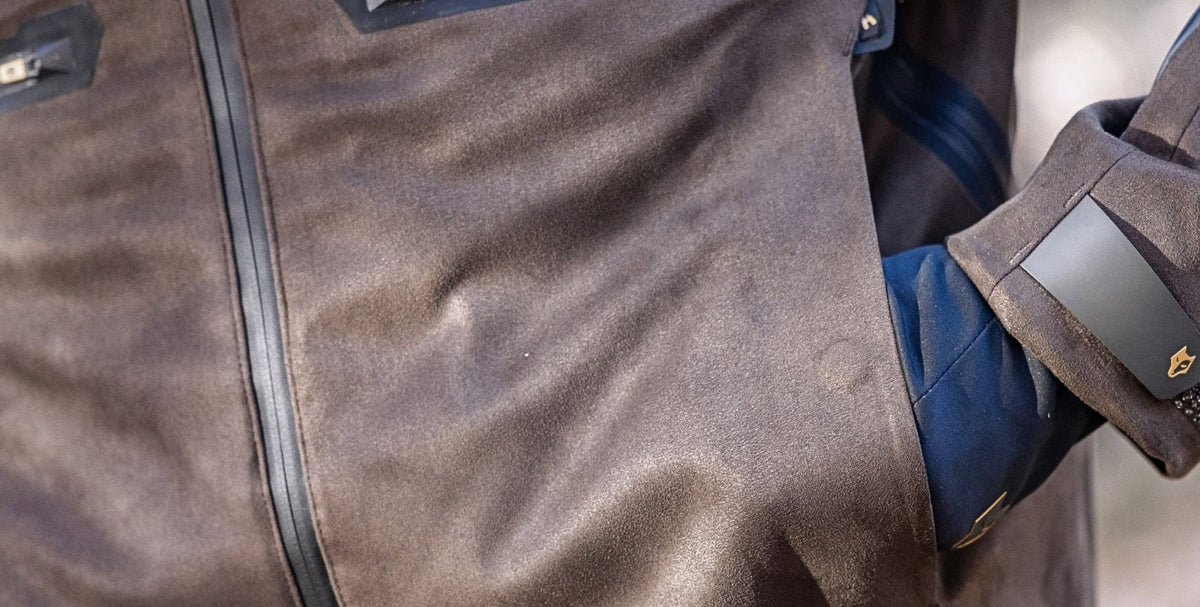
What to Keep in Your Jacket Pockets During a Deer or Wild Boar Hunt

The evening before the hunt, I emptied my jacket onto the kitchen table and found the shed key. For three weeks I had suspected everyone in the house, including a dog whose interest in gardening equipment was slight. Beside it lay a lens cloth, a folded receipt and a hazelnut. I could account for the cloth and the receipt. The hazelnut would have to remain an open investigation.
I was meeting Milan before dawn for a deer stalk through the beech woods. We expected wet undergrowth, a slow approach and a wait above a clearing where he had seen deer feeding. I laid out what I would need along the way: gloves, a small snack, the cloth in its protective sleeve, my phone, documents and a compact pouch containing a headlamp and whistle. Water, spare insulation, first aid and the rest of the day’s equipment went into the pack. The shed key stayed home, having contributed enough to the preparations.
I have become particular about what goes into a hunting jacket, partly because I enjoy walking with my hands free and partly because I dislike interrupting a good morning to search for myself. I keep the same few things in familiar places. There is still room to change the arrangement when the hunt changes, but I want a reason for every object I carry against my ribs.
What I kept within reach

The woods were dripping when we arrived. Water collected on the ends of the beech branches and fell whenever a bird landed above us. Milan took the narrow path beside the ditch, and I followed with my jacket pockets closed. A deep pocket can look secure while you are standing upright; bend beneath a fallen branch and its contents get a rather different view of the world. My phone and documents were zipped inside, with separate waterproof protection for anything that needed to stay dry.
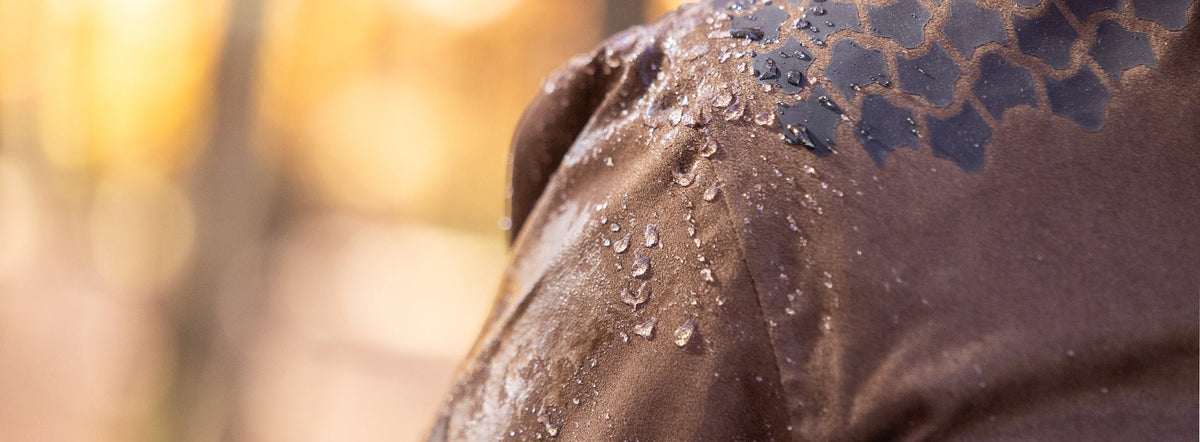
That protection matters even when the jacket itself is waterproof. I check how the manufacturer describes the pockets, including their seams and closures, before trusting them with electronics or paper. Wet gloves also carry water through an open zip. A small waterproof pouch is easier to arrange than an explanation for an unreadable permit. I carry whatever identification and documents the particular hunt requires, with the organiser’s contact details available offline.
The phone rode in an inner pocket where it did not interfere with my binocular harness. Cold is another reason I prefer that position. Apple specifies an ambient operating range of 0–35°C for iPhones and warns that very cold conditions outside that range can temporarily shorten battery life or switch the device off. I check the guidance for the device I am carrying and keep a navigation backup appropriate to the ground.
At the first opening, I found a droplet on the binocular lens and reached for the cloth in my left chest pocket. It lives in a clean sleeve of its own, away from crumbs and grit. Once the lens was clear, the cloth went straight back. I like being able to do that while watching the clearing, although I make no claim that knowing where my cloth lives has improved my ability to spot deer. Milan found the first one. I was still studying a stump that had shown considerable promise.
Leaving room for cold hands

We settled above the clearing with a broad trunk behind us. I put on the warmer gloves I had carried in a lower pocket and moved the small food pouch aside, leaving the handwarmer pockets free of hard objects. A lined pocket loses much of its appeal when your knuckles meet a bunch of keys. The vehicle key was already secured in a zipped trouser pocket, where it would remain if I took the jacket off later.
The snack was a modest piece of flapjack in a reusable food pouch. I had dealt with the crackling packaging at home. I am fond of eating outdoors, but less fond of providing a lengthy sound check beforehand. This is also why I separate hard objects rather than dropping a torch, keys and loose change into the same pocket. Before leaving, I walk about wearing the loaded jacket and listen as I bend and turn. It is a simple check that often tells me more than rubbing the fabric between two fingers.
Gloves deserve the same rehearsal. In a 2022 pilot study, six men completed small assembly tasks in a climate chamber. Average total times were roughly 23–25 minutes with protective gloves at +5°C or −1°C, compared with about 14 minutes barehanded at +20°C. Temperature, clothing and gloves changed between those conditions, so the result cannot isolate the effect of cold or predict how quickly a hunter will open a pocket. For me, it reinforces a practical habit: I try the actual zip with the actual gloves before buying the jacket.
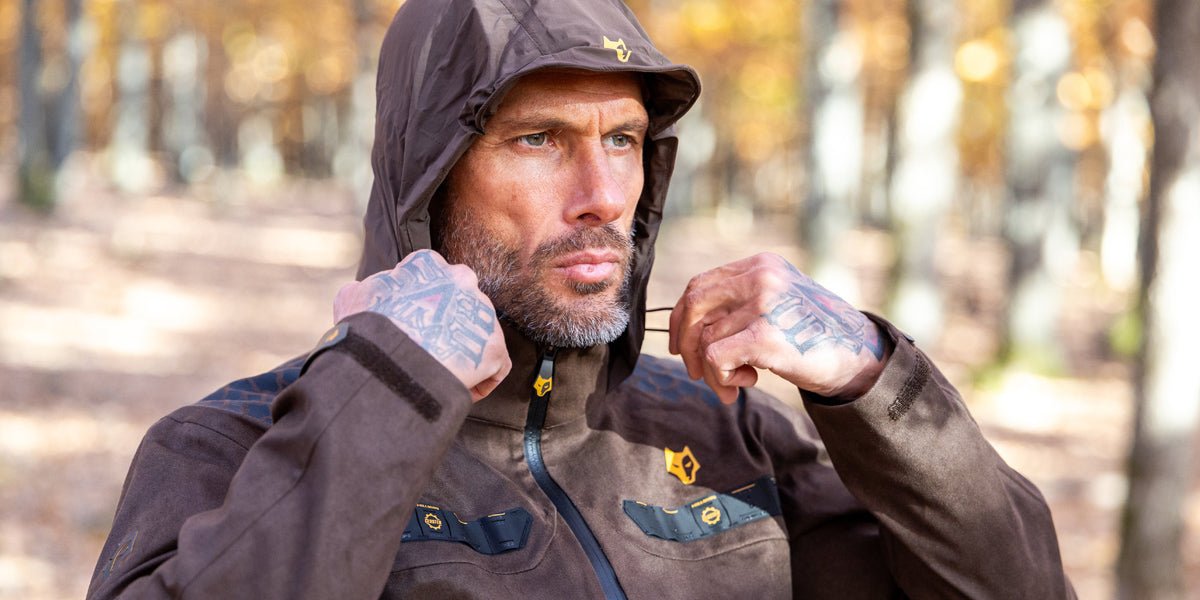
On that morning, the pull was easy to find and the opening wide enough to return the gloves without feeding them in one finger at a time. When choosing a men's hunting jacket, I bring the layers and harness I expect to wear. Otherwise, I am testing an arrangement that may never leave the shop.
For a while, nothing entered the clearing. A woodpecker worked somewhere behind us, and Milan watched the far edge with the patient expression of a man who had eaten a larger breakfast. I passed him the remaining flapjack. There was enough room in the pocket for the empty pouch afterwards, which spared us the usual question of whose turn it was to carry something sticky.
The things that stay with me

Eventually, a deer appeared near the far side of the clearing. This time I was looking in the right place. We had time to assess it properly, and the morning eventually ended with a clean shot and a recovered deer. There was work to do afterwards, and my jacket came off as we warmed up. Before putting it away, I transferred the compact essentials pouch, phone and documents to secure pockets in the layer I was keeping on.
That transfer is easy to forget after a successful hunt. A headlamp hanging inside a jacket on a distant branch is of limited use to the person who has walked away from it. Mine stays with me, along with the whistle, communication device and essential documents. Anyone carrying personally essential medication needs an equally deliberate arrangement. Texas Parks & Wildlife includes a whistle, light, communication and navigation equipment in its hunting survival guidance. My pocket selection carries a few of those essentials; it does not replace the full kit appropriate to the outing.
What changes on a wild boar hunt

An organised wild boar hunt asks for different things from my pockets. On a previous outing, I had spent much of the morning at an assigned position on a wooded slope. The walk in had been short, and the waiting felt long. Before the drive began, I arranged the radio where I could hear and use it as instructed at the briefing, with its controls protected against accidental presses. A convenient pocket is useful only if it suits the radio and the communication plan.
I also sorted my hearing protection before the hunt, rather than leaving it buried in a pouch until it was needed. Warm gloves and a dry hat had places I could reach without opening the pack. Handwarmer pockets remained available during the wait. I followed the organiser’s visibility requirements and instructions about remaining at my position; pocket organisation gave me no reason to wander off or miss a call. There was plenty to watch from where I stood, including a squirrel that appeared to have a much fuller programme for the morning than I did.
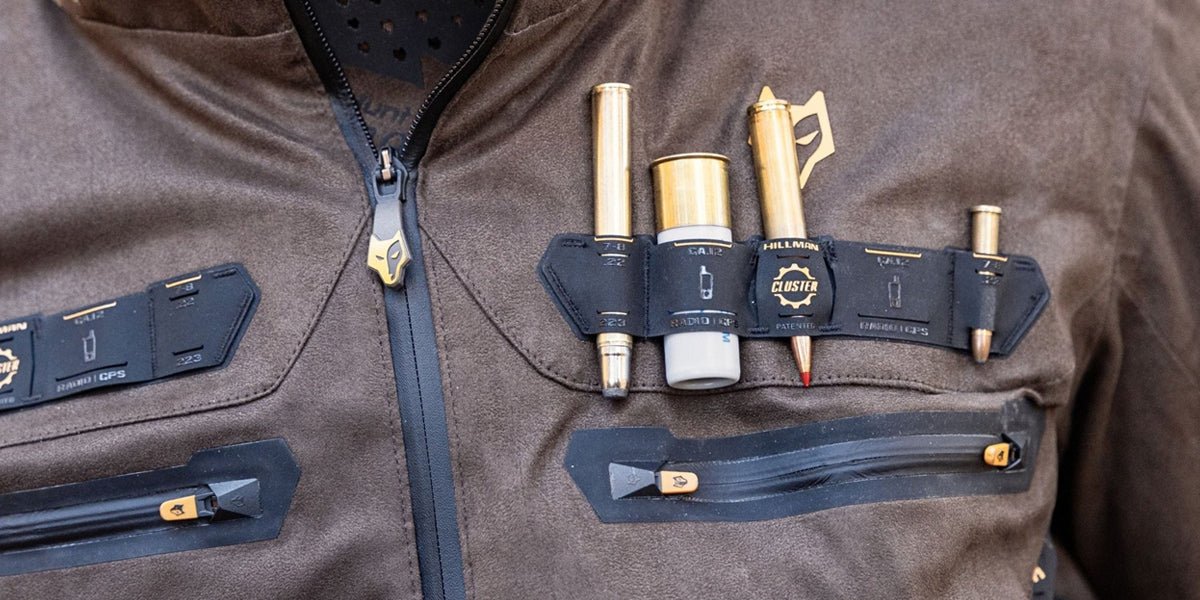
If spare ammunition is carried in a jacket, I want it secured in a suitable holder, separate from other objects and in accordance with the applicable requirements and hunt instructions. A knife belongs in a secure sheath or closed carrier appropriate to its design. Neither needs to share a loose heap with food, a phone or bare spare batteries. I keep batteries in a protective case and put bulky field equipment in the pack, where it can be carried without dragging down the front of the jacket.
How I would choose the next jacket

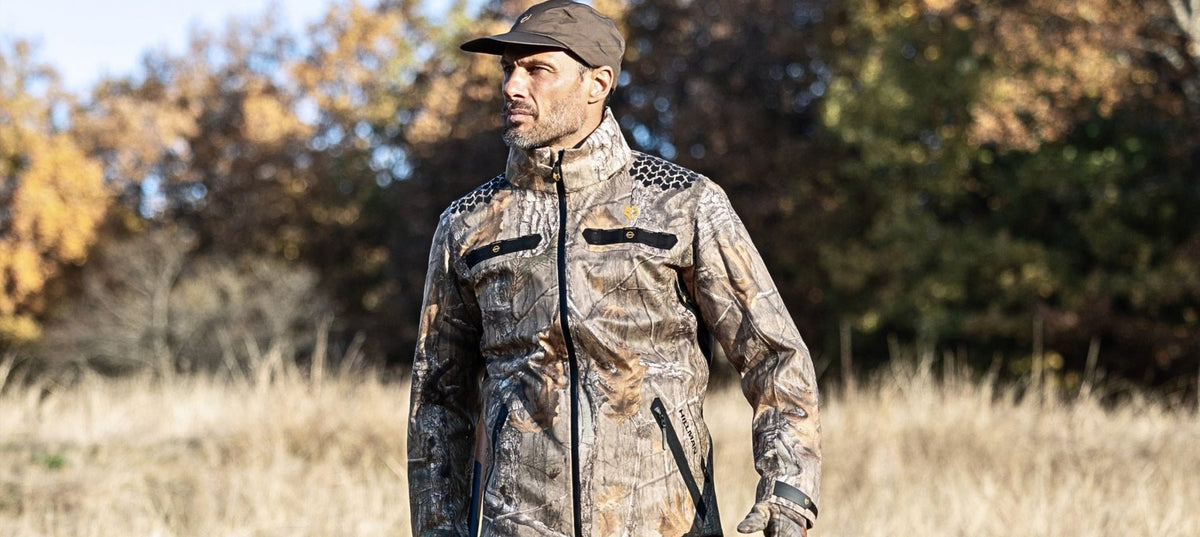
When people ask me about the best hunting jackets, I want to know how they hunt and what they carry. A stalking jacket needs to move comfortably with loaded pockets and the equipment worn over it. For long waits, I give more attention to accessible handwarmer pockets and space for the insulation underneath. Pocket count tells me little until I know which openings I can reach and what happens when I sit down.
Before committing to a jacket, load it with your own phone, gloves and small essentials. Fasten your pack belt or harness, then reach for each item. Check whether the closures retain things when you bend, whether the lining catches your fingers and whether a full pocket pulls across your chest. If shopping online, look for photographs that show pocket placement clearly and descriptions that explain weather protection. Ask about anything the pictures leave uncertain, and check the returns policy so you can assess the fit properly.
At home that evening, I emptied the jacket again. The cloth needed drying, the food pouch needed washing, and everything else went back into its usual place once checked. I left the jacket open on its hanger and put the vehicle key where I would find it in the morning. The shed key was already there. After three weeks of accusations, it seemed only fair to give the household a quiet evening.

Cuota: