
Small Hunting Jacket Details That Matter on Deer and Boar Hunts

I have never judged a hunting jacket properly in a shop, under warm lights, with clean hands and dry boots. A jacket starts telling the truth much later. It happens when I have crossed a muddy track before sunrise, pushed through wet bramble, stood still longer than planned, then lifted the gun and felt the fabric pull across my shoulders at the worst possible moment.
That is why small details matter on deer and boar hunts. Not because hunters like technical talk for the sake of it, but because the field has a way of exposing every weak point. A noisy sleeve. A hood that blocks side vision. A pocket that sits too far back. A cuff that lets rain creep in. A cut that feels fine while standing, but tightens the moment I sit, kneel, stalk, aim, or climb into a stand.
This guide is for hunters who already understand that hunting clothing is not decoration. It is part of the system: rifle, boots, optics, base layer, outer jacket, pockets, warmth, camouflage, weather protection, and freedom of movement. I will focus on the small features I look for when choosing a jacket for deer and boar, especially in wet weather, cold conditions, and rugged terrain.
Why do small hunting jacket details matter more than you think?

On a clean day, almost every jacket feels good enough. The real test begins when weather conditions change. Rain starts light, then turns persistent. Wind comes through the trees. The ground becomes slippery. A short walk becomes a long walk. The body heats up during movement, then cools sharply when the waiting begins.
That rhythm is familiar to anyone who hunts deer or boar. One hour I need breathability; the next I need warmth. One moment I am moving quietly through cover; the next I am standing still, trying not to lose heat through my arms, neck, and shoulders. A jacket that cannot manage both sides of that rhythm soon becomes a problem.
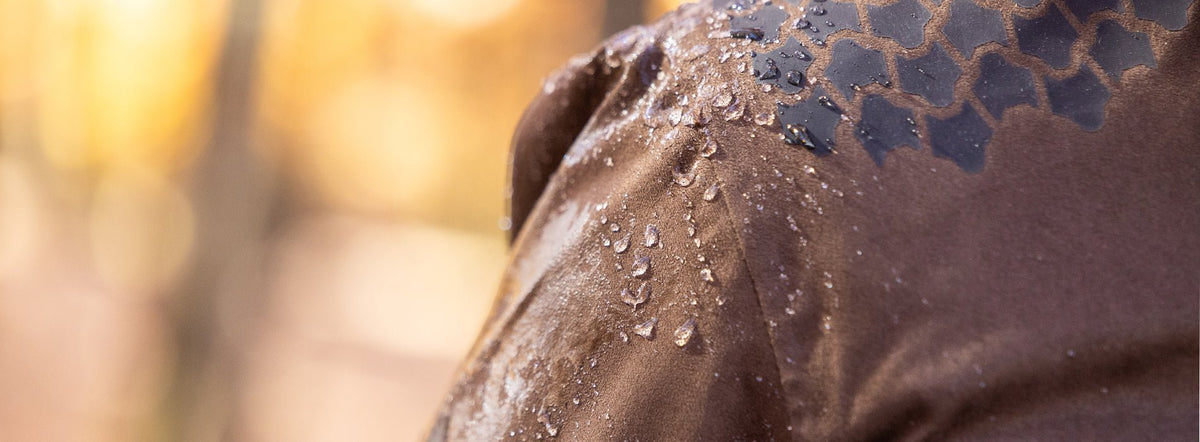
Breathable membranes matter because active hunting creates moisture from the inside, not only from the rain. If sweat cannot escape, I may stay technically waterproof and still end up damp. Waterproof materials matter too, but only when the whole construction supports them. A hydrostatic head of around 10,000 mm to 15,000 mm gives me confidence for serious rain, soaked vegetation, and longer exposure, but the number alone is not the full story. Sealed seams, protected zippers, adjustable cuffs, a proper hood, ventilation, and durable outer fabric all have to work together.
For me, the best hunting gear is rarely the loudest in its marketing. It is the one I stop thinking about once the hunt begins.
What makes the best hunting jacket for deer and boar hunts?

The best hunting jacket for deer and boar hunting is not necessarily the heaviest, warmest, or most expensive jacket in the collection. It is the one that matches the way I hunt.
For active stalking, I prefer a jacket that gives me protection without trapping too much heat. Non-insulated or lightly insulated jackets work well when I am covering ground, climbing, crossing rough vegetation, or following fresh sign. I can build warmth with a base layer and mid-layer, then use the outer shell for windproof and waterproof protection.
For long sits, late-season high seats, driven days with pauses, and cold dawns, insulation becomes more important. Advanced insulation can make a big difference when the temperature drops and movement is limited. Synthetic insulation has one practical advantage I value: it tends to perform better than down when damp. That matters on hunts where cold and wet arrive together, which is often the case in real nature.
Modern hunting jackets have moved far beyond the old idea of a thick coat. Today I look for multi-layer construction, breathable waterproof membranes, body-mapped warmth, quiet face fabrics, and ergonomic shaping. In cold weather, technologies such as Matrix® insulation and advanced moisture control help keep warmth close without turning the jacket into a heavy, stiff shell. Hillman uses these kinds of technologies in its technical hunting jackets, and this is where modern functionality becomes more than a phrase. The purpose is simple: stay warm, stay dry, stay quiet, and keep moving naturally.
How should a man's hunting jacket fit when you move, sit, and aim?

A mens hunting jacket should not be judged only by chest size. Fit in hunting is about movement. I want enough room for layering without feeling loose, bulky, or noisy. I also want the jacket to stay in place when I raise the gun, turn my torso, lean forward, or sit with the rifle across my knees.
A good cut gives space across the shoulders and upper back. Shooting jackets and men's shooting jackets often use an action back or ergonomic paneling because arm mobility is not optional. If the fabric pulls when I shoulder the gun, the jacket is working against me. If the hem rides up when I sit, it leaves my lower back exposed to the cold. If the sleeves are too short when my arms are extended, rain and wind will find the gap.
The perfect fit is not tight. It is controlled. I should be able to wear a base layer and insulation underneath, close the jacket comfortably, and still breathe, turn, crouch, and aim. I also check whether the hood moves with my head. If I turn to follow movement in the trees and the hood stays behind, my side vision disappears. That is a small detail until the animal appears exactly where I did not expect it.
Why does a camo hunting jacket need more than just the right pattern?
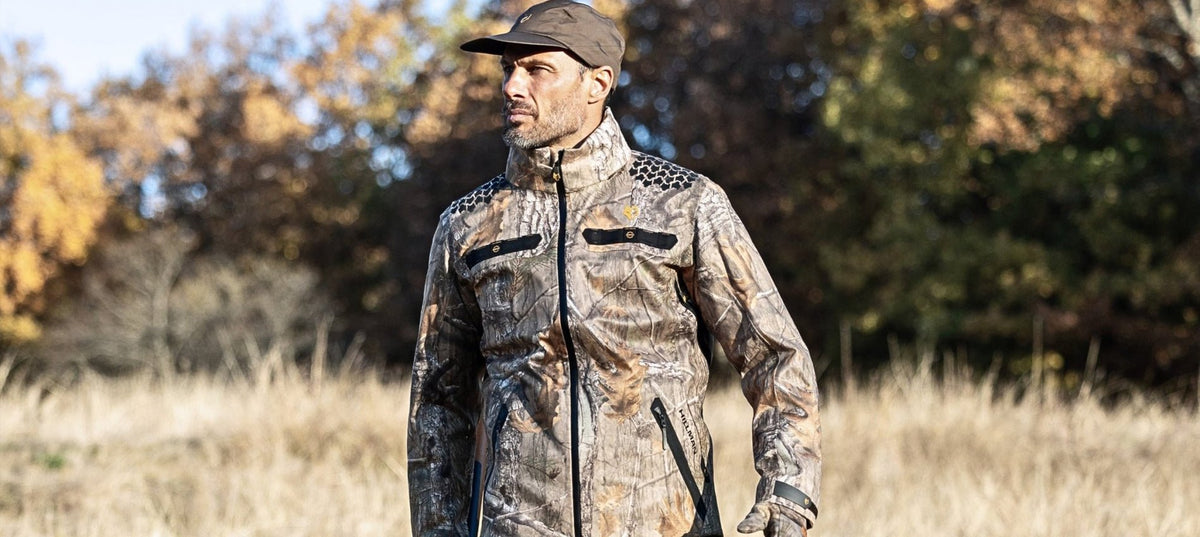
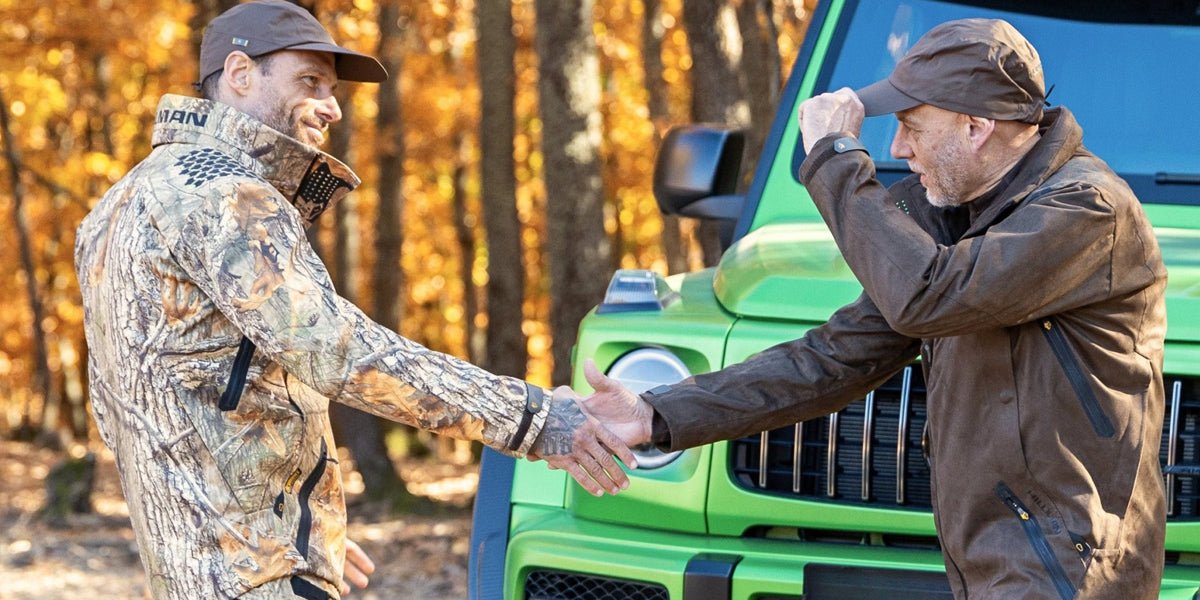
A camo hunting jacket can have the right print and still fail in the field. Camouflage helps, but only when it works with silence, movement control, terrain, light, and background. Deer and boar are not fooled by pattern alone. They notice shape, motion, shine, sound, and scent long before they care whether my jacket has a fashionable camo design.
When I choose camouflage, I think first about my surroundings. Forested areas need broken, natural shapes that avoid turning the upper body into a dark block. Open fields and winter terrain need softer contrast. Dense cover calls for quiet fabric because close-range hunting punishes every rustle. Snowy landscapes may need lighter tones, while low-light conditions require a different kind of visual disruption.
The best camo does not shout. It disappears into the season. Brown, grey, green, muted black, dry grass tones, leaf shadows, and bark-like shapes all have their moment, but no pattern is universal. I chose camo for the place, not for the photo.
Camo jacket features that help you stay quiet and unnoticed

A camo jacket earns its place when it helps me stay unnoticed in more than one way. Pattern breaks the outline, but fabric controls sound. Loden wool, brushed synthetic fabrics, soft fleece surfaces, and quiet outer materials can make a noticeable difference during stalking, especially in dry leaves, close cover, or bow hunting situations.
Noise often comes from places hunters ignore. Sleeves rubbing against the body. A zipper pull tapping against metal. Stiff fabric folding at the elbows. A pocket flap lifts in the wind. Even the wrong cuff can brush against gloves and create a small, repeated sound.
I like jackets with soft contact points, shaped sleeves, reinforced elbow panels, and durable materials that do not become loud after wear. Reinforcement matters because boar country can be rough on clothing. Bramble, branches, rocks, muddy banks, pack straps, and repeated kneeling all test fabric. Durability should not mean stiffness, though. The jacket has to protect without turning into armour.
This is where modern hunting clothing has improved. Purpose-built jackets now combine rugged protection with flexibility, warmth, waterproofing, and quietness in ways older coats rarely managed.
Is a leather hunting jacket practical for deer and boar hunting?

A leather hunting jacket has tradition, character, and a certain field charm. I understand why hunters like leather. It can be durable, wind-resistant, handsome, and long-lasting when cared for properly. In dry, cold, casual outdoor activities or traditional shooting settings, leather still has a place.
For deer and boar hunting in wet weather, however, I am careful with it. Leather can become heavy when soaked. It usually does not breathe like a modern technical membrane. It also needs more maintenance after rain, mud, and repeated exposure to the elements. In rugged terrain, a leather jacket may resist abrasion well, but it may not provide the same balance of waterproof performance, ventilation, lightweight movement, and packable versatility that I expect from modern hunting jackets.
That does not make leather useless. It simply makes it specific. I would wear it for the right kind of day, the right kind of shooting, and the right weather. But when I expect rain, long movement, cold wind, and changing field conditions, I usually trust a modern waterproof or windproof hunting jacket more.
Pockets, zippers, cuffs, and hoods: the details hunters often ignore

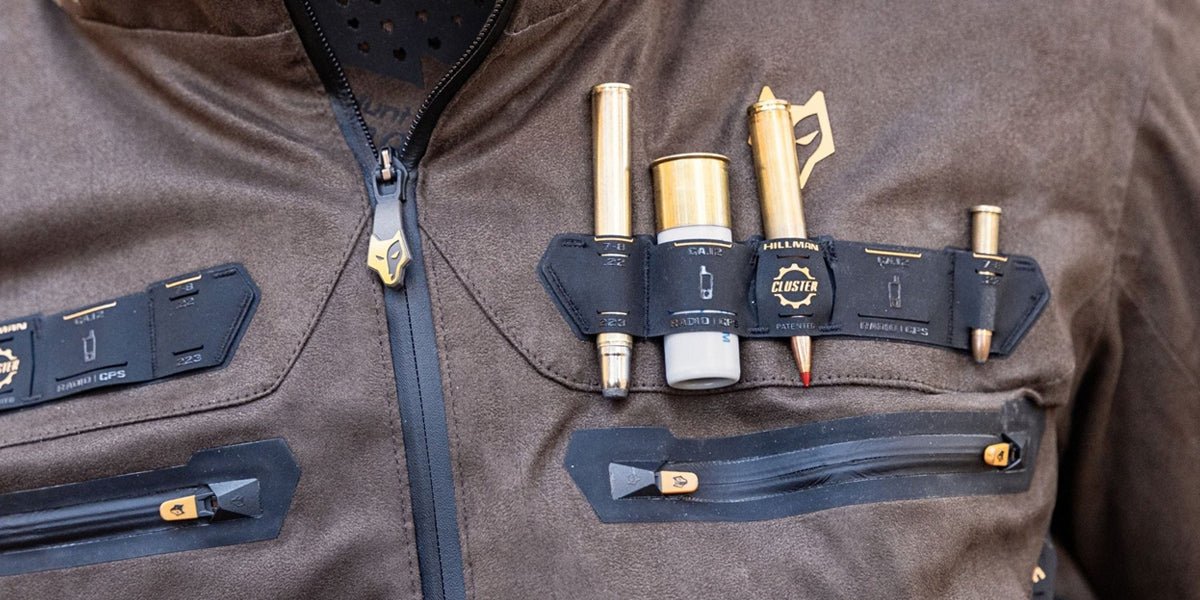
Pockets can decide whether a jacket feels practical or irritating. I want the pockets below when I need easy access to cartridges, gloves, a knife, calls, or small shooting supplies. Chest pockets should be reachable with a pack on. Hand pockets should sit where they actually warm the hands, not where they only look good in product photos. Fleece-lined pockets are a small luxury until the temperature drops and fingers start losing feeling.
Zippers deserve attention, too. Waterproof zippers, storm flaps, and silent pulls protect against rain and reduce noise. A two-way front zipper can help when sitting, kneeling, or climbing. Ventilation zippers are useful during high-activity hunts because temperature regulation is often more important than raw insulation.
Adjustable cuffs matter more than they seem. Loose cuffs let wind and rain enter. Overly tight cuffs fight gloves and restrict movement. A good cuff seals warmth, keeps water away from the sleeve opening, and adjusts quickly without creating bulk.
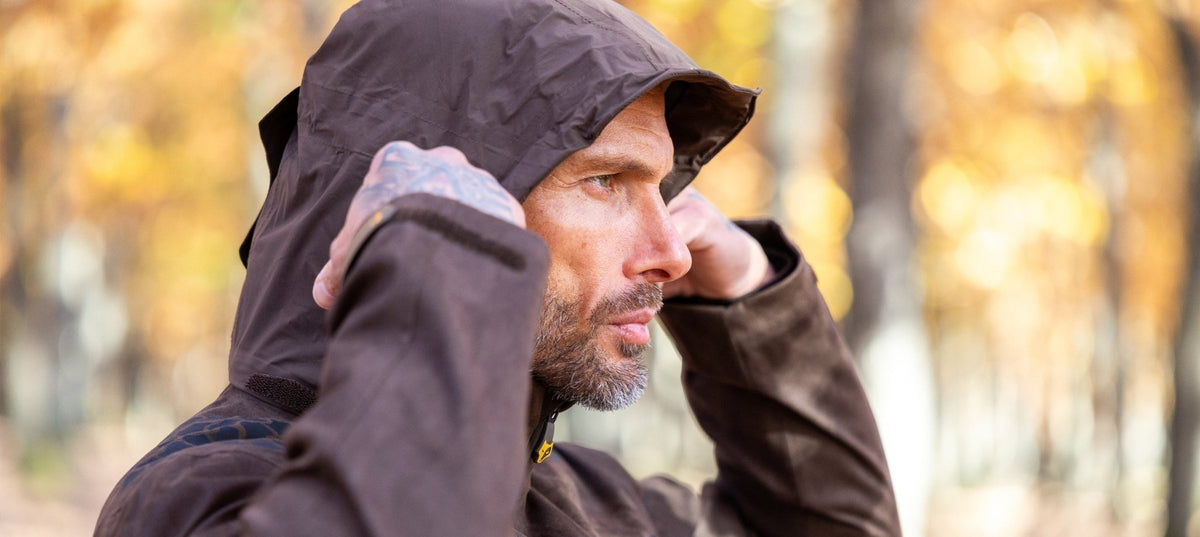
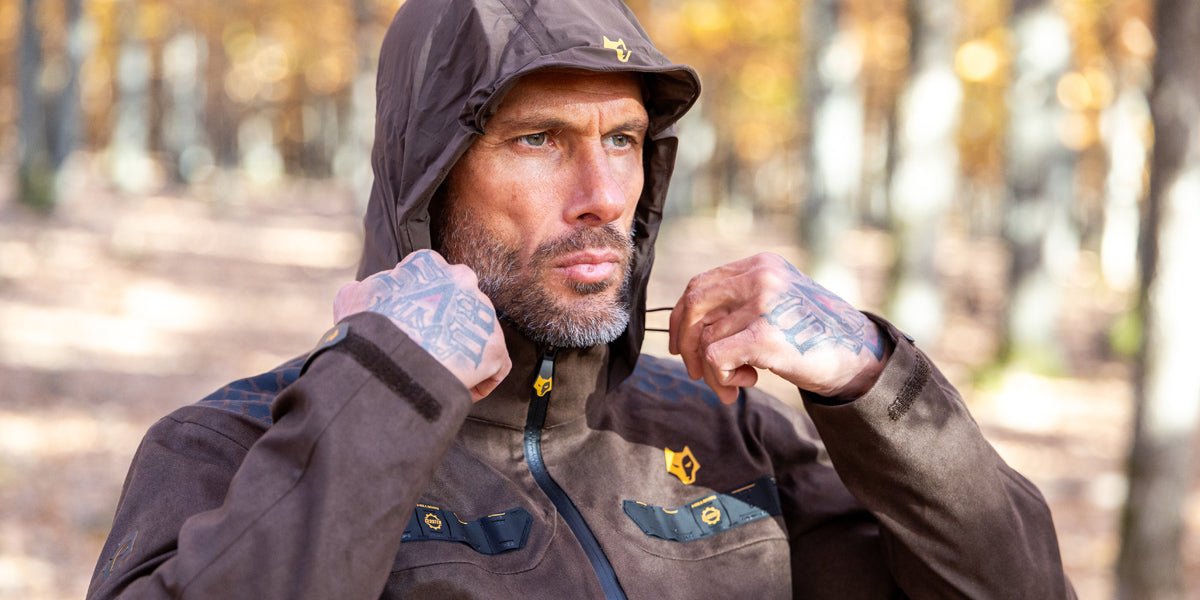
The hood is another detail I never ignore. I prefer a 3-way adjustable hood or at least one that tightens well around the head without blocking hearing and vision. A packable hood is useful when conditions change, while a fixed hood can be better in severe weather if it is shaped properly. Longer jacket styles also have their place, especially when sitting, kneeling, or waiting in cold rain, because coverage becomes comfort.
How to choose a hunting jacket that works in real field conditions?

I start with the hunt, not the jacket. Deer stalking requires silence, mobility, and camouflage that suits the surroundings. Boar hunting often requires rugged fabric, practical storage, warmth during waiting, and enough freedom to mount the gun fast. Wet weather demands waterproof protection and breathability. Cold static hunts need insulation. Active hunts need ventilation and layering.
Then I think about seasons. Early autumn may call for a lightweight shell over a breathable base layer. Late autumn may need windproof protection and a warmer mid-layer. Winter hunting may require insulated jackets, reinforced construction, and serious waterproofing. Severe cold conditions demand complete protection, especially when long stillness is part of the day.
I also consider local safety laws. In some areas, hunters must wear visible colors during certain types of hunting. Camouflage should never come before legal visibility requirements or safe identification in the field.
Finally, I look at the details: shoulders, arms, cuffs, pockets, hood, lining, seams, zippers, length, and fabric noise. I want the jacket to offer freedom, not restriction. I want warmth without unnecessary bulk. I want waterproof protection without feeling trapped inside my own clothing. I want durable materials that can handle thorns, straps, rain, cold, and repeated wear.
A good hunting jacket is not one feature. It is a collection of small decisions that work together. When those details are right, I notice something important: I stop adjusting my clothing and start focusing on the hunt. That is when a jacket has done its job.

Share: