
2BL Merino Wool Hunting Long Johns-Thermal Base Layer Pants
Why Hunters Need Base Layer Bottoms in Cold Weather?
Hunters need base layer bottoms because outer trousers alone may not hold enough warmth close to the legs during prolonged inactivity. The cold becomes more noticeable when sitting in a high seat, standing during a driven hunt, kneeling on frozen ground or glassing after a steep approach.
A men's base layer creates a close-fitting thermal foundation beneath the outer trousers. It does not generate heat or block rain, but it slows heat loss and manages the moisture produced while walking. That balance helps prevent the familiar sequence of overheating on the approach and becoming cold soon after stopping.
Thermal Base Layer Bottoms That Keep Warmth Close

A thermal base layer bottom works by sitting near the skin, trapping a thin layer of warm air and moving perspiration into the fabric. The outer trousers can then provide insulation, wind resistance or waterproof protection according to the conditions.
For hunters comparing the best bottom base layer, warmth is only one part of the decision. Fit, fabric composition, seam construction and moisture behaviour all affect comfort over a full day.
Warmth Without Heavy Layers
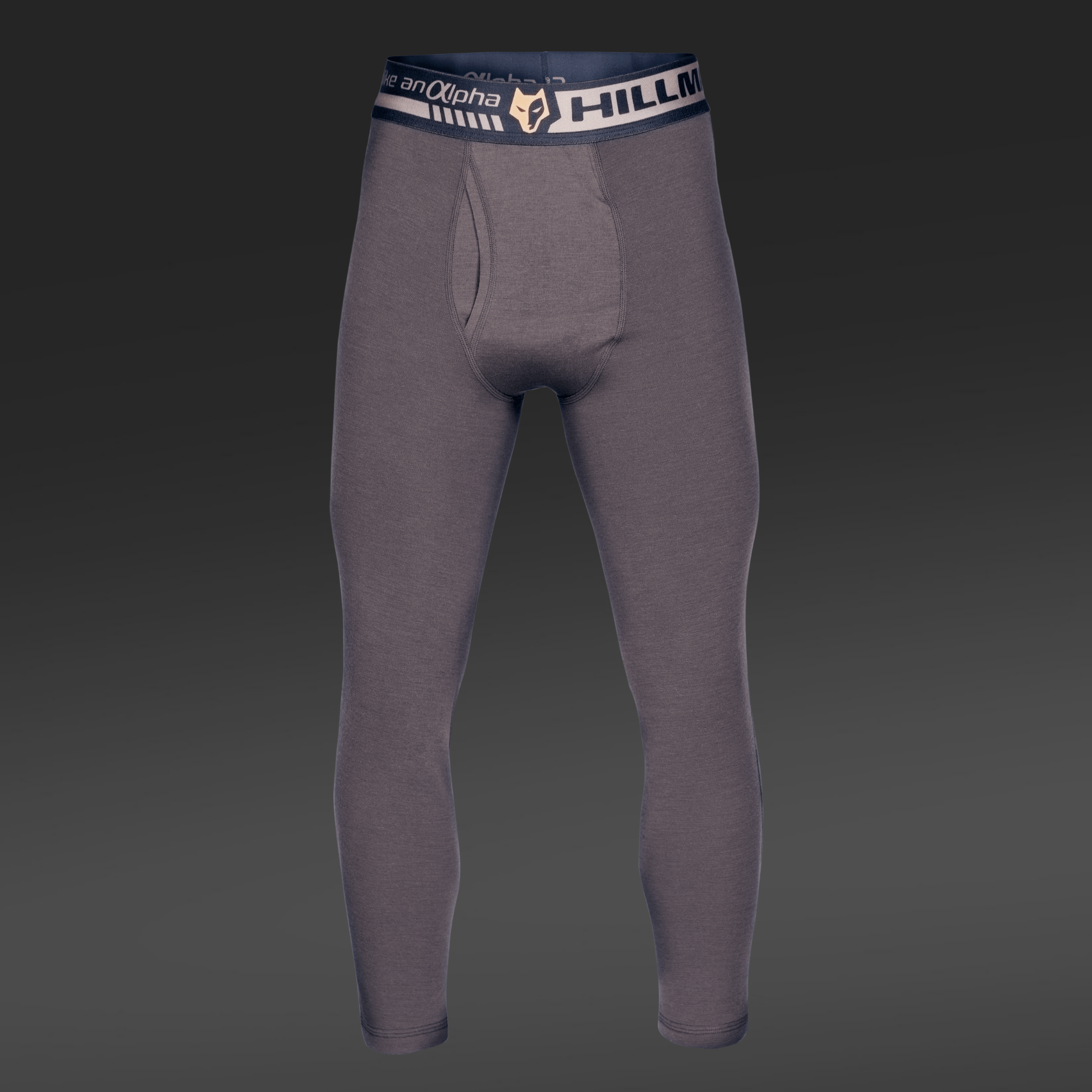
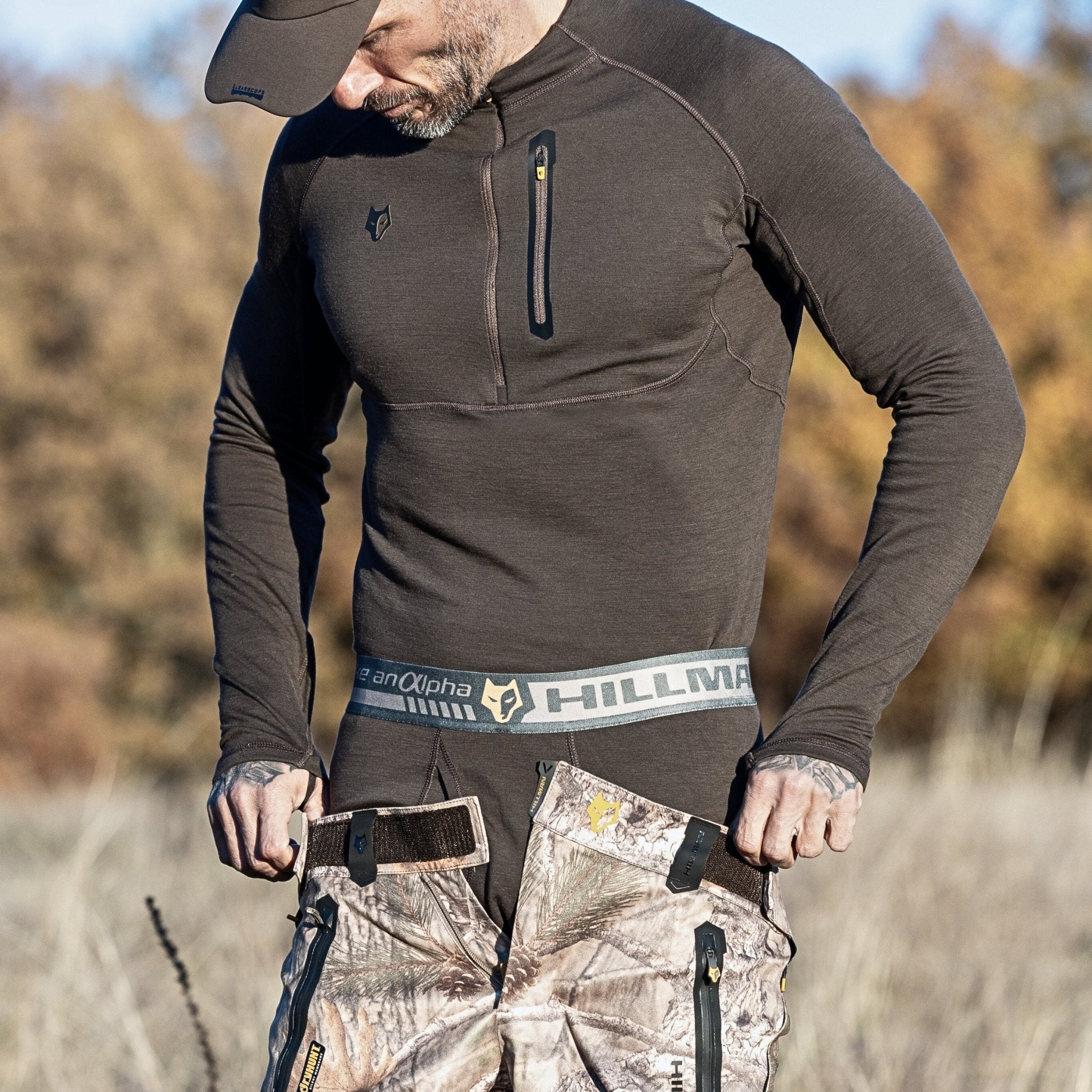
A good base layer adds thermal support without making the knees, seat or waist feel crowded. Hillman’s 2BL long johns weigh approximately 260 g in size EU52 and use a close, flexible construction that fits beneath technical hunting trousers.
Unlike a quilted base layer bottom, which relies on thicker lofted sections, the 2BL uses a Merino-Bamboo fabric blend. This keeps the profile lower and allows the outer trousers to move more naturally when walking, climbing or kneeling.
Moisture Control When You Walk and Then Wait
Moisture control becomes critical when an active approach is followed by a long, cold wait. Sweat left close to the skin cools rapidly once the body stops producing the same amount of heat.
The 2BL fabric combines bamboo viscose, which absorbs moisture next to the body, with fine Merino wool that supports moisture transfer and evaporation. This does not mean the layer will remain completely dry during hard exertion. Adjusting the pace and opening outer-trouser ventilation before heavy sweating develops are still important.
Comfortable Fit Under Hunting Trousers
A men's bottom base layer should fit close enough to avoid folds but not so tightly that it restricts circulation or stretches the waistband. Excess fabric can bunch behind the knees, while raised seams may become uncomfortable beneath fitted outer trousers.
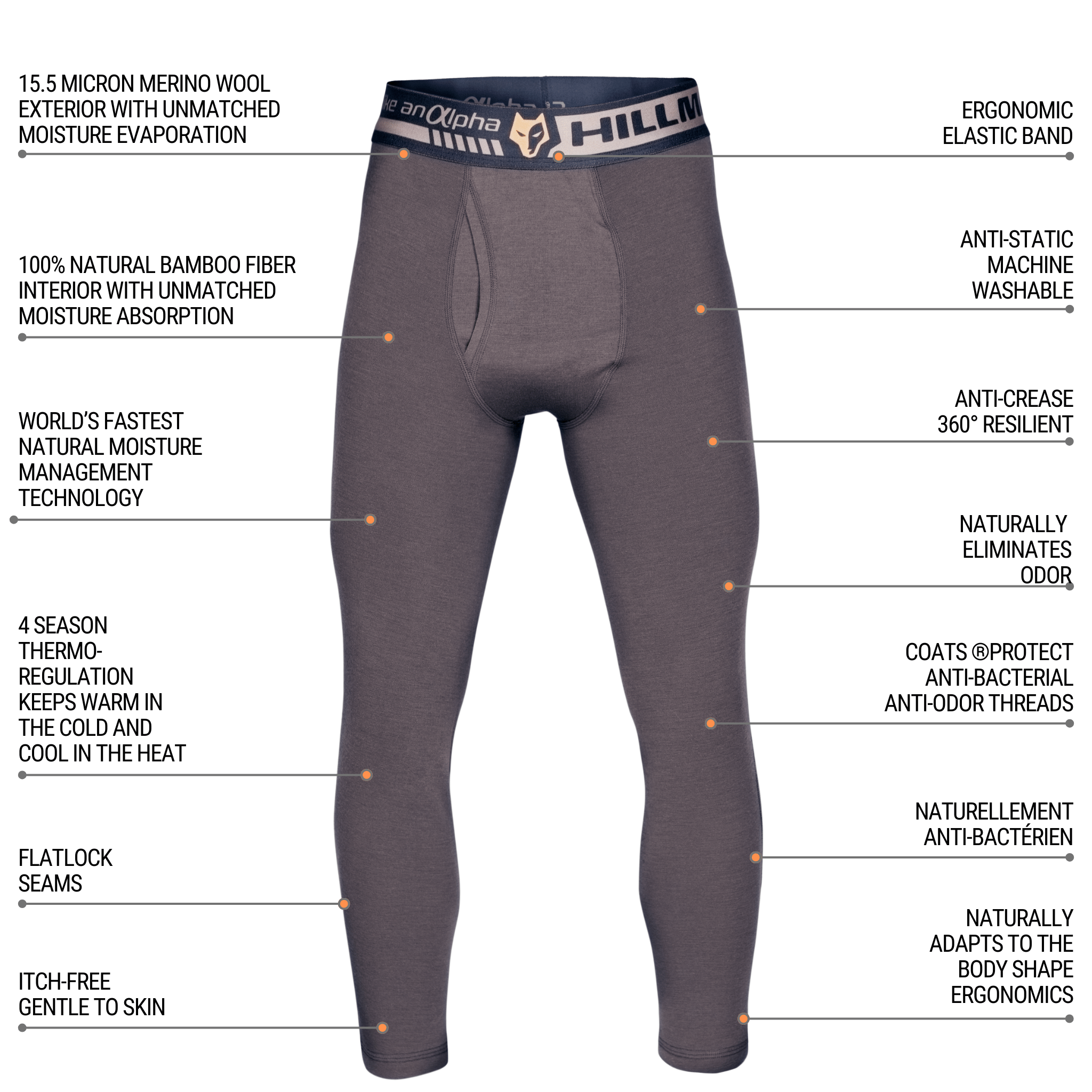
Hillman uses flatlock seams, an ergonomic elastic waistband and resilient stretch construction. The fabric follows the legs during a full stride or crouch, reducing the friction that develops when two poorly fitted layers move against each other.
When Should You Wear Hunting Base Layer Bottoms?
 Base layer bottoms are most useful when low temperature, limited movement or a sudden change in activity makes heat management difficult. They may be unnecessary during mild, highly active hunts where the outer trousers already provide sufficient warmth.
Winter Deer Stalking
Winter deer stalking often combines steady walking with long pauses for glassing, observation or waiting for a safe shot. A base layer helps manage perspiration during the approach and preserves more warmth when the pace slows.
The layer should suit the hardest part of the route as well as the coldest pause. An excessively thick thermal may feel comfortable at first light but become damp during a steep climb, creating more discomfort later.
Driven Hunts and High Seats
Driven hunts and high-seat sessions place greater emphasis on insulation because the hunter may remain still for hours. Legs lose warmth gradually, particularly when exposed to wind or when the seat draws heat from the lower body.
The 2BL long johns add a thermal layer beneath waterproof or insulated trousers without creating another loose garment. For severe cold, they should form part of a wider system that also includes suitable socks, boots and weatherproof outerwear.
Cold Wet Days and Wildfowling
Base layer bottoms help retain warmth on cold, wet days, but they must be protected by waterproof outer trousers. Merino-Bamboo fabric manages internal moisture; it is not a barrier against rain, marsh water or repeated contact with soaked vegetation.
For wildfowling, combine the 2BL with properly fitted waterproof trousers, bibs or waders and insulated waterproof footwear. If water reaches the base layer from outside, its ability to keep the skin comfortable becomes more limited.
How to Wear Base Layer Bottoms?
 Wear base layer bottoms close to the skin, with hunting trousers above them. Add waterproof or insulated outer protection according to the forecast, terrain and length of time spent stationary.
The layers should work together without compressing one another. Before the hunt, test the full setup while walking, sitting, kneeling and stepping onto a raised surface.
Under Lightweight Hunting Pants
Base layer bottoms extend the use of lightweight trousers into cooler mornings and transitional weather. Under XPR trousers, for example, the 2BL adds warmth while the outer Cotton Suede® fabric provides quiet movement, ventilation and brush protection.
This combination suits a cold dawn that is expected to become milder. If the temperature rises significantly, the base layer may become too warm, so the day’s forecast and the possibility of removing layers should be considered.
Under Insulated Hunting Pants
An additional thermal layer is useful beneath insulated trousers during freezing weather, long static waits or exposure to strong wind. It can fill the gap between the skin and the insulation without requiring a second bulky pair of trousers.
The outer garment still needs enough room for the 2BL. If insulation and base fabric are compressed too tightly, the outfit may restrict movement and lose some of the warm air held between its layers.
With Warm Socks and Hunting Boots
Base layer bottoms, socks and boots protect different parts of the lower body and should meet without creating thick pressure points. Warmth around the thighs and calves will not compensate for boots that are too tight or socks that remain wet.
Keep the bottom cuffs smooth and avoid bulky folds inside the boot. Hunting socks should manage foot moisture, while the boots must provide the required insulation, grip and waterproofing for the ground conditions.
Hillman Base Layer Details
 Hillman’s 2BL long johns focus on material balance and next-to-skin comfort. Their composition combines 48% merino wool, 34% natural bamboo viscose, 14% organic cotton and 4% spandex.
Merino Wool for Warmth and Odor Control
Merino wool helps regulate temperature by trapping air within fine fibres while allowing moisture vapour to move through the fabric. Hillman uses fine 15.5-micron Australian Merino in the 2BL construction for a softer feel against the body.
Merino also develops odour more slowly than many conventional synthetic thermals. This can be useful during long days and multi-day trips, although the garment still needs airing and regular washing according to use.
Watch how the merino thermo-thighs work as a warm and breathable bottom base layer for hunting. The video shows why lower-body warmth matters during cold mornings and long waits.
Bamboo Blend for Softness and Breathability
Bamboo viscose provides a smooth next-to-skin surface and supports rapid moisture absorption. In Hillman’s Synertech™ construction, it works with Merino rather than replacing it: bamboo accepts moisture close to the body, while Merino helps move it towards the outside.
Organic cotton adds stability to the blend, and spandex supplies stretch. The result is a fabric intended to feel soft without becoming loose or heavy beneath the outer trousers.
Flat Seams and Stretch for All-Day Comfort
Flat seams reduce the raised edges that can rub against the inner thighs or press beneath a trouser seam. Their benefit becomes more apparent after several hours of walking, sitting and repeated changes of position.
The 360-degree resilient construction allows the 2BL to follow the legs without pulling at the knees. A close fit also prevents the long johns from twisting inside the outer trousers, which helps both layers move as one system.
FAQs
Do base layer bottoms actually make a difference, or is a decent pair of outer trousers enough?
What weight merino base layer bottom do you actually need for a full day's deer stalking in winter?
Can you wear the same base layer bottoms for rough shooting in October and a late January driven day?
How many days can you realistically wear merino base layer bottoms before washing them?
Do base layer bottoms affect how outer trousers fit and move?
Are flat seams on base layer bottoms actually worth paying for, or is it marketing?
Do base layer bottoms work for wildfowling, or does the wet and cold demand something more substantial?
Shop Related Collections