Insulated Hunting Boots Winter Waterproof | Aerogel 2.0
Wide Width Insulated Hunting Boots | Aerogel 2.0
What matters most when choosing cold weather hunting boots?

A winter boot earns its place after several hours outside, not in the first few steps. Warmth, dryness, grip and fit must work together, because one weak point is usually enough to shorten the day.
Breathability and moisture control inside the boot
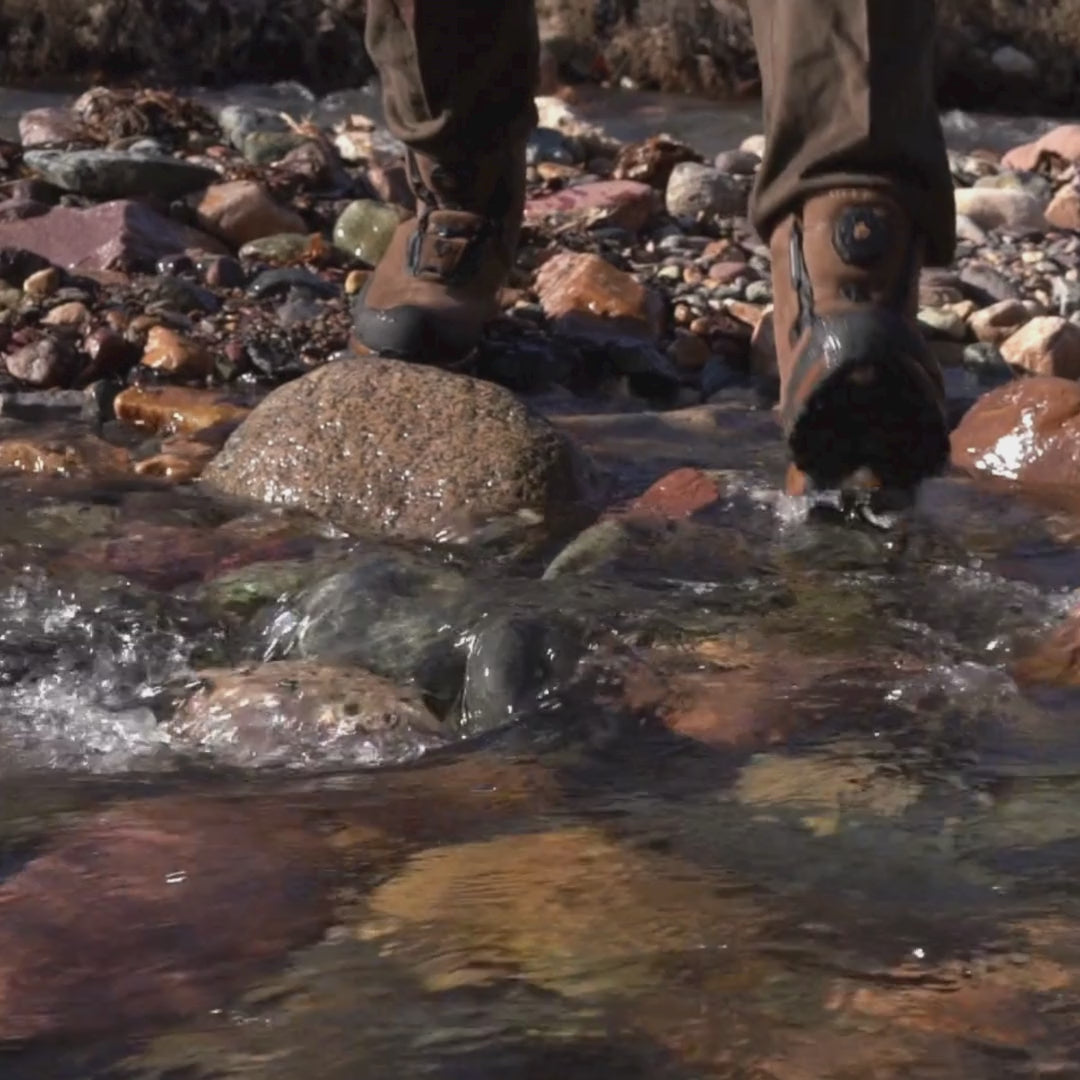
Cold feet do not always start with water coming from outside. During walking, climbing or slow stalking, sweat can build inside the boot, then cool down as soon as the hunter stops. Hillman uses the Dryhunt® air-permeable waterproof nanomembrane to help vapor escape while keeping external moisture out. That matters in wet grass, snow, mud, thawing ground and shallow crossings where waterproof hunting boots need to block water without trapping every bit of heat and moisture inside. The sealed protection reaches up to 5 inches / 12 cm, which covers realistic wet hunting ground without turning the boot into a wader.
See how waterproof hunting boots manage moisture during movement, keeping your feet dry from the inside while blocking water from the outside.
Insulation that keeps warmth without overheating
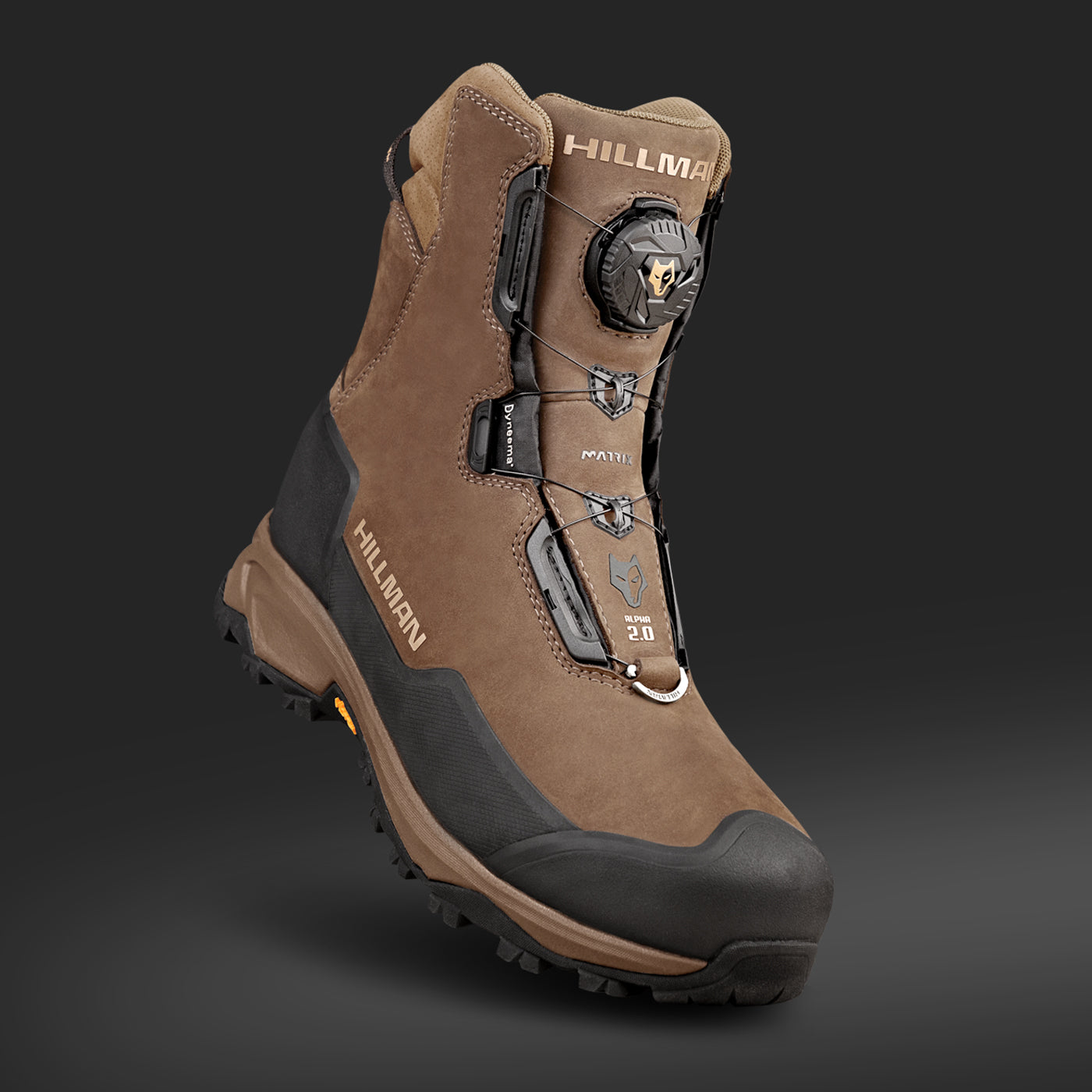
Warmth is not just a question of adding more padding. Good insulated hunting boots have to hold heat when movement stops, yet avoid becoming bulky or sweaty on the approach. MATRIX® and Aerogel insulation give the Aerogel 2.0 platform its cold-weather value, with a listed thermal range from 60°F to -22°F / 15°C to -30°C. The real test often comes after the walking is done: waiting on cold soil, standing at a peg, glassing from exposed ground or holding position during a winter stalk. That is when insulation has to do its quiet work.
 Stability and grip on uneven, frozen terrain
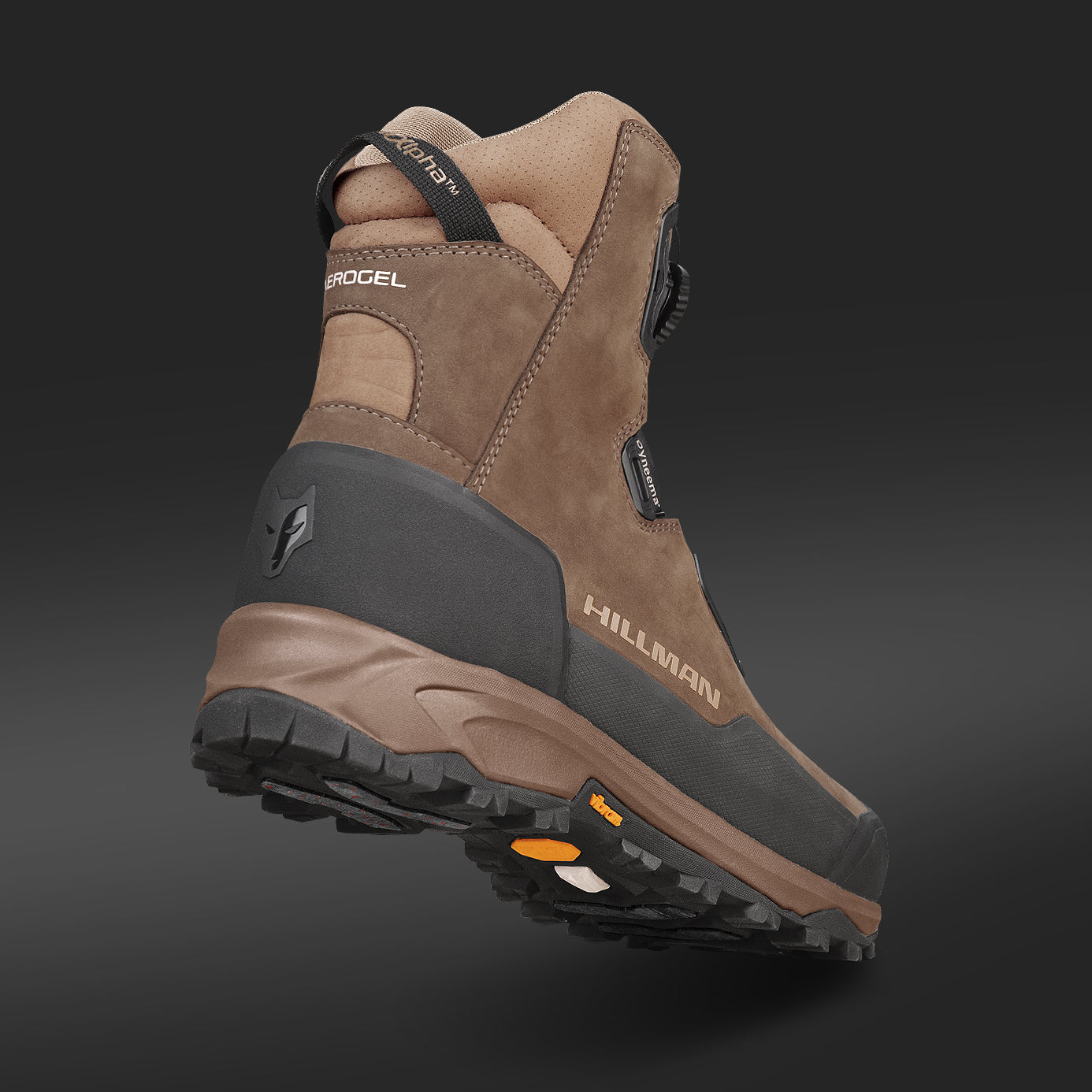
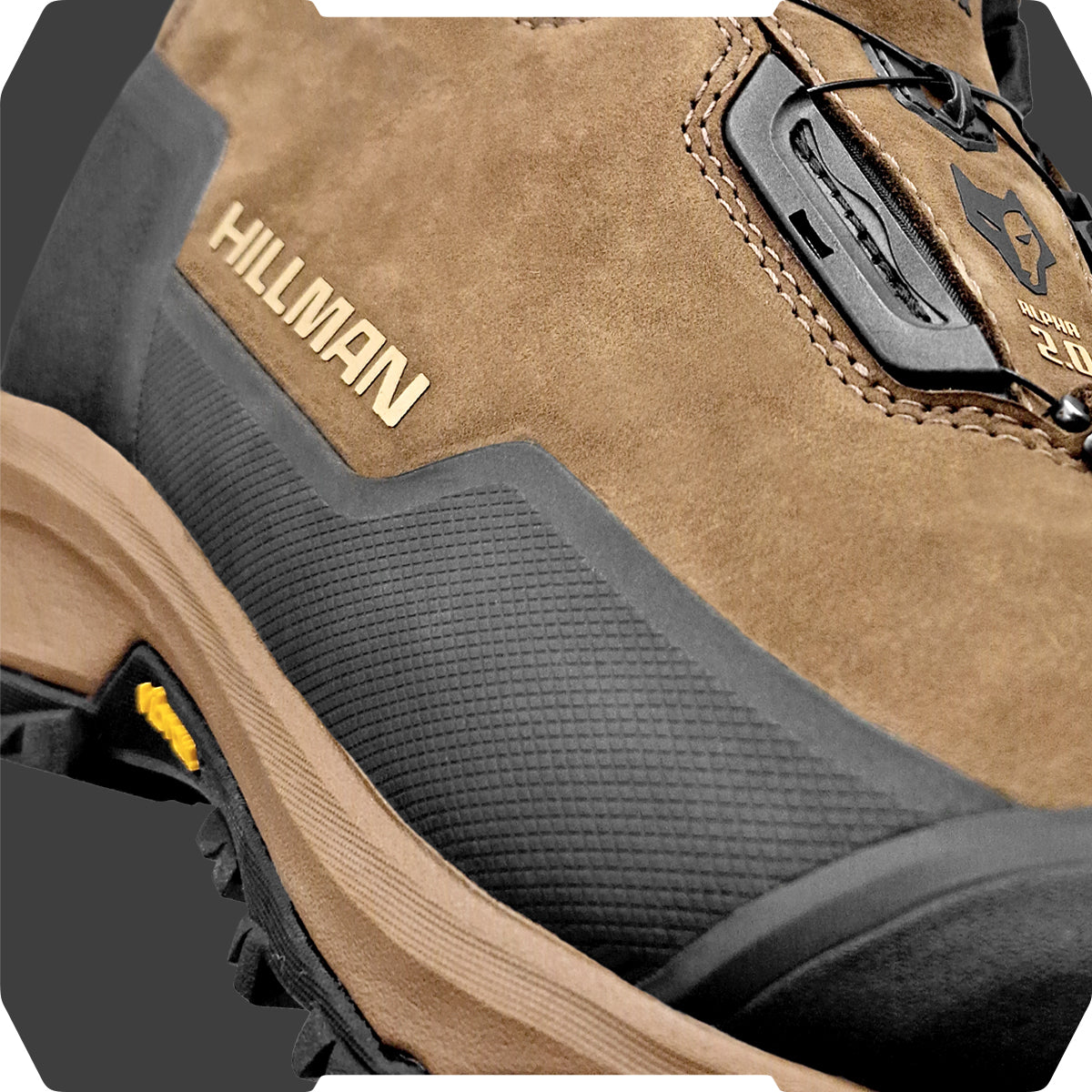
Winter hunting rarely gives clean footing. Frozen mud, wet ice, steep banks, loose slopes, rocky approaches, hidden roots and uneven woodland ground all ask more from a boot than simple warmth. Vibram® ARCTIC GRIP™ helps with wet ice traction, while the shock-absorbing EVA midsole by Vibram® softens repeated impact over hard ground. The H-Flex® cushioned heel-stabilizing insole, flexible foot-joint structure, reinforced heel and toe protection and 360-degree reinforcement all support controlled movement rather than stiff, clumsy stepping. For hunting, that difference matters when the next step needs to be both quiet and secure.
 Choosing boots based on how you hunt
Different hunting styles put pressure on the boot in different ways. Driven hunting often means standing on cold ground, then moving quickly when the drive starts. Stalking asks for walking, stopping, kneeling and covering distance without losing feel underfoot. Bow hunting needs quiet, controlled foot placement. Hill or open-ground hunting needs traction, ankle confidence and weight control. The right winter hunting boots should match the hardest part of the hunt, not just the average conditions.
Different types of cold weather hunting boots by Hillman

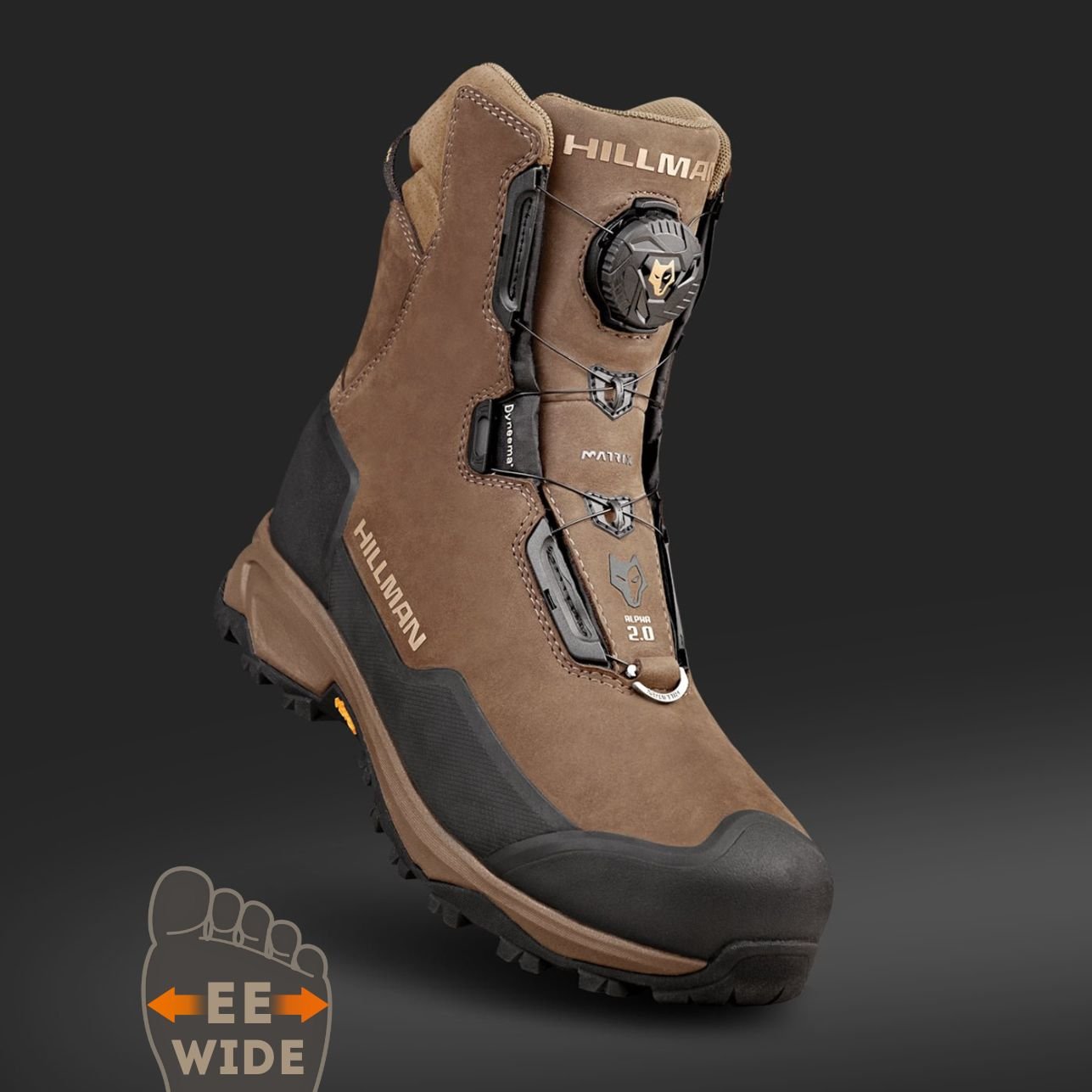
This is a focused collection, not an oversized wall of near-identical choices. The main decision is between the regular Aerogel 2.0 winter boot platform and the wide-width version, depending on fit, sock room, terrain and expected exposure.
Waterproof boots for wet and muddy hunting conditions
Wet winter ground can mean shallow water, snowmelt, mud, marsh edges and long walks through damp vegetation. Hillman waterproof boots use the Dryhunt® membrane, sealed waterproof protection up to 12 cm / 5 inches, water-repellent premium leather and Durashield® flexible double-sided protection around exposed zones. The full-grain Italian cow leather outer shell adds structure without making the boot feel like a rigid shell. These are boots for real wet hunting ground: wet grass, muddy rides, melting snow and shallow crossings, not deep-water standing.

Insulated boots for low temperatures and long exposure
Cold ground draws heat from the feet, especially when a hunter is waiting rather than walking. Aerogel 2.0 combines MATRIX® insulation, low weight and reduced bulk with a warm lining and ventilated memory-foam collar. The boot should feel secure, but not strangled. Over-tight lacing can reduce circulation and make even a warm boot feel cold. The best cold weather hunting boots for your conditions are the ones that keep warmth, allow blood flow, manage internal moisture and still feel stable after several hours outside.
See how the best cold weather hunting boots for 2026 perform across different conditions, giving you a clear idea of what makes a reliable and well-balanced choice for serious winter hunting.
How your boots affect your full winter hunting setup?

Winter comfort starts at ground level. If the feet are wet, cold or unstable, even the best jacket, trousers or layering system cannot fully compensate.
Matching boots with the rest of your cold weather hunting gear
Boots connect directly with trousers, gaiters, socks, base layers, winter jackets, gloves and headwear. A full winter hunting setup should work as one system, not as separate items bought for separate reasons. Detachable gaiter loops help when snow, mud or brush need extra control around the lower leg. Boot height, trouser cuffs and gaiters also matter when moving through wet cover, because moisture often creeps in from above when the rest of the boot is doing its job properly.

Socks, layering, and moisture control inside the boot
A thicker sock is not always a warmer sock if it crushes the foot and restricts circulation. Winter socks need enough room to loft, move moisture and keep the heel seated. The regular Aerogel 2.0 fit suits normal to slightly wide feet, while the wide fit option gives more room for hunters who need extra volume or wear heavier winter socks. The FREELOCK® smart-lace system with 1 mm wire helps adjust tension evenly, so the foot stays held without cutting off comfort during long static periods.
 Staying comfortable from the ground up during long hunts
Comfort is not softness alone. It is dryness, warmth, grip, fit and support still working together after hours of uneven ground. At 0.59 kg / 1.3 lbs per boot in EU 42 / US 9, the Aerogel 2.0 keeps weight controlled for winter footwear. The EVA midsole, H-Flex® insole, slight arch support, heel stabilization, no break-in comfort and moderately soft outsole that flexes naturally at the front help reduce the small irritations that become big problems late in the day. A boot can feel good in the shop; the real question is how it feels when the ground is frozen, the socks are damp from effort and there are still miles left.

Ready for cold ground, steady through the hunt
Hillman cold weather hunting boots bring together cold-ground protection, breathable insulation, waterproof construction, wet-terrain grip, sock compatibility and controlled fit in a winter boot made for serious field use. The Aerogel 2.0 platform is not just warm footwear. It is part of the full cold-weather hunting system: stable underfoot, dry through mixed ground, quiet enough for careful movement and supportive enough for long exposure. For hunters who read the ground before they take the next step, Hillman winter hunt footwear gives that step more confidence.

FAQs
How do you actually test if insulated boots are warm enough before committing to a full winter season?
Does the waterproofing on these boots actually hold when crossing wet ground or shallow water?
Do insulated boots handle the specific demands of driven boar hunting in central Europe?
Do flexible soles actually make a difference on steep or uneven ground?
Are these boots suitable for red deer stalking on open Scottish hill ground in winter?
Can the same boots work for both wildfowling and hill work or do you need separate pairs?
What's worth checking on hunting boots before the season starts?
Shop Related Collections