Multifunctional Hunting Headwear
Headwear for Hunting That Keeps Your Head Warm, Hidden, and Focused
You lose a surprising amount of body heat straight out the top of your head. Go bare on a frosty morning and the best jacket in the world can't catch up. So yeah, headwear for hunting earns its spot. You feel the importance of it on the first cold dawn. But warmth is only half the story. Your head moves first. And a pale face, or a shiny forehead, catches a deer's eye before anything else does. A good hat fixes that. It cuts the sun's glare. It blocks cold air and wind. It warms your ears through a long, dead-still sit in the woods. Soft headwear even keeps you quiet on the move. Tiny bit of kit. Huge difference by dark.
How to Choose the Right Hunting Headwear?

So which one? Depends on the day. How cold. How you hunt. How hidden you need to be. And whether you want a beanie, a hunting face mask, or one piece that pulls double duty. Here's how to pick from the range.
Choose by Temperature and Cold Weather
Cold first. Frosty mornings, early starts, deep winter, long motionless sits: that's merino wool beanie territory. Super warm, and not thick or heavy with it. It keeps your head warm when you're sat dead still, making zero heat of your own. Milder cool weather, or a day on the move? You don't need all that. Light multifunctional headwear, or a plain cap, does just fine. Match the weight to the day. From the beginning of the season through to the deep cold it's intended for.
Choose by Coverage and Concealment
Then coverage. A beanie warms the head and softens your outline. A hunting face mask, or one of our balaclavas, hides your face and neck. That counts most up close, where bare skin alone can trip a deer's alarm. A neck gaiter shuts the gap at your collar. Multifunctional headwear flips between all of them, hat to face cover to neck warmer, as you go. More cover, more stealth. So match it to how close you're working, and how open the country is.
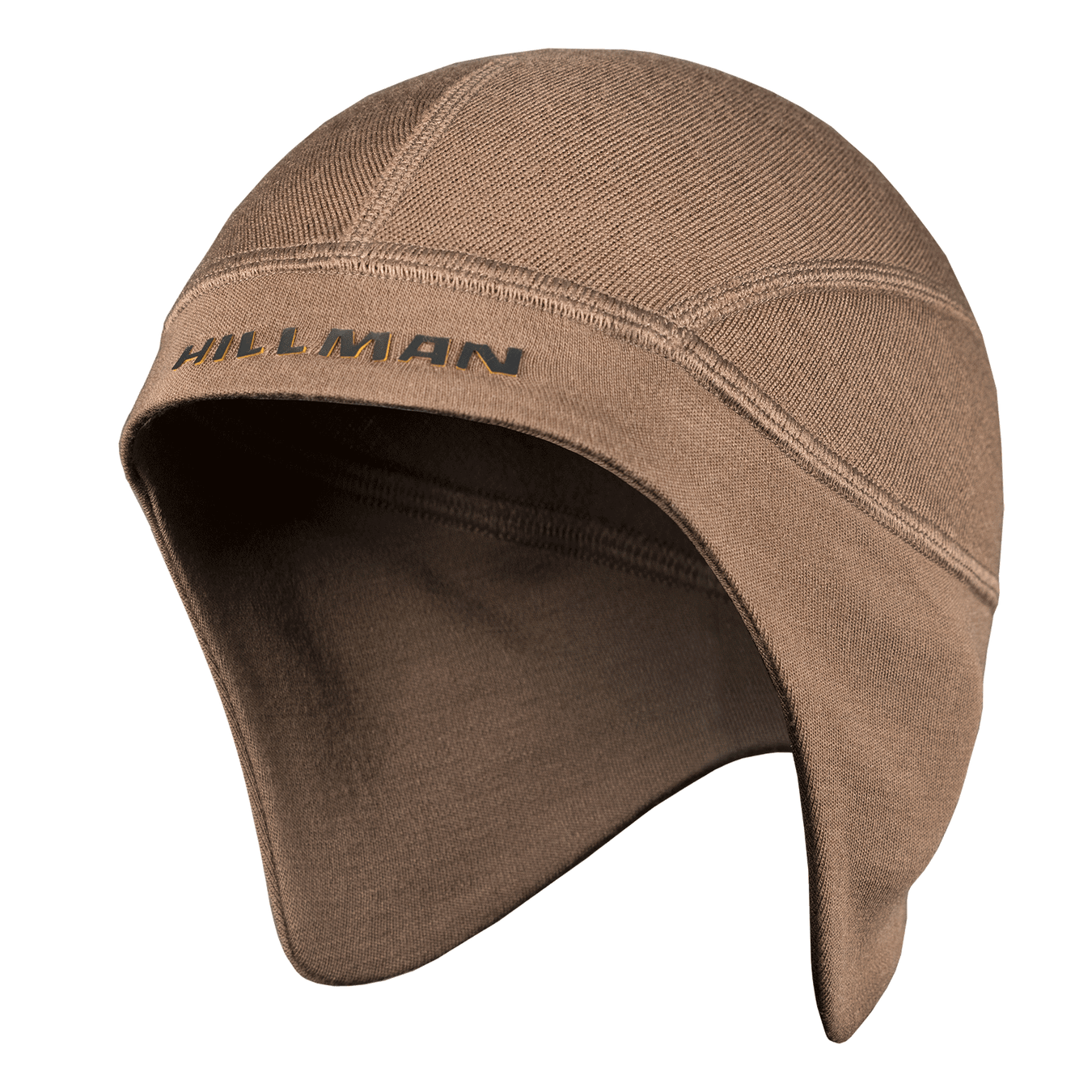
Watch how the Merino Termo Hunting Beanie adds warmth and comfort during cold hunting days. It shows why a soft merino wool beanie is useful for long waits, early mornings, and layering under a hood.
Choose by Comfort and Material
Last, the material. This is where merino wool and bamboo fiber pull ahead. Merino keeps you warm, wicks your sweat, and beats odor on its own. Bamboo fiber softens the fabric against your skin and helps it breathe. Put them together, and you get a comfortable fit that doesn't go itchy, holds up over a few years of hard use, and still feels right at hour twelve. Cheap synthetic hats can't get near that. It's the department where many other brands quietly fall apart. Bonus: it's as good for hiking and other outdoor activities as it is for the hunt.
Best Hunting Headwear
Once you've got the weather, the ground, and how close you hunt pinned down, the right headwear for any environment is obvious. Here's our men's hunting headwear lineup, and what each one is for.

Merino Wool Beanie: Men's Options for Serious Hunters
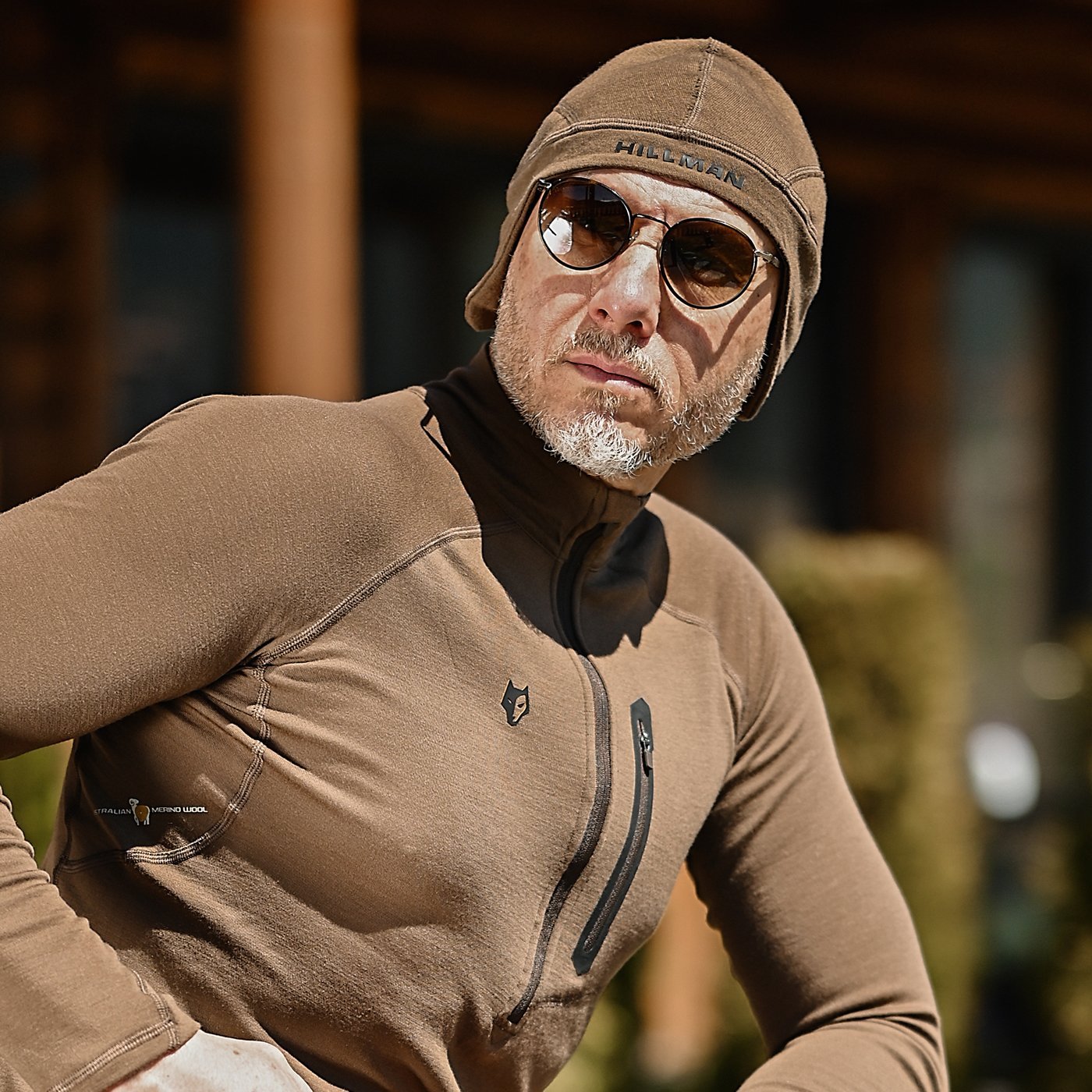
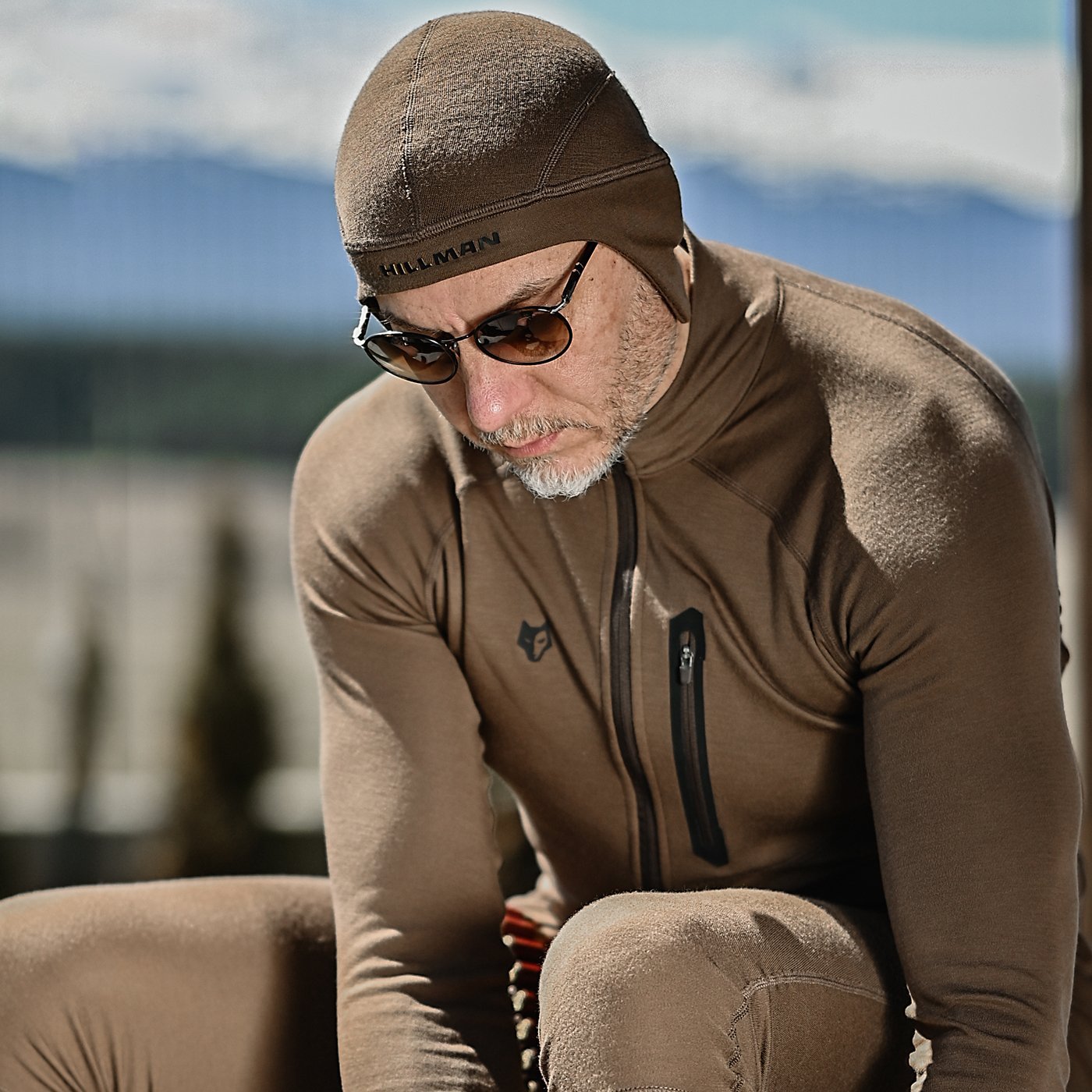
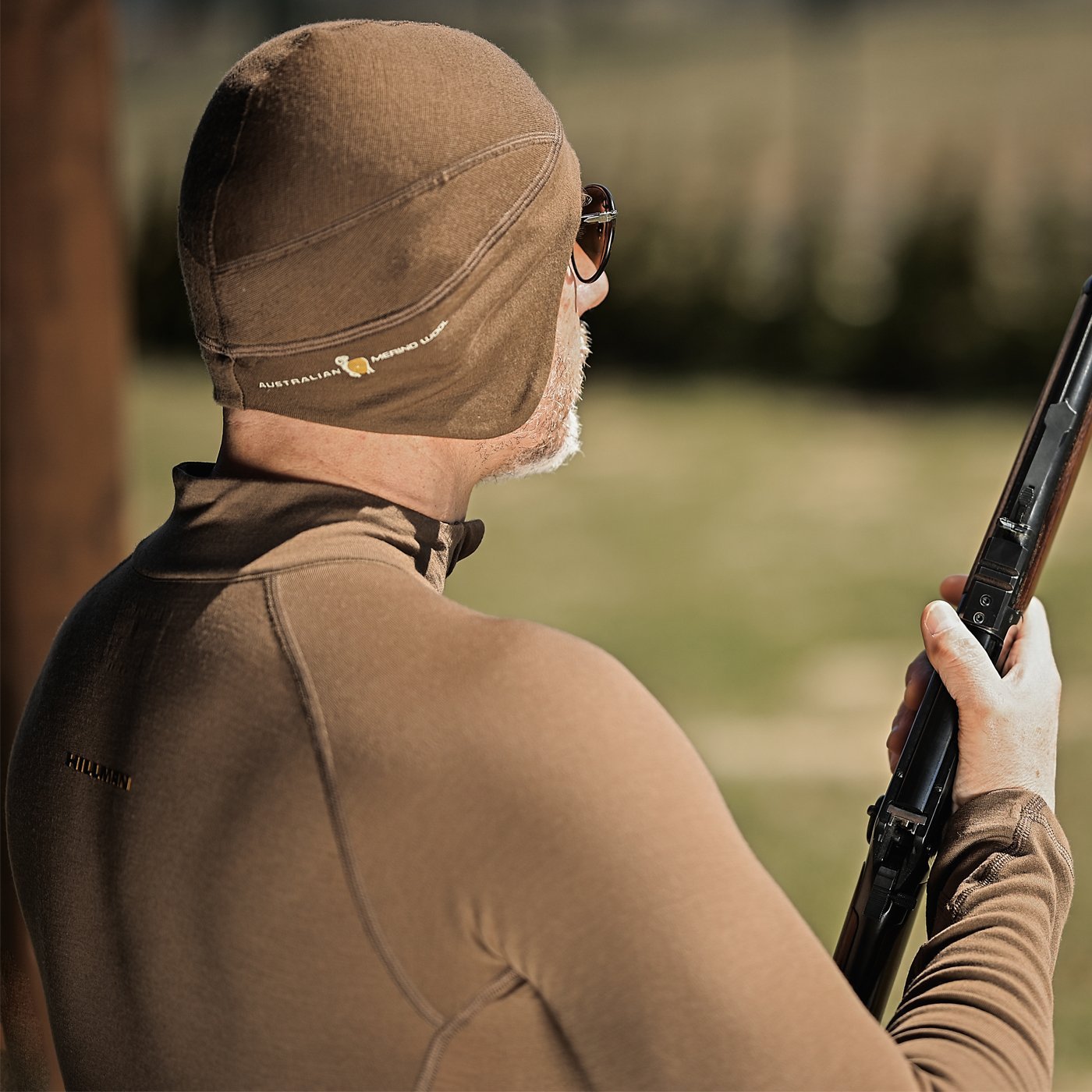
Our main warm hat is the Anatomic Merino Beanie. It's for hunters who sit in the cold and stay put. Crafted from 16μm merino wool, it's soft, super warm, and cozy, with none of the itch older wool is famous for. Merino wool beanies just hold heat better than synthetic, and this one proves it. The anatomic cut sits flat and close. One size fits most heads. It covers your ears and doesn't creep off. Want a merino wool beanie that hunters actually keep pulling on? This is the one. It's the merino beanie men's hunters trust from October on, and the price makes it an easy first purchase. Serious cold-weather guys rate it. It comes highly recommended, and hunters report staying out longer once they've got one on. Wear it once, and you're sold.
Hunting Face Mask for Concealment and Wind Protection
Need to hide your face, or kill a biting wind? Grab a hunting face mask. It covers the pale skin that gives you up at close range, in open country, or against snow. It blocks the wind on a cold approach, so your face stays protected. And it kills the sharp edge a deer's eye locks onto first. For close-in stalking and bowhunting, where drawing your arrows means freezing solid, hunting face masks pull their weight. A scrap of cover is a real advantage when the shot's tight.
Multifunctional Hunting Headwear for Changing Conditions
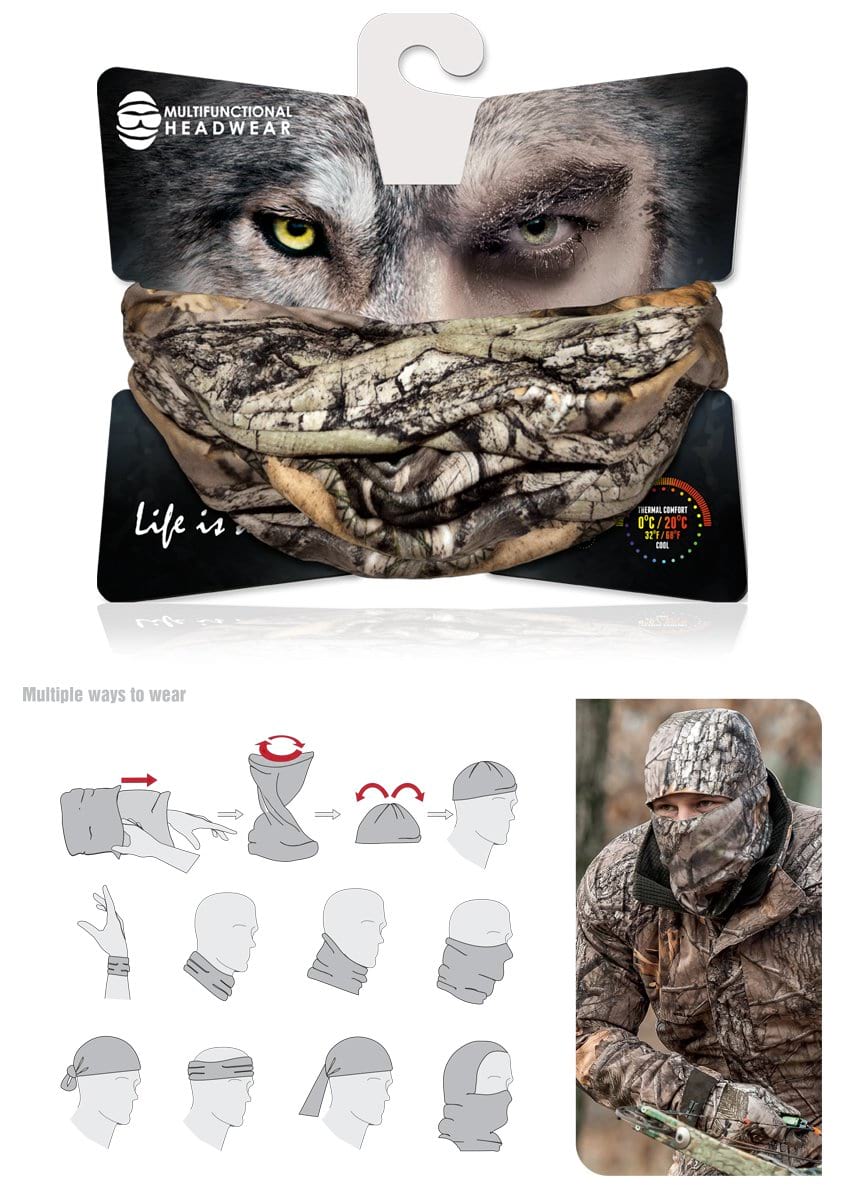
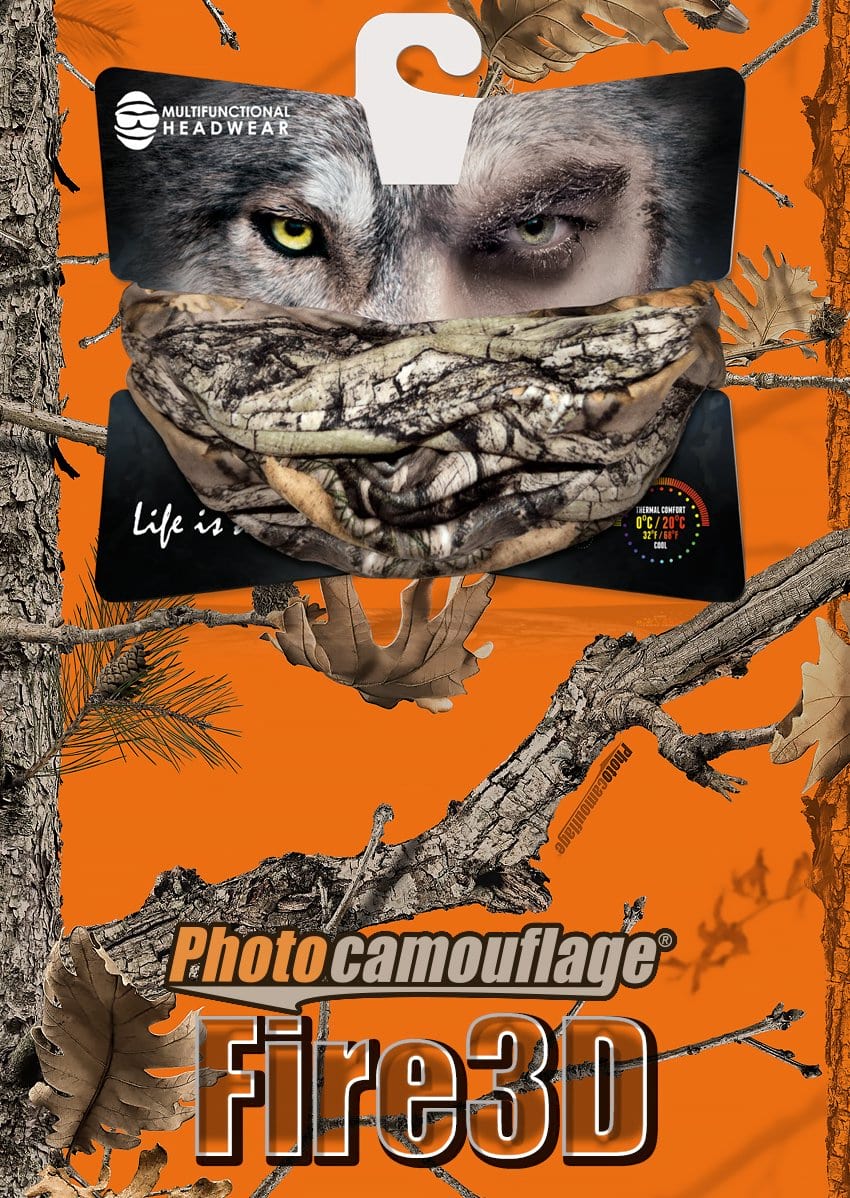
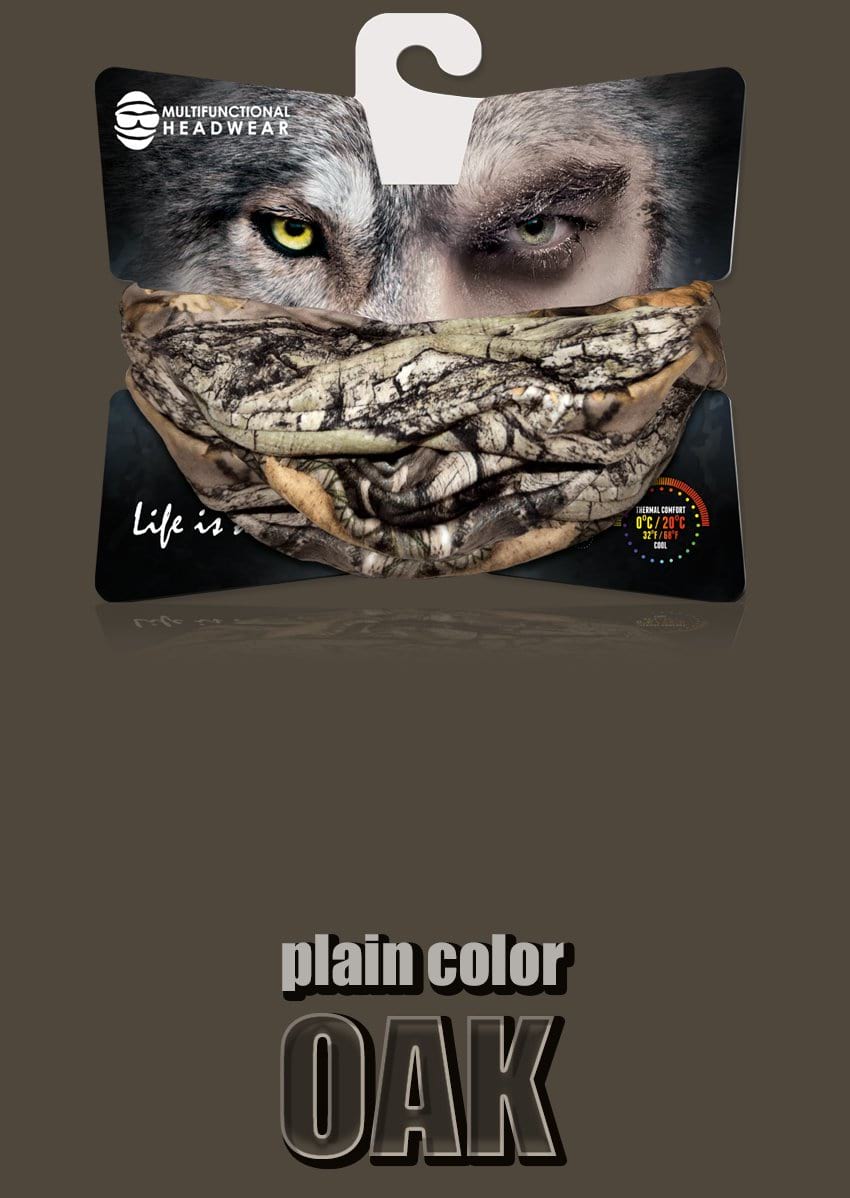
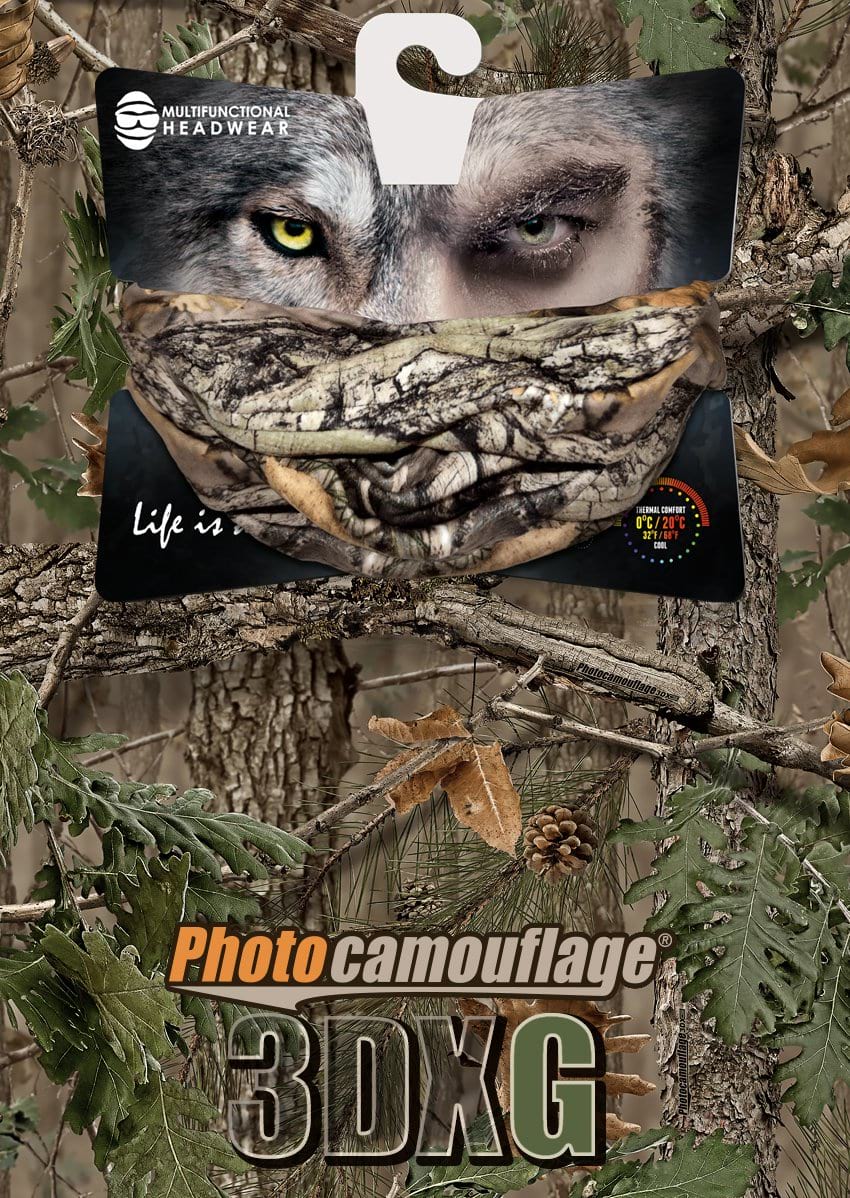
The Multifunctional Hunting Headwear does everything. Neck gaiter one minute. Face cover the next. Light hat, or an extra layer when the wind swings round. It weighs next to nothing, packs down to nothing, and lives in a jacket pocket year-round. One tube of fabric, a dozen ways to wear it, handy in just about any pursuit. Men or women, if your conditions keep shifting, it's the best few euros in the kit.
Bamboo Fiber and Merino Wool: Why the Material Matters?

It comes down to two natural fibers: merino wool and bamboo fiber. Get those right, and the rest of the headwear looks after itself. Here's what each one brings.
Merino Wool for Natural Warmth and Odor Control
Merino wool is a bit of a marvel. It holds warmth even when damp. It pulls sweat off your skin. And it fights smell on its own. Wear it three days straight, and it still smells fine, which is real odor control when a deer's downwind. There's no plastic in it, either. That's kinder to your skin, and better for human health, than the synthetic stuff. Warm. Fresh. Comfortable. Hunt after hunt.
Bamboo Fiber for Softness and Breathability
Then bamboo fiber, for comfort. Bamboo softens the fabric and helps it breathe right against your skin. It shifts moisture when you warm up. So worn close for hours, it never turns clammy or scratchy. Soft. Breathable. Easy on the skin. On a long, cold sit, that soft feeling is the thing you notice most.
Lightweight Fit Under Hoods and Jackets
A piece of hunting headwear has one more job: vanish under your hood. Bulky hats bunch. They slip. They press on your skull. Ours doesn't. It sits flat and thin, so it tucks under a waterproof hood or jacket and stays put. No hot spots on a long wait. Light, low-profile, and suitable for layering under anything you own.
How to Combine Hunting Headwear with the Rest of Your Gear?
Your headwear isn't a one-off. It's part of the stack. On a cold sit, slip a merino wool beanie under your jacket hood for extra warmth up top. Pull a hunting face mask or neck gaiter over your collar, above your base layer and hoodie, so cold air can't sneak in. Moving instead? Swap the beanie for light multifunctional headwear, and you won't cook. Treat it like the rest of your clothing. Match the head layer to the day, and everything works better. And when you pack your food and water, drop in a spare hat. Cold head, cold hunter. Don't leave the top of the stack to luck.
FAQs
Does headwear actually affect how deer or other game detect you?
When does a beanie make more sense than a cap for hunting?
Can a merino beanie be worn under a waterproof hood without bunching or slipping?
Is there a scent control argument for merino headwear specifically?
How versatile is the multifunctional hunting headwear in practice?
Do you need separate headwear for summer hunting, or does a beanie cover all seasons?
Does a merino beanie actually perform differently from a cheaper synthetic one in the field?
Shop Related Collections