Hunting Boots for Mixed Terrain Trips: One Pair or Two?

best hunting boots for mixed terrain guide: waterproof, insulated

Boots for mixed terrain hunts: should you bring one pair or two? Learn how hunting boots, insulated boots, and hiking boot options perform across rugged terrain, wet conditions, and long hikes.

I’ve stood in airport terminals staring at two pairs of hunting boots, knowing I only had space for one. One felt lighter. The other felt safer. Neither felt like the obvious answer.

That’s the reality of mixed terrain travel. You don’t just hunt one type of ground anymore. One day, you’re crossing flat terrain. The next time you’re pushing into uneven terrain, climbing steep terrain, or side-hilling across slippery slopes with a heavy pack cutting into your shoulders.

The question isn’t just about boots. It’s about the right footwear for terrain that refuses to stay predictable.

Best Hunting Boots for Mixed Terrain – What Really Matters?

best hunting boots for mixed terrain, rubber boots

People ask about the best hunting boots as if there’s a single answer. There isn’t. There’s only the best boot for the terrain in front of you. Great hunting boots don’t win because of branding. They win because they stay consistent when the ground changes.

Flat terrain forgives mistakes. Mountain terrain does not. On flat ground, almost any comfortable boot will feel fine for short hikes. Add long hikes, elevation, off-trail movement, and suddenly, less support starts to show.

Durable boots matter more than people admit. Hard-wearing construction, especially full-grain leather or high-grade nubuck leather, changes how a boot ages. Leather adapts. It forms around your feet. It becomes more personal over time.

Extremely durable builds handle repeated stress better. A rugged sole with proper structure doesn’t collapse after a week of mixed conditions. And that matters when your hunt depends on staying mobile.

Men’s hunting boots designed for real terrain usually sit in that middle ground, stiff enough for support, flexible enough to move naturally. Too much stiffness and fatigue build up. Too much flex and ankle stability suffers. The best boot isn’t the most aggressive. It’s the one that stays stable across a wide range of terrain.

Hiking Boot vs Hunting Boots – Where the Difference Starts to Matter

best hunting boots for mixed terrain guide, hiking boots

A midweight hiking boot feels efficient. Especially on flat terrain. It’s lighter, it moves naturally, and for short hikes it makes sense. I’ve used hiking shoes on early-season trips where the terrain was predictable. They worked. Until the route changed.

The boot flexes more in a hiking design. That feels comfortable at first. Under load, especially with a heavy pack, that same flexibility becomes less support. On uneven terrain, your ankles start compensating.

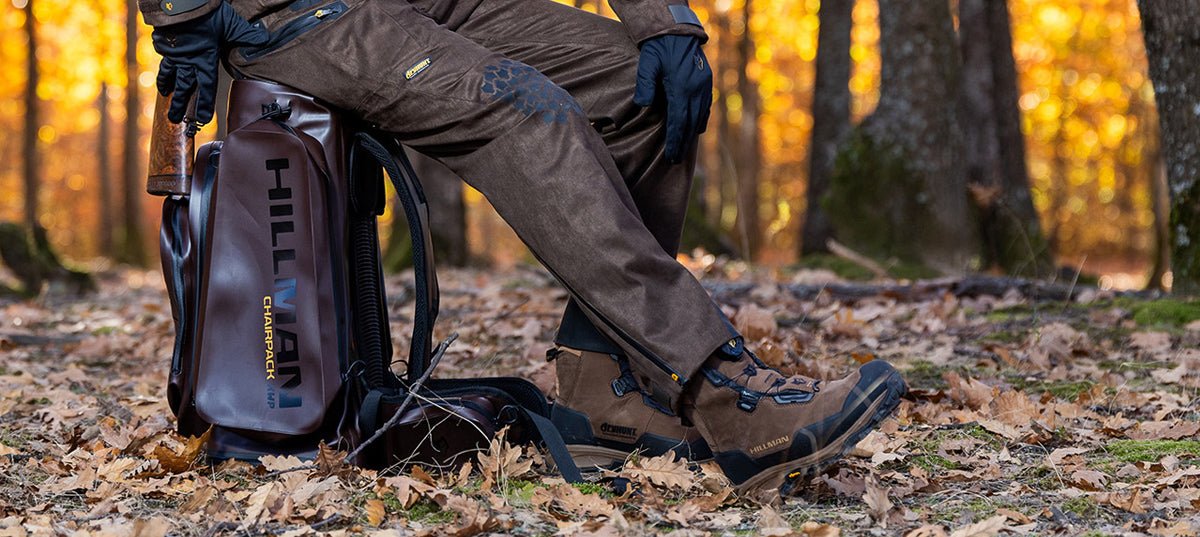
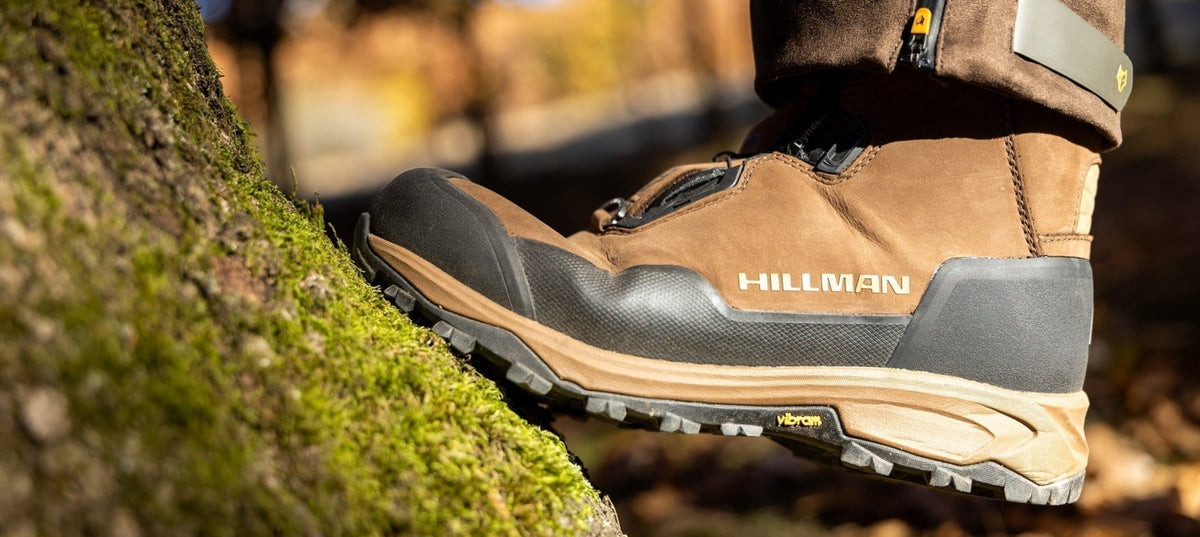
That’s where hunting boots designed for rugged terrain show their purpose. The sole is often stiffer. The upper holds shape better. The ankle support is deliberate, not restrictive, but present.

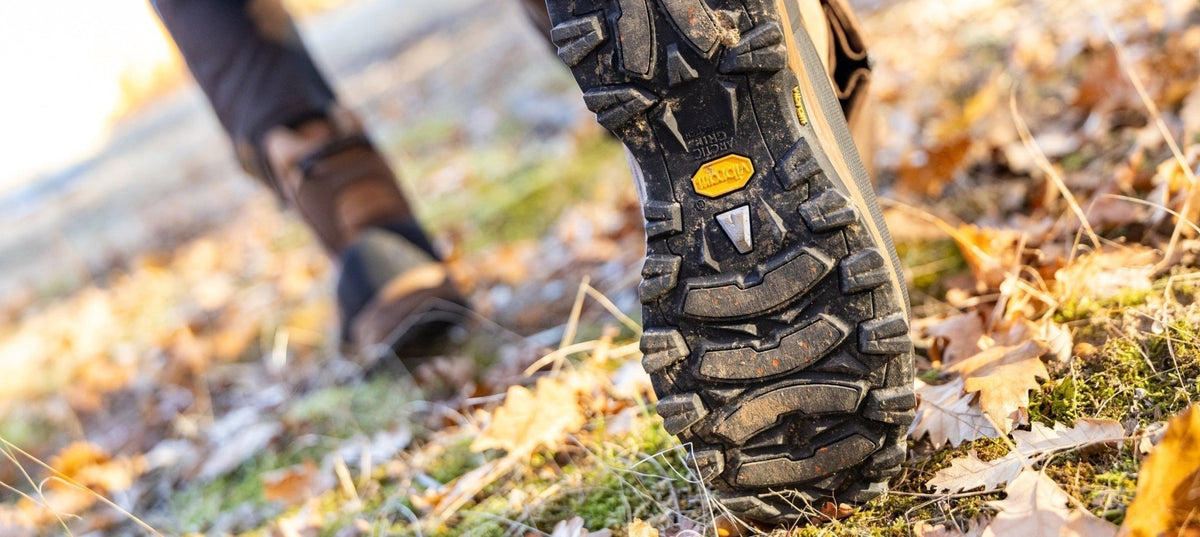
A stiff sole helps distribute pressure across steep terrain. A rugged sole grips when the ground is loose or muddy. On slippery slopes, traction becomes survival, not preference.

Hiking footwear has its place. But when the hunt goes off-trail and into treacherous terrain, the difference becomes obvious.

Insulated Boots – When Warmth Helps and When It Hurts

best hunting boots for mixed terrain: waterproof, insulated boots

Insulated boots are essential in true cold. If you’re glassing at dawn, moving slowly, or sitting for long periods, feet warm mean feet functional. But insulated boots can backfire during long hikes.

I learned that on a mountain terrain hunt where temperatures rose faster than expected. Insulation that felt reassuring at sunrise became excessive by midday. Sweat built up. Moisture stayed inside. Hot spots started forming before I noticed.

Breathable waterproof membranes help regulate that balance. Systems like Gore-Tex and Dryhunt allow vapor to escape while maintaining waterproof protection. Keeping feet dry isn’t just about rain; it’s about internal moisture too.

In wet environments, waterproof construction is non-negotiable. Wet conditions wear down morale quickly. Rubber boots provide full waterproof confidence in mud-heavy terrain, especially in deep marsh or standing water.

But rubber boots sacrifice ankle support. They are stable in flat terrain and mud, but less forgiving on steep terrain or long uneven ground.

Insulated boots are tools. So are uninsulated waterproof boots. The mistake is treating either one as universal.

Essential Features of Hard-Wearing Hunting Boots

best hunting boots for mixed terrain guide: durable boots

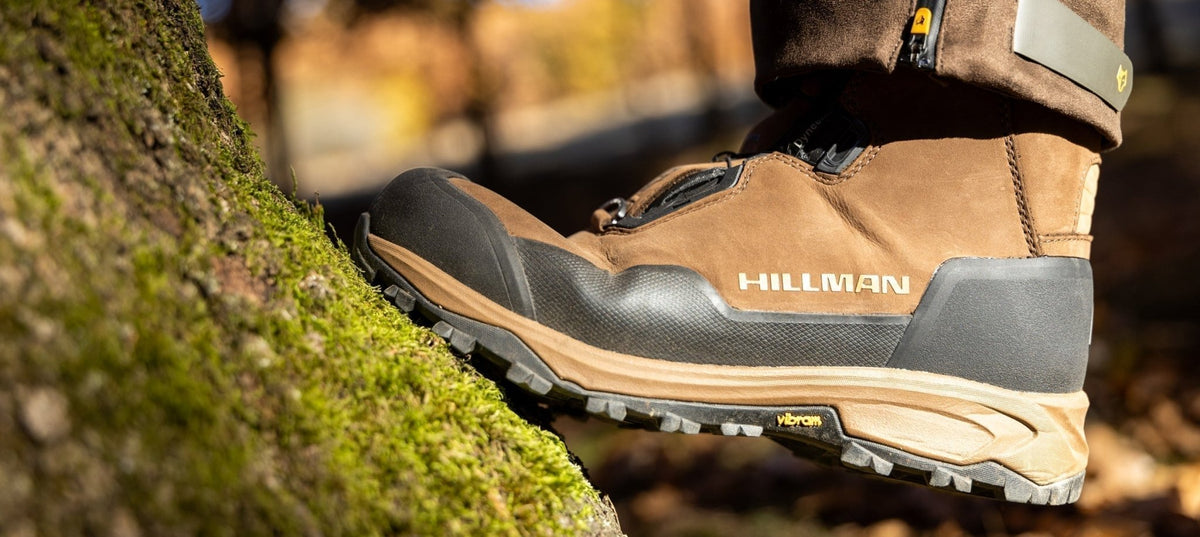
When I evaluate essential features, I start with materials. Full-grain leather remains one of the most reliable options in hunting boots. It’s tough, naturally water resistant, and adapts during the break-in period. Nubuck leather offers similar resilience with slightly more flexibility.

Various materials now combine leather with technical fabrics. Some perform well. But the foundation still matters.

A rugged sole with deep tread handles mud and wet conditions better. A stiff sole improves stability under load. Excellent ankle support reduces strain when moving across uneven terrain.

High-cut boots, especially in mountain boots, protect against lateral movement and unexpected slips. Ankle stability is subtle. You don’t notice it until you lose it.

Breathable waterproof membranes like Dryhunt are critical in mixed climate travel. They protect against rain and soaked vegetation while allowing air exchange.

Durability is not just about surviving the first season. It’s about surviving long days, repeated terrain changes, and varying weather conditions without breaking down.

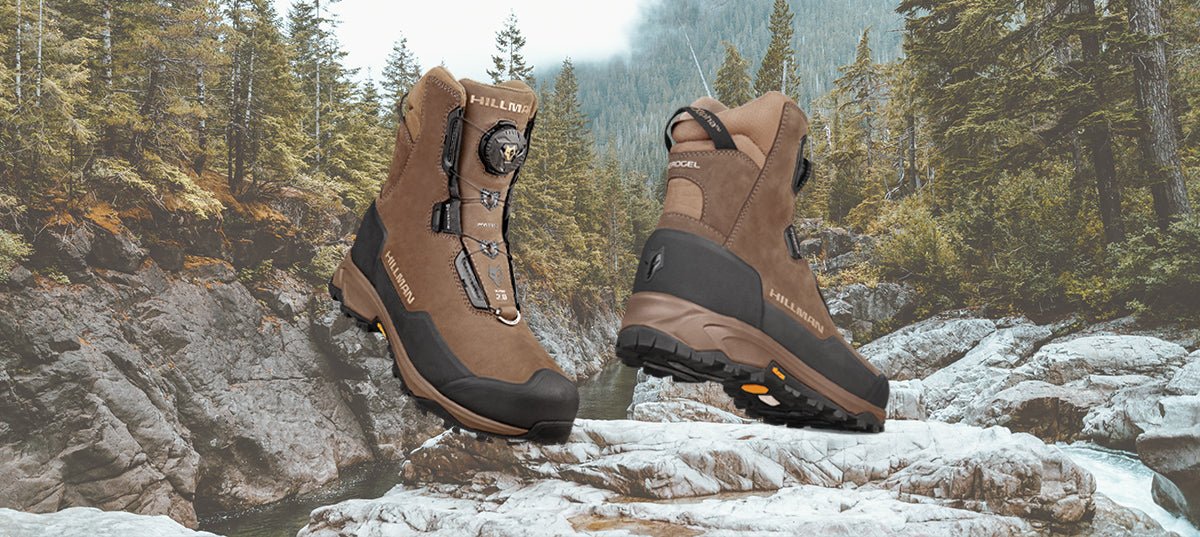
Modern hunter-travelers don’t operate in one ecosystem. Brands like Hillman understand that boots must perform across a wide range of environments. From wet forest to exposed ridge, the expectation is the same: reliability.

Break-In Period, Fit, and Avoiding Hot Spots

best hunting boots for mixed terrain guide: waterproof, insulated

Most failures don’t happen on the mountain. They happen before it. The break-in period is not optional. Even the best hunting boots need time. Leather softens. The boot flexes more naturally. Pressure redistributes.

Skipping that stage leads to hot spots. They start small. A little friction near the heel. A slight burn on the forefoot. After long days, those minor issues escalate. Fit matters more than features.

Hunters with narrower feet often need to experiment with half-size adjustments. A perfect fit prevents movement inside the boot. And internal movement causes blisters. Always test boots with the socks you plan to wear. Socks influence moisture control and internal space more than most people realize.

Experienced shooters know that feet happy on day one often stay reliable through the entire hunt. Discomfort compounds over time. Especially across uneven terrain and long hikes.

Gore-Tex, Dryhunt Waterproof Protection and Wet Conditions

best hunting boots for mixed terrain: waterproof, hiking boots

Waterproof isn't optional in mixed terrain travel. Wet grass, morning dew, shallow stream crossings: it adds up. Without waterproof construction, feet become compromised early.

Gore-Tex systems provide reliable waterproof performance while maintaining breathability. Hillman's Dryhunt membrane takes that further, using a nanoporous construction that moves moisture out considerably faster than conventional hydrophilic membranes, which matters most during hard climbs where sweat builds quickly inside the boot. That balance is critical. Full waterproof sealing without ventilation leads to trapped moisture.

A high-quality rubber outsole with aggressive tread improves grip in mud and slippery slopes. Traction is often overlooked until terrain becomes unstable.

Water resistance from treated leather adds another layer of protection. Combined with breathable waterproof membranes, it creates a dependable barrier in wet environments. The goal isn't just dry feet. It's a consistent performance across unpredictable terrain.

One Pair or Two? When Each Choice Backfires

best hunting boots for mixed terrain guide: waterproof

One pair simplifies everything. Less gear. Less weight. One comfortable boot you trust. If the boot is extremely durable, waterproof, supportive, and balanced, it can handle most terrain changes. For many international hunts, that’s enough.

But one pair struggles when drying time disappears. Consecutive wet conditions saturate interiors. Without rotation, moisture lingers. Two pairs offer recovery time. One dries while the other works. You adjust based on terrain, insulated boots for cold mornings, and lighter footwear for active movement.

The risk? Extra weight. Additional space. And if the second pair hasn’t completed its break-in period, you’ve introduced uncertainty. There isn’t a universal answer.

For me, the decision comes down to expected terrain diversity and drying opportunities. If I expect prolonged wet environments and unpredictable mountain terrain, rotation makes sense. If conditions are stable, one top-quality, hard-wearing boot is often a solid choice.

Editor’s Note – Make Your Boots Last

Boot longevity isn’t accidental. Dry boots properly after each use, but never place them near direct heat. Clean off mud and debris before it settles. Condition leather periodically to maintain flexibility and water resistance.

A well-maintained boot performs better and adapts more comfortably to your feet over time. Durable boots remain durable only if treated with care. Long days and harsh terrain test gear. Maintenance protects your investment and your mobility.

At the end of the day, hunting boots are not just footwear. They are the foundation of movement. Choose the right boot for your terrain, test it properly, and your feet will carry you further than you expect.

Markus Holm
Author

Markus Holm

Expedition Hunter / International Field Specialist

Markus Holm writes about hunts where conditions change faster than the plan. Different terrain, unfamiliar species, poor weather, long approaches, missed signals from the field, these are the situations he is interested in. His work is less about perfect conditions and more about what hunters learn when the mountain, forest or weather does not cooperate.

Related blog posts

how to break in hunting boots, best socks to break in boots: waterproof, insulated boots leather

How to Break In Hunting Boots Before a Serious Hunting Trip?

Breaking in hunting boots is not about forcing stiff leather to soften overnight. It is about learning how the boots behave before rough ground, wet weather, and long hours start exposing problems. A proper break-in gives you time to sort heel movement, pressure points, socks, and support before the hunt becomes serious.

Read more

Best Hunting Rain Gear for Hunters (2025 guide) - Hunting Boots - Winter, Waterproof Gear | Men's Hunt Clothes

Best Hunting Rain Gear for Hunters (2026 guide)

The article reviews the best hunting rain gear for 2026, tailored for the unpredictable and often extreme weather conditions across the UK and EU. It emphasizes the importance of breathable, lightweight, quiet, and durable gear for different hunting styles and terrains. Hillman’s rainwear is highlighted as a top performer, outscoring competitors in versatility and weather resistance. The piece also offers practical tips on layering, gear maintenance, and choosing the right setup for woodland stalking, hill stalking, and driven shoots.

Read more

best hunting boots for mixed terrain guide: waterproof, insulated, hiking boots

Best Hunting Boots for Mixed Terrain Trips: One Pair or Two?

For mixed terrain hunts, there’s no perfect boot - only the one that stays stable, dry, and supportive as conditions change. One pair works if it’s versatile and reliable, but two pairs help in wet environments where drying time matters. In the end, fit, break-in, and real-world performance matter more than labels or categories.

Read more

how to choose hunting boots for unknown terrain & conditions: waterproof insulated footwear with reliable grip, ankle support, socks

How to Choose Hunting Boots for Unknown Ground Conditions

Choosing hunting boots for unknown ground is about balance rather than labels or reputation. When grip, fit, waterproofing, insulation, and support work together, boots fade into the background and allow natural movement as conditions change. The right pair keeps feet dry, stable, and comfortable over long hours, even when terrain and weather refuse to behave as expected.

Read more

lightweight hunting gear for frequent travel, layering system: breathable base layers, waterproof hunting jackets, accessories

Lightweight Hunting Gear for Hunters Who Travel Frequently

This piece explains why lightweight hunting gear matters for frequent travel, stressing that excess weight drains energy, slows movement, and disrupts focus. It highlights how adaptable, breathable, and packable clothing improves comfort in changing conditions and makes travel logistics easier. Ultimately, it argues that lightweight gear becomes a long-term investment because it reduces friction, simplifies decisions, and supports better performance in the field.

Read more

best hunting jackets for extreme temperature swings: insulated cold-weather jackets, waterproof warm weather jackets

The Best Hunting Jackets for Extreme Temperature Swings

Hunting in countries with volatile temperatures demands jackets that adapt as conditions swing from cold mornings to warm middays and back again. The best modern shooting jackets balance insulation, breathability, weather protection and movement without constant adjustment. Ultimately, versatility and fit matter more than any single feature, allowing hunters to stay focused on the field rather than the forecast.

Read more

hunting gear evolution: tradition and technology, leather, wool, waterproof boots, footwear, jackets

The Evolution of Hunting Gear: From Tradition to Technology

Hunting gear has evolved from heavy wool and leather into lightweight, technical equipment that improves comfort, safety, and performance in the field. While tradition once shaped clothing as much as function, modern materials now prioritise weather protection, mobility, and efficiency. Today’s hunters balance heritage and technology, adapting to changing conditions without losing respect for the sport’s roots.

Read more

hunting gear guide for international trip: clothes, bags, boots, accessories

Hunting Gear Guide: What to Pack for a Trip Abroad

Preparing for a hunting trip abroad is about packing trusted, practical gear that keeps you comfortable, focused, and ready for unfamiliar conditions. Prioritise reliable clothing, boots, optics, and simple field essentials over unnecessary extras. Thoughtful packing protects your energy, sharpens decision-making, and lets you enjoy the experience wherever you hunt.

Read more

best leather hunting boot

Best Leather Hunting Boot: Handcrafted for the Modern Hunter

The best leather hunting boots balance comfort, durability, and protection across any terrain or climate. Hillman’s handcrafted designs combine premium leather, waterproof membranes, and superior ankle support to keep hunters steady, warm, and dry through every season. Built for endurance rather than luxury, they turn harsh ground into steady footing and long hunts into lasting comfort.

Read more

most expensive hunting boots: not needed with Hillman

Most Expensive Hunting Boots vs Smart Design: Hillman's Approach

The most expensive hunting boots often sell image over innovation, but Hillman proves performance doesn’t need a luxury price tag. Built with smart design, breathable waterproof membranes, and superior ankle support, Hillman boots deliver warmth, grip, and comfort across the toughest terrain. For real hunters, they offer premium durability and protection at a fair, honest price: where smart engineering replaces unnecessary prestige.

Read more

tactical hunting boots: quality footwear for outdoor adventures

What Are Tactical Hunting Boots? Why Do Hunters Rely on Them?

Tactical hunting boots combine military-grade toughness with the comfort and flexibility hunters need in rough terrain and unpredictable weather. Built from durable leather and nylon with waterproof, breathable membranes, they offer superior grip, support, and all-day comfort. Reliable, protective, and long-lasting, they’ve become the go-to choice for hunters, law enforcement, and outdoor professionals alike.

Read more

hunting work boots for fields and forests

Hunting Work Boots Explained: Best Gear in Field and Forest

Hunting work boots are built for endurance, warmth, and grip, combining full-grain leather, insulation, and Dryhunt membranes to keep feet dry and supported in any terrain. They balance durability with comfort, providing stability, breathability, and protection whether you’re working the land or tracking game. In the end, they’re not just boots, they’re trusted companions built to carry hunters through every season and challenge.

Read more

FAQs

Do I need insulated boots for every cold hunt?

Not always. If you’re moving a lot, climbing, covering miles, insulated boots can actually make your feet sweat. That moisture turns into cold later. If you’re sitting, glassing, or barely moving, then insulation makes sense. Match the boot to how much you’ll move, not just the temperature.

Hiking boots or hunting boots, what should I actually take?

If you’re sticking to easy ground and lighter days, hiking boots can do the job. But once you leave the trail, hit sidehills, or carry weight, they start falling short. Hunting boots give you more support and hold up better when things get rough. Simple as that.

How long should I break boots in?

Long enough that you stop thinking about them. A few short walks won’t cut it. Get some real miles in. Walk hills. Add weight. If something rubs early, it won’t magically fix itself later.

Are rubber boots worth it in muddy terrain?

For deep mud or standing water, yes, they’re hard to beat. Your feet stay dry, no questions. But once you start walking longer distances or hit uneven ground, they feel sloppy and lack support. Good for specific conditions, not everything.

What actually makes a boot last?

Good leather, solid stitching, and a sole that doesn’t give up after a few hard days. But care matters too. If you leave them wet and caked in mud every time, they won’t last no matter how good they were to start with.

Should I bring one pair or two on a trip?

If it’s likely to stay wet the whole time, two pairs help. One dries while you use the other. If conditions are steady and you trust your boots, one good pair is usually enough. Just don’t gamble on a pair you haven’t really tested.

Do expensive boots actually make a difference?

Sometimes, but not always. Price doesn’t guarantee comfort or fit. A well-fitting mid-range boot you’ve properly broken in will beat an expensive pair that doesn’t suit your feet. Fit and real use matter more than the price tag.