
How to Choose Hunting Boots for Regions with Unknown Ground Conditions

Choosing hunting boots for unknown ground isn’t about labels. Discover how grip, fit, and comfort matter when conditions change during long hunts.
Updated on 22d May 2026
I used to think choosing hunting boots was simple. You look at the weather forecast, check the terrain on the map, pick something appropriate, and move on. That logic works only as long as the ground behaves the way you expect it to. The moment it doesn’t, boots stop being just footwear and start shaping every decision you make during the hunt.
Unknown ground conditions remove certainty. I’ve stepped onto ground that looked solid from a distance, only to feel it give way under my foot. I’ve walked dry paths that turned slick within minutes. Those moments teach you quickly that the best hunting boots are not the ones with the loudest reputation, but the ones that quietly keep your feet dry, stable, and comfortable when conditions change without warning.
Why the Right Hunting Boots Make All the Difference?

Discomfort never announces itself clearly. It builds slowly. At first, it’s just a slight lack of grip on uneven ground. Then, there is a bit of pressure on the foot during long walks. After several hours, those small issues begin to dictate how fast you move and where you place your feet.
I’ve learned that hunting boots provide far more than protection. They influence posture, balance, and confidence. When the right hunting boots are doing their job, I don’t think about my feet at all. When they aren’t, every step demands attention, and that constant adjustment drains energy during long hunts.
In country pursuits and outdoor adventure alike, the difference between the right footwear and the wrong one becomes obvious long before the day is over.
How Hunting Pace Changes the Type of Boots You Need?

The pace of the hunt changes everything. I have learned that the same pair of hunting boots can feel right in one situation and completely wrong in another. A slow approach through cover, a long climb across broken ground, and a cold wait at the edge of a field all ask different things from the foot.
During stalking hunting, I want control above everything else. The boot has to move quietly, hold the ground well, and still allow the foot to roll naturally. This is where stalking boots for hunting need a very specific balance. Too stiff, and every careful step feels forced. Too soft, and the ground starts pushing back through the sole before the day is over.
For active hunting, the priorities shift. Weight, breathability, grip and ankle support become more important because the body is working harder. Heavy boots may feel protective at first, but once the pace increases, they can make the feet sweat and tire faster. That moisture becomes a problem later, especially when movement slows and the temperature drops.
Then there are the slower, colder situations. I think of this as the predator hunting grounds long wait problem. The hunter may walk in quietly, then spend a long time almost still. In that case, warmth, underfoot insulation and stable support matter more than fast flexibility. If the boots are too light, the cold comes up from the ground. If they are too bulky, the walk in becomes awkward.
That is why I no longer choose boots only by looking at the terrain. I choose them by thinking about pace. How much will I move? How long will I wait? Will I sweat early and cool down later? Good boots match the rhythm of the hunt, not just the surface underfoot.
Best Hunting Boots for Uneven and Unpredictable Terrain

Uneven terrain rarely stays the same for long. One moment I’m walking on firm ground, the next I’m dealing with slippery or uneven surfaces, loose stone, or rough terrain that forces me to slow down.
I’ve made the mistake of choosing boots that were too stiff, thinking more structure meant more safety. They felt reassuring at first, but over long distances, they fought my natural movement. I’ve also gone too light, only to realize that flexibility without necessary grip becomes a problem when the ground turns unpredictable.
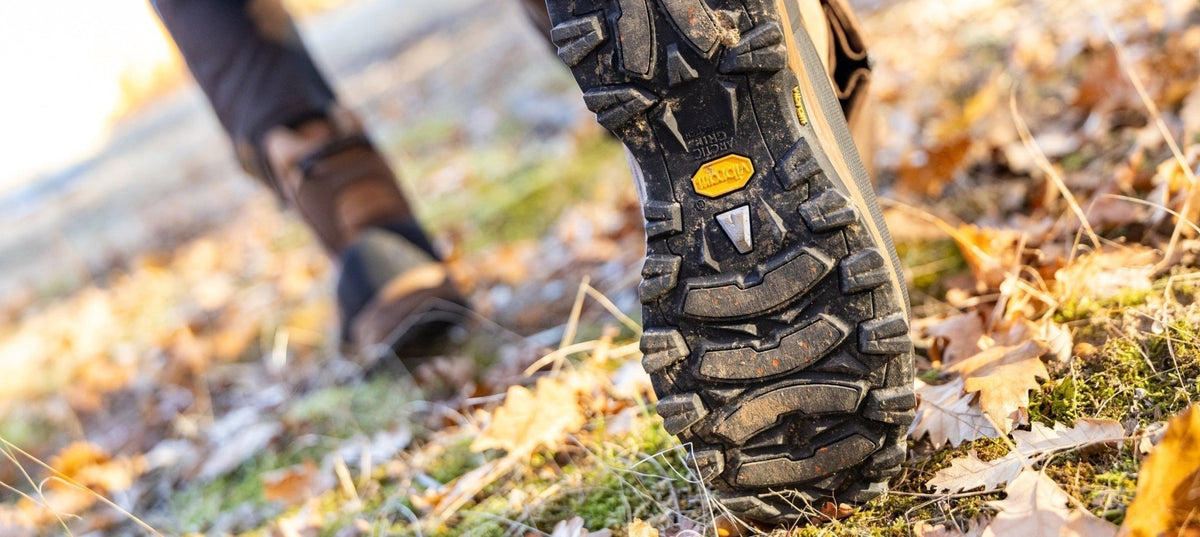
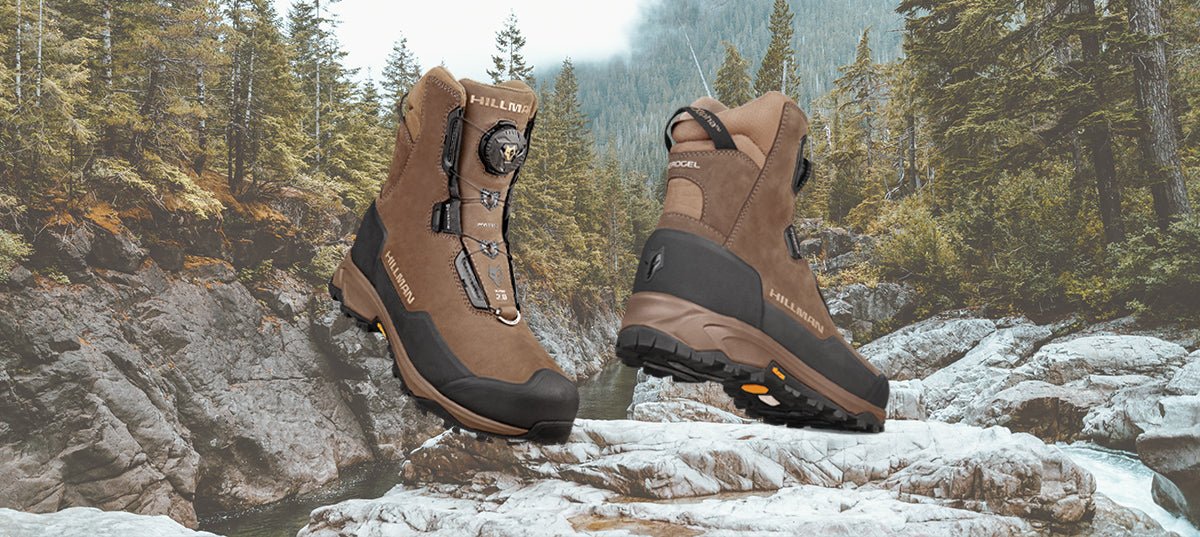
What works best is balance. Sole grip that holds on uneven terrain, combined with enough flexibility to move naturally. The best hunting boots for this kind of ground don’t require constant correction. They adapt quietly as conditions change.
Keeping Your Feet Dry in Wet Conditions
Wet conditions expose weak footwear fast. Once moisture gets inside, everything changes. Feet cool down, friction increases, and comfort disappears far quicker than expected.
I now pay close attention to waterproof boots, sealed seams, and breathable waterproof membranes. Waterproofing alone isn’t enough. If boots don’t breathe, feet stay damp from sweat even when no water enters from outside. That moisture becomes a problem during long hours, especially when temperatures drop later in the day.
Keeping my feet dry has proven to be one of the most important factors in staying comfortable and focused during long hunts.
Keeping Your Feet Warm in Cold Weather

Cold weather demands a different approach. During winter hunting or long periods of reduced movement, insulated boots make all the difference. Without enough insulation, feet lose warmth quickly through contact with cold ground.
I’ve also learned that too much insulation during active hunting causes its own problems. Overheating leads to sweat, and once movement slows, feet cool rapidly. The goal isn’t maximum warmth, but the right level of insulation for the pace of the hunt.
When insulation is chosen correctly, my feet stay warm without becoming clammy, even after long periods outdoors.
Ankle Support and Foot Support on Uneven Ground

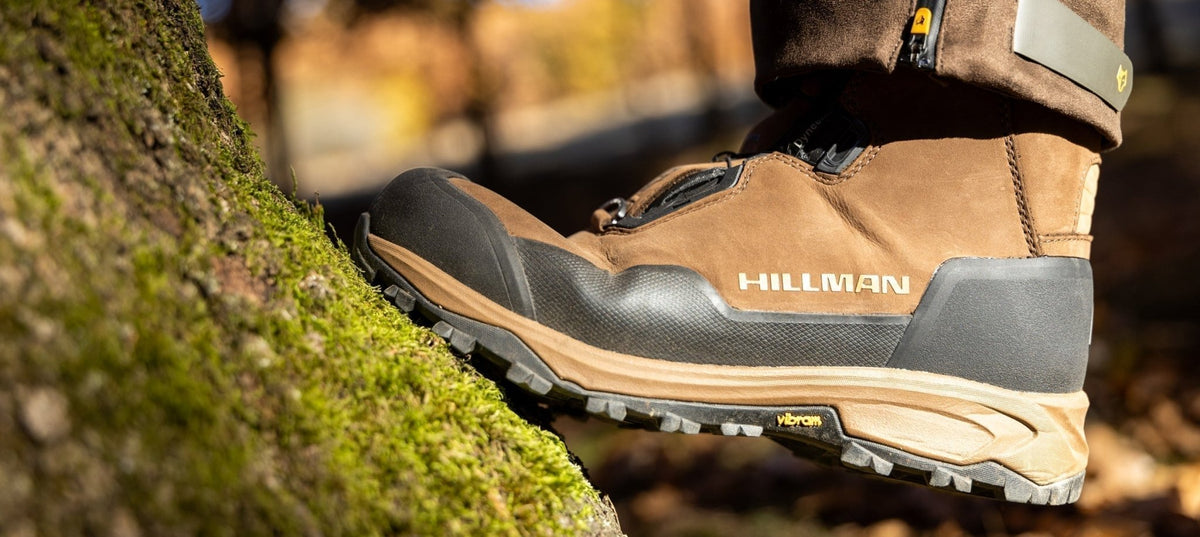
Ankle support becomes noticeable the moment it’s missing. On uneven ground, especially when tired, the lack of support shows up fast. High-cut boots with excellent ankle support have saved me more than once when footing suddenly shifted.
At the same time, I’ve found that lower, ankle-high boots offer better mobility and less weight for lighter terrain and long walks. Neither option is perfect in every situation. The right choice depends on how unpredictable the ground is likely to be.
Proper foot support and ankle support working together reduce fatigue and help maintain confidence when the terrain refuses to cooperate.
Essential Features to Look for in Hunting Boots

Durability isn’t something you appreciate on the first outing. It reveals itself after repeated use. Hard-wearing materials, especially quality leather, hold their shape over time and cope better with rough terrain and changing weather.
A good soul matters more than I once thought. Cushioning reduces strain during long distances, while a reliable grip keeps movement controlled on uneven surfaces. These essential features rarely look impressive in a shop, but they decide how boots perform after several hours on the ground.
Best Shooting Boots for Country Pursuits and Long Days Outdoors
Shooting boots for country pursuits often stay on longer than planned. Long days turn into longer hours, and comfort becomes non-negotiable.
I’ve found that the best shooting boots balance structure with flexibility. Lightweight designs reduce fatigue, while enough support keeps footing reliable when movement slows and attention shifts elsewhere. On long days outdoors, small comfort issues quickly become large ones.
Fit, Socks, and Long Walk Comfort

Even the best boots fail without proper fit. Feet swell throughout the day, especially during long walks. I always try boots later in the day with the socks I plan to wear, usually thick socks in cold weather.
A perfect fit feels secure without pressure. There needs to be room for natural movement, particularly on descents. The perfect pair isn’t defined by how it feels in the first few minutes, but by how my feet feel after long periods of wear.
 Caring for Your Hunting Boots to Extend Durability
Good boots last longer when treated properly. I knock the mud off after every trip and let them dry naturally, never near direct heat. Leather boots get regular treatment to maintain water resistance and flexibility.
With basic care, quality footwear can last several seasons, even when used across demanding terrain.
How Breaking In New Boots Affects Performance on Unfamiliar Ground?
New boots can feel reliable in the shop and still surprise you badly on unfamiliar ground. That is why breaking in new boots is not a small detail. It is part of preparation.
The first few walks tell you things no product description can. You learn how the heel holds on an incline, whether the toe box gives enough room on a descent, whether the ankle collar rubs, and how the sole grips when the ground is wet or uneven. These small signs matter. On unknown terrain, a minor pressure point can become a serious distraction after several hours.
For anyone wondering how to break in boots, I would not overcomplicate it. Start before the real hunt. Wear the same socks you plan to use in the field. Walk short distances first, then build up gradually. Test the boots on different surfaces, not only flat roads. Grass, mud, slopes, stone and woodland paths all reveal something different.
I never trust brand-new hunting boots on a long day anymore. Breaking in boots gives the leather, fabric, sole and foot time to understand each other. More importantly, it gives the hunter confidence. Once I know where the boot flexes, how it grips, and whether it stays comfortable after real movement, I can stop thinking about my feet.
Unfamiliar ground already brings enough uncertainty. The boots should not add more.
Common Mistakes When Choosing Footwear for Unknown Terrain

The first mistake is buying hunting footwear for the forecast rather than for the uncertainty underneath it. A map can show a contour. It does not show the patch of slick clay under leaf cover, the wet ditch hidden in grass, or the stretch of loose stone that starts halfway through the day. Boots chosen for one neat idea of the ground often feel wrong the moment the ground stops cooperating.
Another common mistake is mistaking stiffness for reliability. Some boots feel impressive in their hands and reassured on a shop floor, but after several hours, they stop helping and start fighting back. That is where durable footwear gets misunderstood. Durability matters, of course, but so does movement. A boot can be tough and still be wrong for the way the day unfolds. If it makes you place every step too carefully, it is costing you more than it gives back.
People also overestimate specialist boots and underestimate balance. On unknown terrain, versatile boots usually make more sense than something built for one narrow set of conditions. Ground changes. Pace changes. Weather shifts. What feels dry in the morning can turn wet and greasy by noon. What looked flat can end up chewing at your ankles by the last mile. Boots that handle those changes quietly are usually the ones you trust most by the end of the day.
And then there is wet ground, which catches people out repeatedly. Not every hunter needs full safety boots for wet conditions, but plenty makes the mistake of treating wet footing like a minor detail. It never is. Mud, soaked grass, soft banks, standing water around gateways, all of it changes how your feet work and how tired you get. Once the boots lose grip or start letting dampness in, the whole hunt narrows down to one thing: getting through the next hour without thinking about your feet. That is usually when you realise the choice was wrong.
Choosing the Right Footwear for Your Terrain

I no longer believe there is a single “perfect hunting boots” solution. The right footwear depends on the terrain, the weather, and the pace of the hunt.
When boots provide grip, support, warmth, and comfort without drawing attention to themselves, movement becomes natural again. At that point, I stop thinking about my feet entirely, and that’s usually the clearest sign that I chose right.



Share: