
Packable vs All-Day Hunting Rain Gear for Mountains and Wet Forests

Rain does not test hunting clothing in one fixed way. A steep approach in unsettled weather produces heat and sweat. Hours in soaked woodland expose a shell to wet branches, abrasive cover, mud and pressure at the knees and shoulders.
Packable hunting rain gear and an all-day waterproof system describe two patterns of use, not formal performance classes. Pack size and weight alone do not determine protection or durability. The choice rests on exposure time, physical output, and contact with wet vegetation or ground.
Packable Rain Jacket or All-Day Waterproof System?

A packable rain jacket suits intermittent showers and hunts where the shell may spend much of the day in a pack. An all-day system suits prolonged rain, exposed ground and routes with few opportunities to change. It need not be thick or insulated; it must regulate heat and withstand the expected contact with cover.
| Hunting condition | Packable rain gear | All-day waterproof system |
|---|---|---|
| Short, uncertain showers | Easy to carry and quick to deploy | More protection than the forecast may require |
| Long climb | Low bulk helps; ventilation still matters | Must release heat without frequent removal |
| Prolonged heavy rain | Performance depends on the whole construction | Better choice when designed for continuous exposure |
| Wet brush and high grass | Face fabric and reinforcements need close inspection | Full lower-body coverage becomes more useful |
| Long stationary wait | Requires insulating layers underneath | Gives continuous weather cover but does not replace insulation |
Packable does not mean disposable, and all-day does not mean warm. The distinction is short-term deployment versus continuous wear.
Is Water-Resistant Hunting Clothing the Same as Waterproof Gear?

Water-resistant clothing can shed drizzle or a short shower, but it is not built for the same exposure as waterproof hunting gear. A waterproof shell normally combines a barrier such as a membrane with sealed seams and protected openings. Construction matters because rain can enter through stitching, pocket zips, cuffs, the front closure, or the hood even when the main fabric resists water.
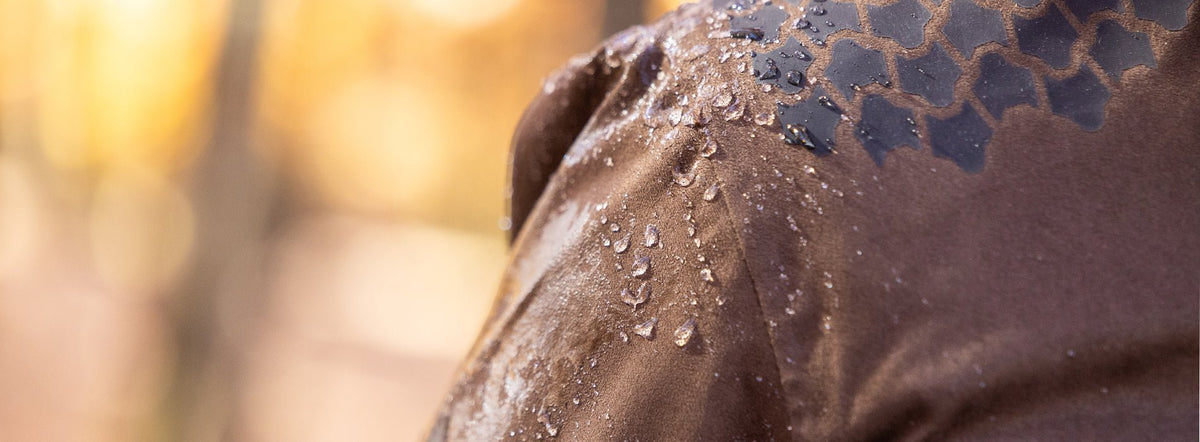
A durable water-repellent finish, usually shortened to DWR, works on the face fabric. It makes water bead and roll away, which delays surface saturation. DWR is not a substitute for a waterproof membrane or sealed seams. If the outer fabric begins to “wet out”, the jacket may feel heavier and colder, and moisture vapour may move out more slowly even though the membrane has not started leaking.
What Do Waterproof and Breathability Ratings Tell You?
Hydrostatic head measures the water pressure a fabric can resist before water passes through it. A 10,000 mm rating can be suitable for moderate rain, but it cannot predict the performance of an entire jacket. Long exposure also tests seam sealing, zips, cuffs, hood shape, fabric wear and pressure from shoulder straps, kneeling or sitting.
MVTR, or moisture vapour transmission rate, reports how much water vapour passes through a material during a stated test period. Figures obtained by different methods are not always directly comparable. No breathable membrane eliminates sweat during a hard climb; the body can produce moisture faster than the fabric moves it out. Pit zips release heat more quickly while the jacket remains on.
The best hunting rain gear is judged as a complete garment. Membrane data, DWR, taped seams, closures, hood control, ventilation, face fabric and fit all affect what happens outside the laboratory.
Does Waterproof Hunting Gear Restrict Movement?

Waterproof protection does not have to restrict shooting or climbing. Tight shoulders, a narrow upper back, stiff fabric and straight-cut sleeves cause more trouble than garment weight alone.
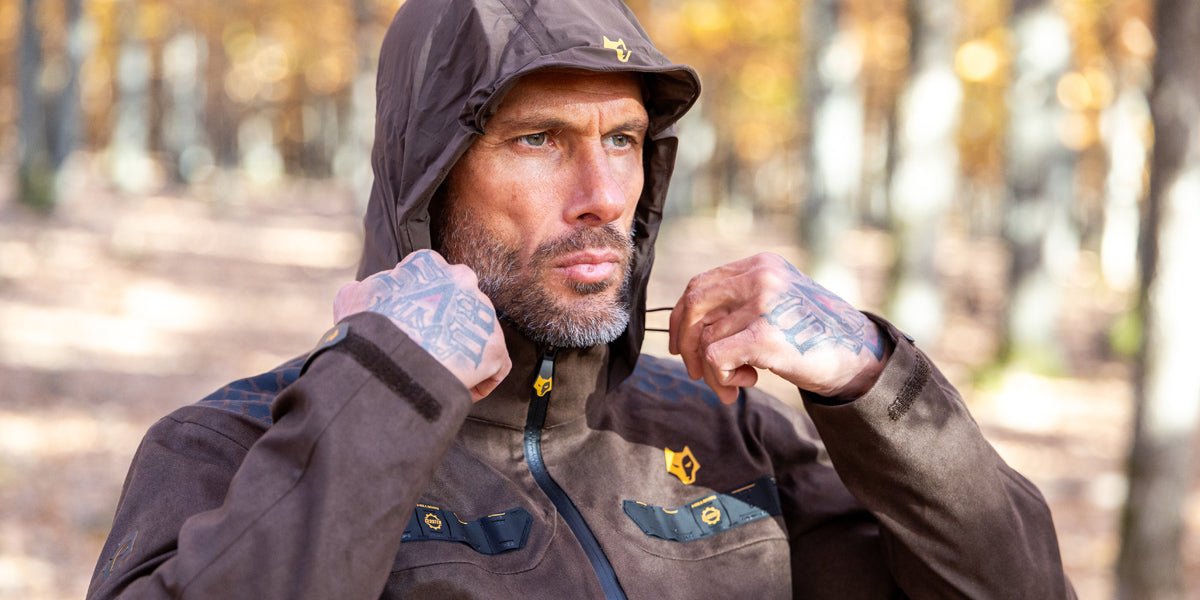
Mount the firearm, crouch, kneel and take a high step while checking the fit. The hem should cover the lower back, the sleeves should protect the wrists and the trousers should not pull across the knees or seat. Gusseted underarms, articulated joints and a hood that turns with the head support natural movement.
The shell also needs room for the planned base and mid layers. A tight fit can compress insulation and restrict the mount; excess fabric can catch on scrub and add noise.
How Rain Gear Requirements Change Across Terrain

Terrain determines which part of a rain system is tested hardest. Dense woodland exposes the fabric to repeated contact with wet branches and brush, while open ridges bring stronger wind, rapid weather changes and heavier physical effort. Alpine climbs combine these pressures in one demanding setting.
Best Rain Gear for Alpine Climbs and Sideways Rain
An exposed Alpine climb demands low weight, wind protection and heat control. The shell may stay packed through a dry approach, then go on when rain moves across the ridge. Wind-driven rain tests the hood, cuffs and the overlap between jacket and trousers. Open vents early, keep insulation light while moving and carry a dry mid layer for the colder period above.
Waterproof Hunting Gear for Balkan Ridges and Changeable Weather
A Balkan route may cross a warm slope, cold gully, scrub, beech woodland and open rock in one day. Heavy rain can be followed by a sheltered climb that turns a closed shell into a heat trap. Look for adjustable ventilation, a clean shooting mount, clear vision from the hood and articulated trousers that tolerate repeated contact with scrub.
Hunting Rain Gear for Wet Woods and Rough Shooting
In wet woods, rain keeps working after it stops. Soaked branches hold water against the upper body, grass wipes the legs on every step, and kneeling adds pressure at the knees. This sustained contact and abrasion can challenge clothing more severely than a short vertical shower. Quiet face fabric and rain pants matter more here than saving a few grams.
Why Can a Waterproof Jacket Feel Wet Inside?

Condensation inside a jacket does not automatically mean that the waterproof membrane is leaking. Dew point is the temperature at which water vapour begins to condense. Warm, humid air from the body can reach the colder inner surface of the shell and form liquid moisture there.
The location of the dampness offers a clue. Moisture spread across the back, chest or underarms after exertion often points to sweat and condensation. A repeatable patch beside one seam, zip or worn area deserves a closer inspection for damage.
Vent sooner, reduce insulation during hard movement, and clean the garment according to its care instructions. Restore the DWR when the manufacturer recommends it and water no longer beads on the surface. These steps reduce wetting and condensation; they cannot repair a damaged membrane or unsealed seam.
How Base and Mid Layers Work with a Waterproof Shell

A moisture-wicking base layer moves sweat away from the skin. Merino wool is often chosen for temperature and odour control, while synthetic materials may dry faster after hard exertion. A mid layer holds warm air and should match the stationary part of the hunt without adding needless bulk on the approach.
Base layer, mid layer and breathable shell work as one system. The shell blocks rain and wind while allowing some vapour to escape. Damp cotton, excessive fleece or a tight outer layer can leave a hunter cold even when rain has not penetrated the garment.
Do You Need Rain Pants as Well as a Rain Jacket?

A rain jacket may be enough for a brief summer shower on open ground. Wet brush, high grass, mud and long walking usually require lower-body protection as well. The contact lasts longer than the rainfall and concentrates water against the thighs, knees and lower legs.
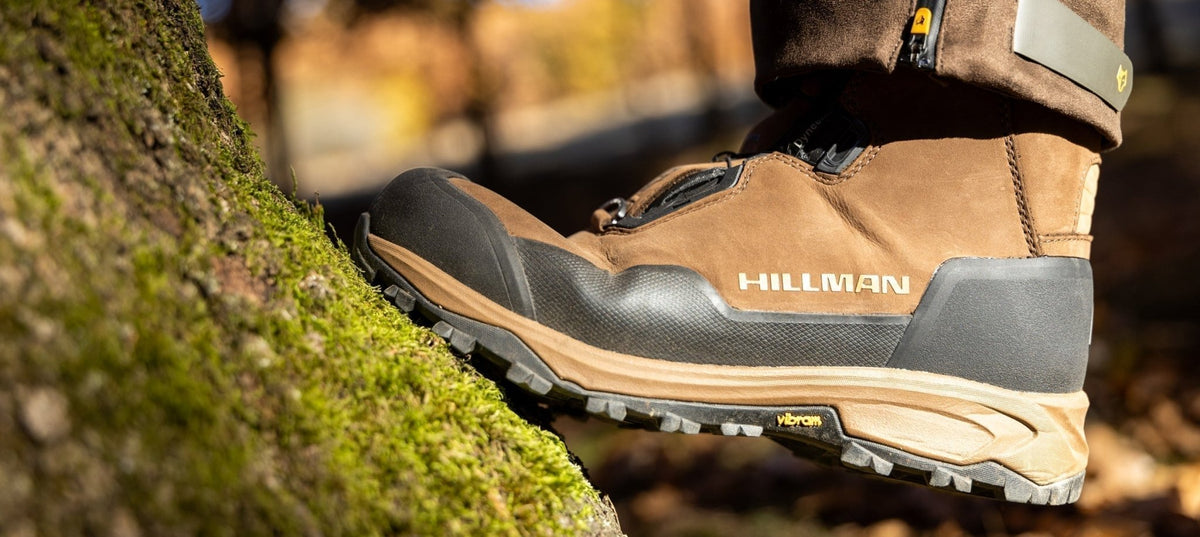
Full-length side zips allow rain pants to go on over boots without removing footwear. They can also release heat during movement. Check the overlap between the jacket hem and trouser waist while bending or sitting, then close the lower leg around the boot so water runs outside rather than into it.
Frequent kneeling raises the value of reinforced knees and secure adjustment. Dense woodland raises the value of a quiet, abrasion-resistant face fabric. Weight alone does not reveal durability; the outer material, seam construction and reinforcement at high-wear areas provide better evidence.
Best Hunting Rain Gear for Long Walks, Long Sits and Late Season
Long walks favour low weight, breathability, pit zips and unrestricted movement. Long sits shift the priority towards wind protection, full coverage and enough room for fleece or another insulating layer. Late-season hunting often needs both: ventilation on the approach and added insulation before the hunter becomes stationary.
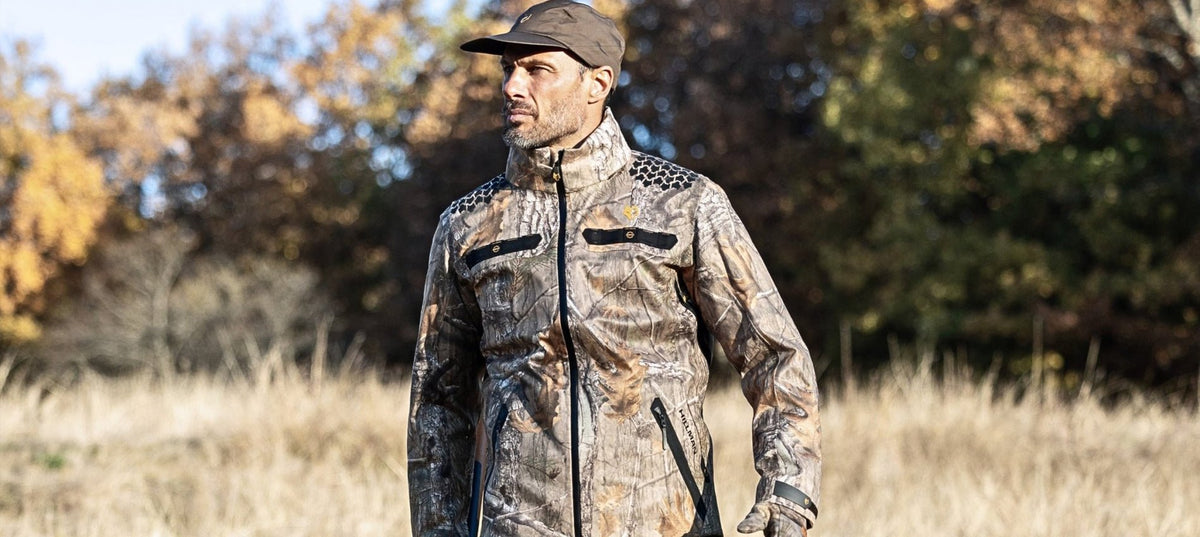
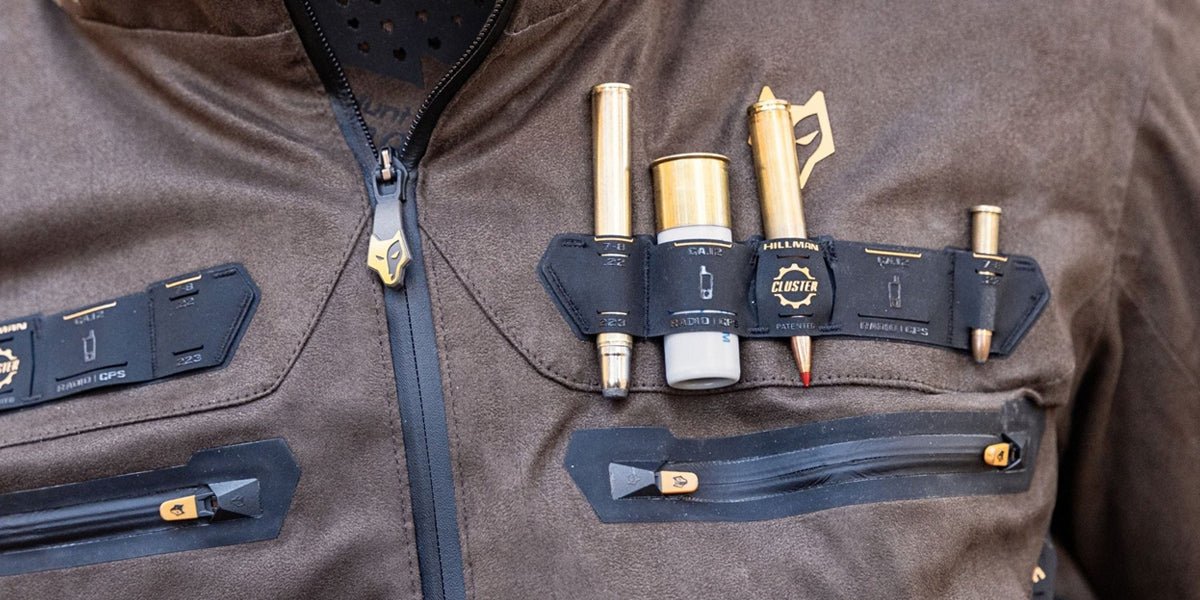
Hillman’s AlphaShell 5WL hunting rain jacket shows how a packable shell can be built for more than a passing shower. Hillman lists a Dryhunt® nanomembrane with an 11,000 mm hydrostatic head and an MVTR of 32,000 g/m²/24 h. These are manufacturer-published fabric specifications, not a guarantee based on numbers alone. The jacket also uses fully taped seams, C0 DWR and YKK® AquaGuard™ zips, with pit zips, gusseted underarms and articulated elbows for heat control and movement. It weighs about 690 g and packs into its own pocket.
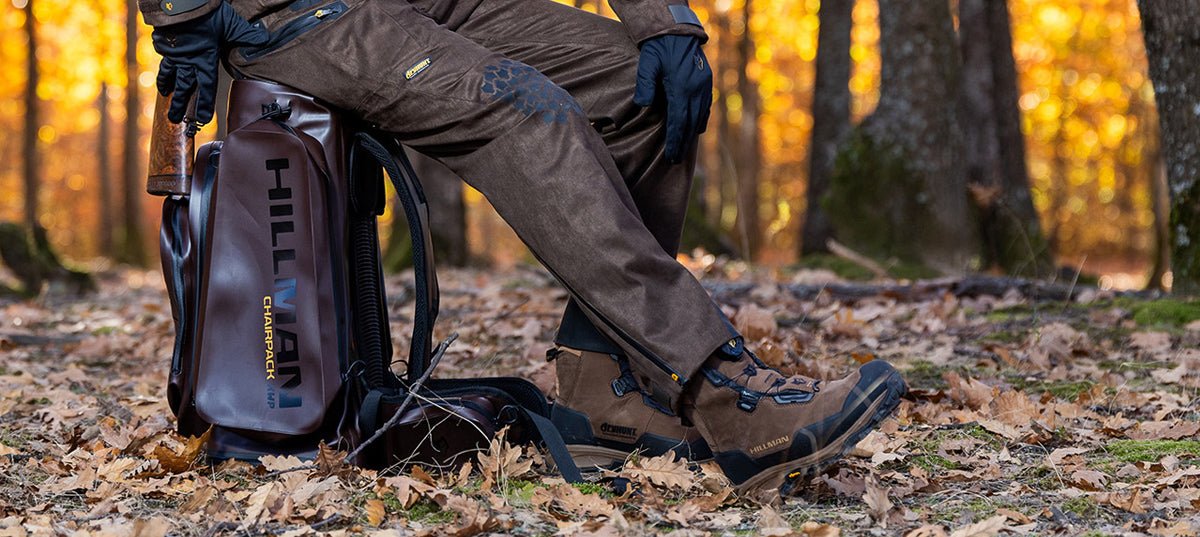
The matching AlphaShell 5WL waterproof pants weigh about 590 g. Fully taped seams, full-length side zips, articulated knees and lower-leg adjustment support quick changes and wet-brush coverage. These details explain the intended use more clearly than the word “lightweight” on its own.
How to Match Hunting Rain Gear to the Hunt

Select rainwear for the hardest expected exposure, then check whether it remains manageable through the easier parts. A mountain climb points towards a light, vented shell. Hours in wet forest call for leg coverage, quiet fabric and abrasion resistance. A cold sit needs space for insulation.
Judge the whole garment: membrane, seams, zips, hood, cuffs, ventilation, face fabric and fit. The best waterproof hunting gear is selected by exposure, activity and terrain rather than one rating in isolation.

Share: