
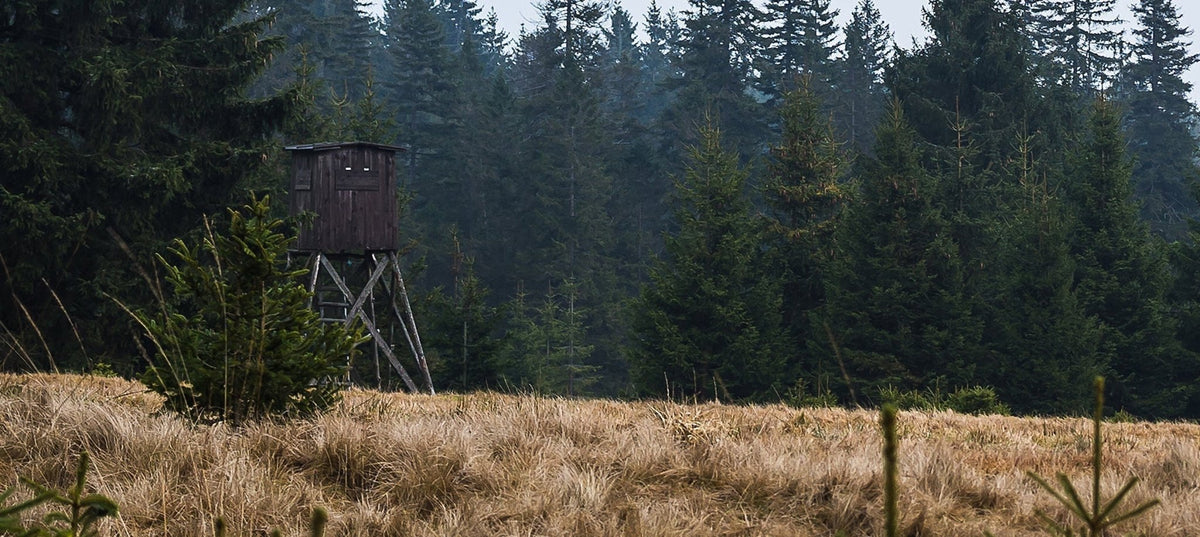
From Central European Forests to Open Balkan Hills: How Terrain Changes Your Gear

I have learned to read terrain before I trust the sky. A forecast can tell me whether the morning will bring rain, cold weather, wind or a dry spell after sunrise, but it cannot tell me how my body will move through wet beech leaves, how much heat I will build on a Balkan climb, how quietly I need to pass through thick cover, or how long I will stand with cold ground under my boots before a deer finally steps into view.
That is why hunting gear should never be chosen by temperature alone. The same jacket that feels right in a wet Central European forest can become too heavy on an open ridge. The same light layer that works during a long climb can feel underpowered during long waits in freezing conditions. Terrain decides where you sweat, where you lose warmth, where mud pulls at your feet, where stone punishes your ankles, and where wind finds every weak point in your clothing.
This is not only a story about a hunting jacket. It is about the full system: base layers, mid layer, waterproof jackets, hunting boots, waterproof boots, trousers, gloves, pack, shooting clothing, and accessories. I am writing from the perspective of the field, for deer hunters, bird hunters, mountain hunters, stalkers, shooters, UK and European hunters, and anyone who moves between wet woodland, muddy banks, heavy cover, open hills, uneven ground, rain, wind, warmer months, and winter cold. The difference matters because gear performs differently when the ground changes.
Why should hunting gear follow terrain before weather?

A hunter often begins with the obvious question: Will it rain, will it be cold, will the wind pick up by midday? These questions matter, but they are only the surface. The deeper question is what the terrain will force the body to do.
In the forest, movement is usually short, careful, and close. You push through wet branches, cross muddy banks, kneel under dripping cover, and stalk through leaves that make noise even when you place your foot well. In that environment, waterproof hunting gear has to do more than keep out rain. It must handle contact moisture from grass, bark, and brush, while remaining quiet enough to protect the moment before the shot.
The Open Balkan hills ask for another kind of discipline. The hunter climbs more, sees farther, and meets wind earlier. The ground is often broken, exposed, and uneven, with dry grass, stone, sudden shade, and quick shifts in temperatures. Here, breathability, grip, shoulder freedom, and the ability to block wind become part of performance. Heavy does not always mean better. Warmest does not always mean smartest. The best kit is the one that matches how the terrain makes you move, wait, sweat, hide, and shoot.
Central European forests: thick cover, muddy banks and quiet movement

In a Central European forest before sunrise, everything feels closer than it looks on a map. The visibility is short, the sound travels strangely, and the ground is rarely clean. Wet leaves hold water. Mud builds around roots. A thin branch can scrape across a sleeve at the worst possible moment. Heavy cover may hide the hunter, but it also tests every fabric, seam, and zipper.
This is where quite waterproof protection matters. A forest jacket should not crackle against brush or shine when damp. Trousers need enough strength to handle kneeling, crossing fallen timber, and moving through thick cover without restricting the legs. Gloves should protect warmth and touch at the same time, because a rifle, cartridge belt, or silent ammunition pouch is only useful if the hand can work without noise.
Moisture control is the hidden problem. A hunter can get wet in a forest without a single drop of rain falling from the sky. Wet grass brushes the knees, branches drip onto shoulders, and muddy banks soak weak boots from below. In these real conditions, the clothing system needs to wick moisture from the skin, hold warmth during stillness, and stay breathable enough that slow stalking does not turn into a damp, cold wait.
Open Balkan hills: wind, stone, sun and uneven ground
The open Balkan hill teaches a different lesson. After the first climb, the body is warmer than the air. After the first stop, the wind finds the sweat. A hunter who dressed only for the morning cold can start overheating on the slope and then chill quickly once he reaches a ridge, glassing point, or shooting position.
This is where mountain hunting clothing earns its place. Open country needs mobility, breathability, and weather resistance in the same system. Stone and uneven ground punish weak boots. Wind cuts through poor layers. Sun exposure can make a cold day feel warm during movement, then the same hill can feel bitter the moment the hunter stops. I want clothing that lets me stay cool while climbing, blocks the wind when waiting, and moves naturally when the rifle comes to the shoulder.
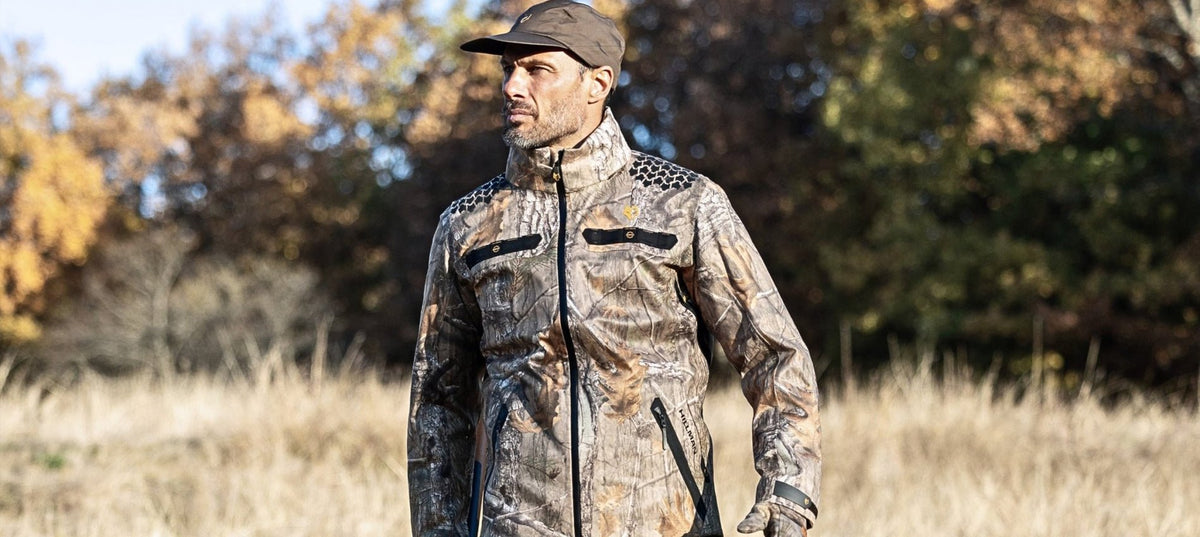
The open hill also changes concealment. In the forest, the hunter hides behind cover. On exposed slopes, the body shape, movement, and timing matter more. Camouflage helps, but silent movement and controlled layering often matter more than pattern alone. If the gear pulls, rustles, or traps too much heat, focus starts to go before the opportunity arrives.
How does a hunting jacket change between forest and hill country?

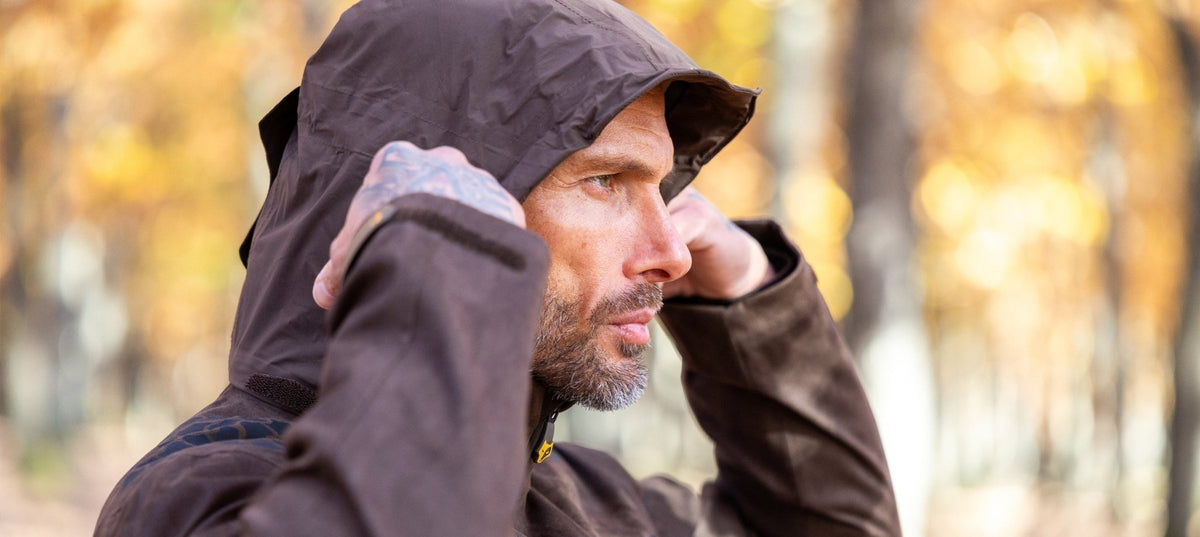
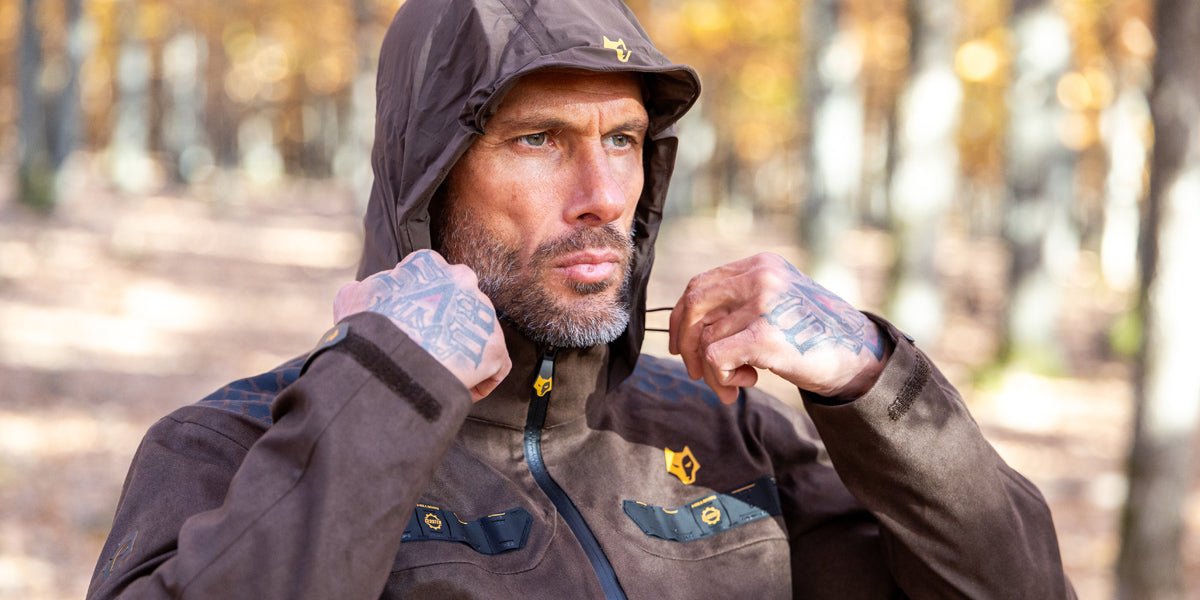
A hunting jacket for forest work should be quiet, protective, and resistant to contact moisture. I look for a soft exterior, waterproof protection, reinforced construction, and enough breathability to handle slow stalking. The shoulders matter because lifting a rifle through cover should feel natural, not like fighting the jacket. Anatomical tailoring helps here, especially when the hunter is kneeling, turning, or moving through close vegetation.
On open hills, I look at the same jacket differently. Weight, wind resistance, and mobility become more important. A shell with a breathable membrane, taped seams, and a stable 3-layer construction can make sense when rain and wind are part of the day, but it must not become a walking sauna on the climb. Good waterproof jackets are not only about staying dry. They are about staying useful after the hunter has worked hard to reach the place where the hunt begins.
For men's hunting gear, this difference is easy to underestimate. A jacket can fit well in a shop and still fail in the field if it binds across the shoulders, rides up under a pack, or holds sweat during a steep approach. The terrain reveals these things quickly.
Waterproof jackets and hunting rain gear in wet woodland

Rain gear is often treated as something to pack only when the forecast looks bad. In wet woodland, I think of it differently. Forest rain often comes sideways from the branches after the actual rain has stopped. A hunter can brush against wet hazel, crawl under beech limbs, and sit against damp bark for hours. By midday, the sky may be clear, and the clothing may still be under pressure.
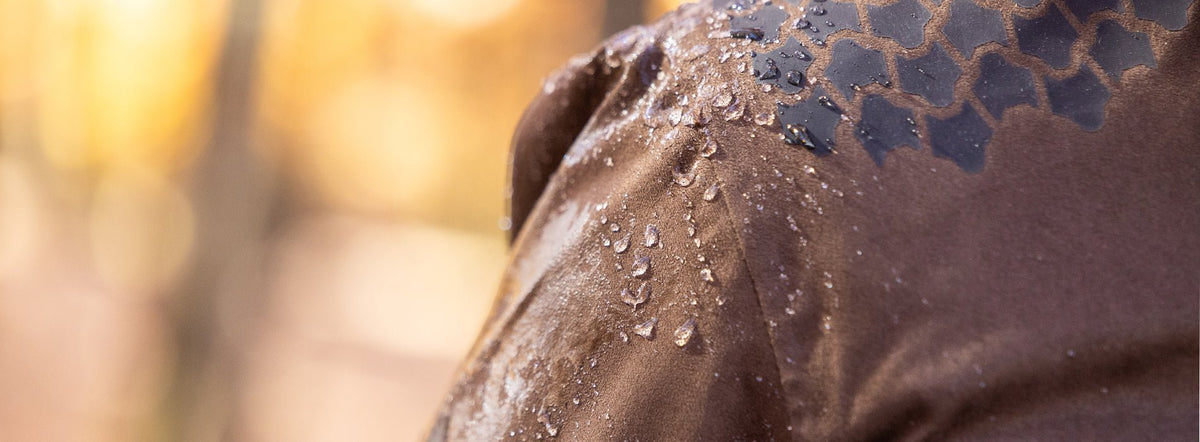
That is why hunting rain gear needs to be quiet, breathable, and fully waterproof where it counts. A waterproof jacket should protect the shoulders, chest, and arms without turning every movement into noise. Waterproof trousers should handle kneeling and wet vegetation without becoming stiff. Breathable rain gear also matters because woodland is rarely at a constant pace. You move, stop, listen, move again, and wait longer than expected.
On an open slope, the same rain gear faces another problem. Climbing under a waterproof shell can quickly lead to overheating, so ventilation and moisture management become as important as rain protection. The goal is not to feel sealed inside the clothing. The goal is to stay dry enough, cool enough, and ready enough to keep the hunting experience under control.
Base layers that help hunters stay warm, stay cool and wick moisture
The base layer is where comfort is either protected or lost. I prefer to think of it as the layer that decides what happens to sweat before the weather has a chance to punish it. Merino wool is useful in this role because it regulates body temperature, wicks moisture away from the skin, feels soft and quiet, and resists odor during long days in the great outdoors.
In a cold forest, base layers help a hunter stay warm through slow movement and long waits. In the hill country, they help the body stay cool during a climb and reduce the chill that comes when sweat sits against the skin. The same principle works in warmer months, where a light t-shirt under the right layers may be enough during active movement, provided the fabric can wick moisture and prevent overheating.
This is where summer hunting gear should not be misunderstood as simply thinner clothing. It is clothing that manages heat, moisture, and movement without exposing the hunter to wind, sun, or rough terrain. Staying cool is part of performance, just as staying warm is part of endurance.
The mid layer: warmth without bulk in real conditions

The mid-layer is the quiet worker in the system. It should add warmth without bulk, move well under a jacket, and pack down when temperatures rise. In real conditions, I want a mid-layer that can be worn during a cold glassing session, removed during a climb, and pulled back on before the body cools too far.
Modern ultralight insulation can provide warmth without making the hunter feel wrapped in weight. This matters in forest and hill country, but for different reasons. In woodland, bulk catches on branches and restricts the rifle. On open hills, extra weight becomes more obvious with every step. A useful mid-layer keeps the core warm while allowing the arms and shoulders to work naturally.
This is where warm hunting gear should be judged by balance, not thickness. Warmth is valuable only when it does not cost mobility, breathability, or silence. A good mid-layer earns its place in the pack because it solves a precise problem at the right moment, rather than trying to be the whole system by itself.
Hunting boots and waterproof boots: where terrain punishes weak gear first
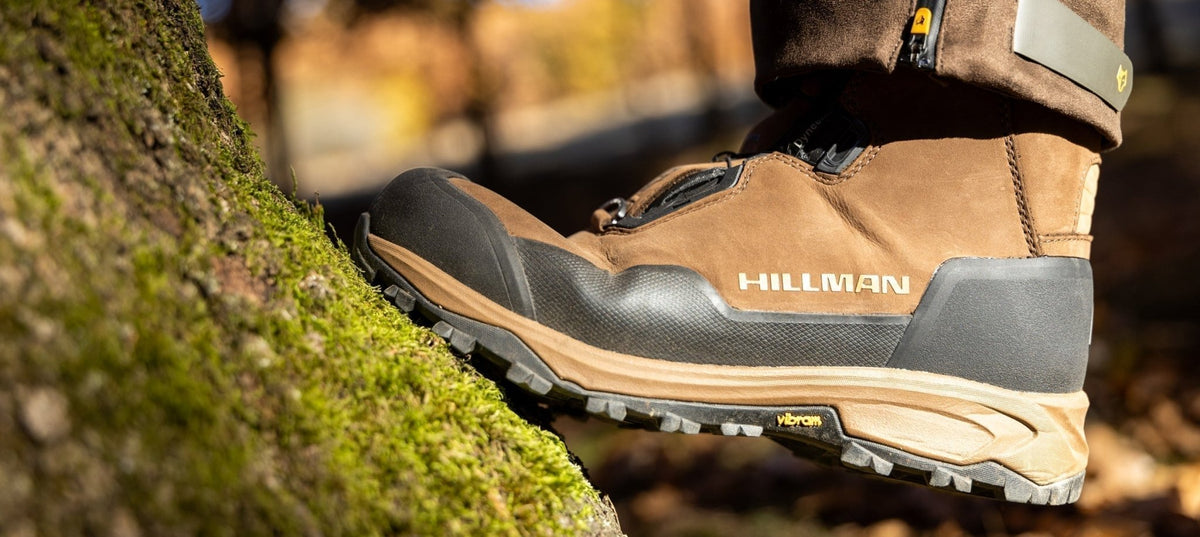
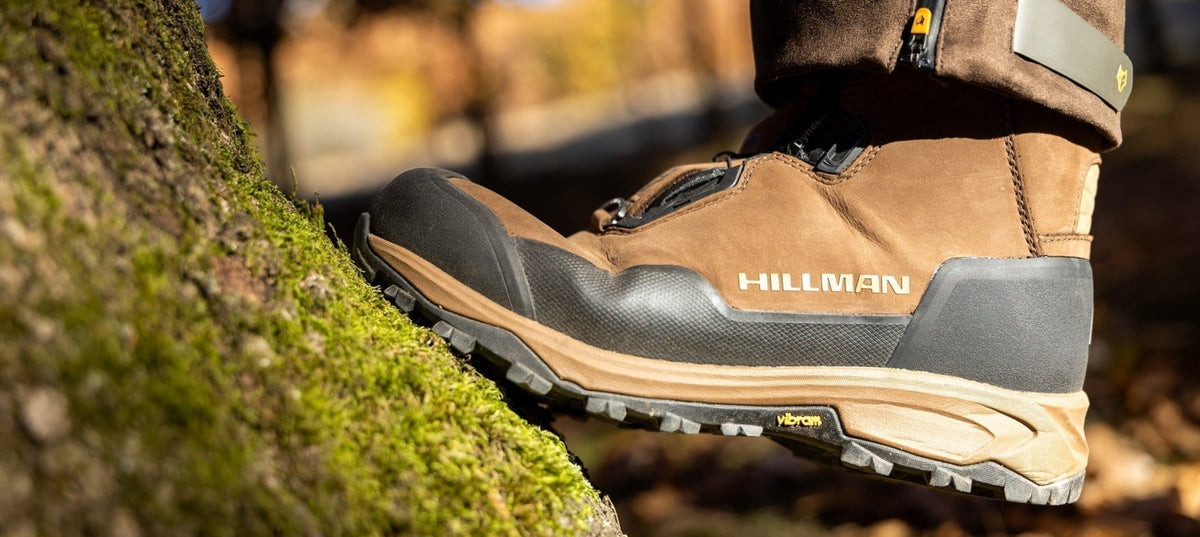
Boots are where terrain speaks most directly. In forest mud, the problem is water, suction, and long waits on cold ground. The boot must keep feet warm, keep water out, and grip without becoming heavy by the second hour. Muddy banks punish weak soles and poor ankle support, especially when the hunter is carrying a rifle, pack, and winter clothing.
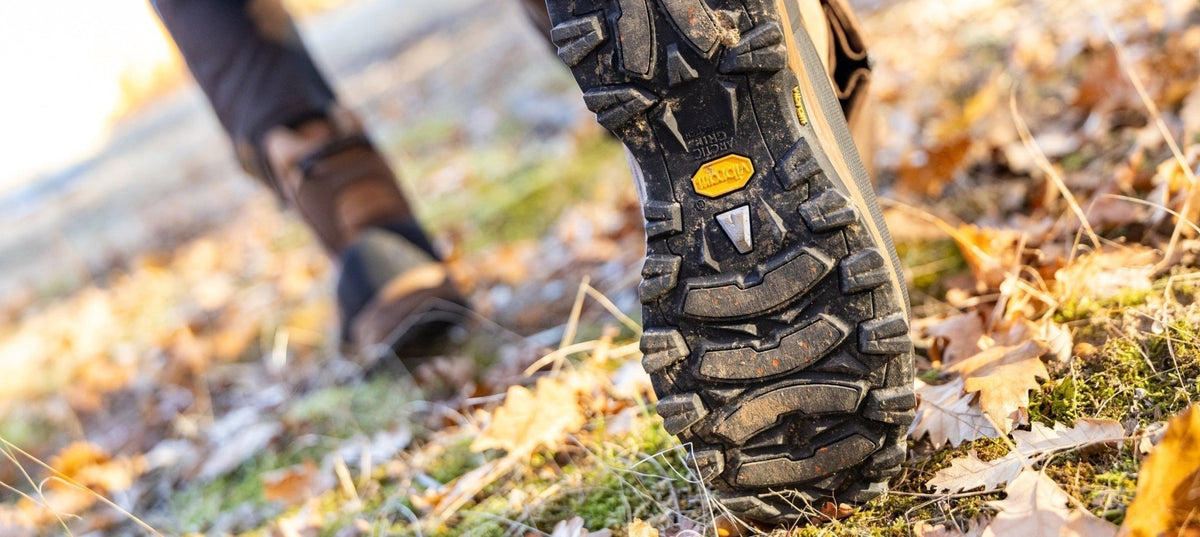
On Balkan stone, the punishment changes. Uneven ground, loose rock, and side slopes require stability, secure lacing, abrasion resistance, and enough sole structure to protect the foot during long days. A pair of boots that feels comfortable on flat ground can feel vague and tiring when the foot is constantly adjusting to stone, grass, and hidden holes.
For cold-weather hunting gear, boots are not an accessory. They are a survival part of the system. Insulated boots, and in some extreme cases, heated boots with adjustable warmth, help maintain foot temperature during long waits, but they must still allow walking, stalking, and steady shooting. Warm feet mean little if the boot cannot handle the ground.
How to choose the best hunting boots for forest mud and Balkan stone?

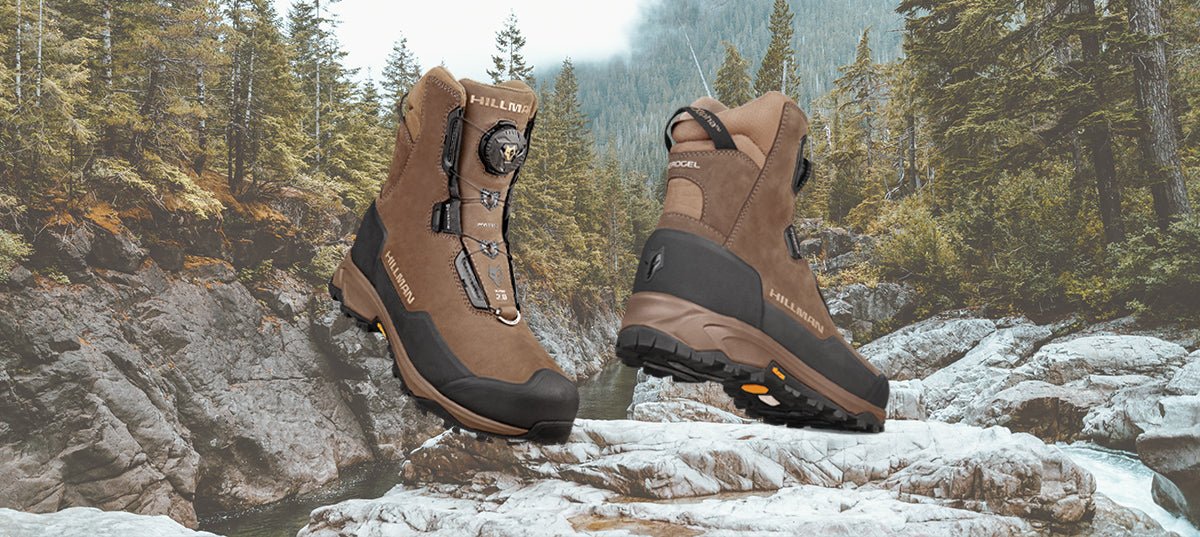
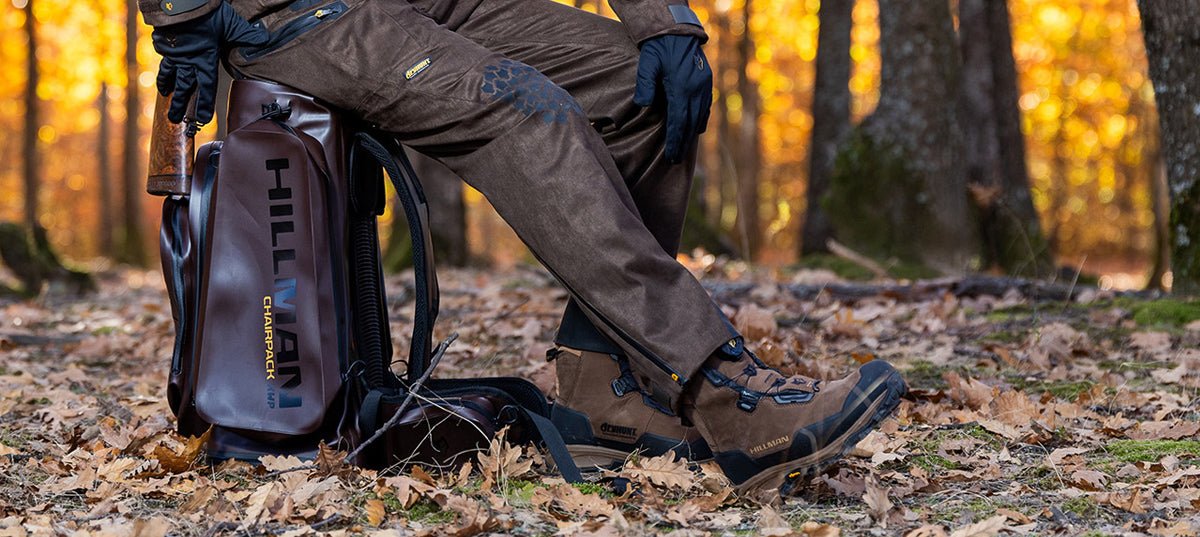
The best hunting boots are the ones chosen for the ground, not for a generic season. In the forest, I look first at waterproof boots, grip in wet soil, comfort during long waits, and a shape that does not fight the foot when crossing roots or muddy banks. The boot should hold warmth without making the foot sweat too much during movement.
For open hill country, I shift the focus toward stability. The boot needs secure ankle support, dependable traction, and a lacing system that allows adjustment during the day. Long climbs change how the foot sits inside the boot, and even a small amount of movement can create fatigue or blisters when the terrain is broken.
The mistake is to assume one boot can do everything equally well. Some boots are better for stillness and cold. Others are better for hiking, stalking, and uneven ground. The right choice depends on whether the day will be spent pushing through wet cover, crossing open slopes, or doing a little of both.
Shooting clothing, gloves, and accessories for long days in the great outdoors

Shooting clothing should not look separate from hunting clothing. It has to support the same field decisions: silence, mobility, warmth, access, and focus. A jacket that blocks the rifle mount, gloves that make cartridges difficult to handle, or trousers that tighten when kneeling can turn a good setup into a distraction.
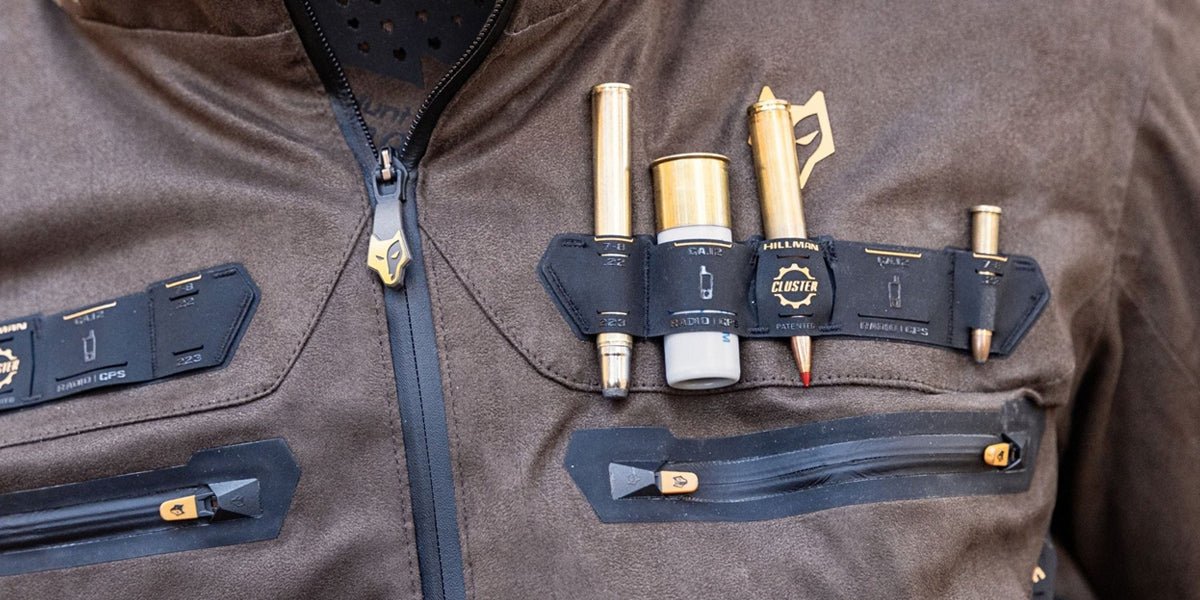
I like accessories that do not announce themselves. Silent ammunition pouches, a practical cartridge belt, gloves with enough feel, and a pack that carries weight close to the body can make a long day smoother. Ergonomic packs help distribute weight across the shoulders and hips, while waterproof backpacks protect spare layers, food, optics, and a small kit when rain or wet ground becomes part of the day.
Storage also matters. Specialized pockets should make sense in motion, not only while standing still. If I have to search for every item, the gear is not helping with the task. Quality in the field often appears as small conveniences that keep the hunter quiet, organized, and ready.
Cold weather hunting gear, warm hunting gear and freezing conditions

Cold exposes the weakness of every layer. During freezing conditions, especially in winter forest or exposed hill country, the body needs insulation that protects warmth without turning movement into a struggle. Long waits are the real test. A hunter may walk enough to build heat, then stand still until the cold begins at the feet, hands, and lower back.
Good insulation should be warm, light, and stable under a shell. Advanced thermal materials, air-trapping structures, and carefully mapped insulation can help protect the body without creating unnecessary bulk. This matters because mobility is not optional. Even in cold weather, a hunter still needs to climb, shoulder the rifle, kneel, crawl, sit, and stand.
The right cold setup often combines base layers, mid layers, insulated outerwear, gloves, trousers, warm socks, and boots that match the ground. Too little warmth shortens the day. Too much bulk shortens the movement. I try to find the middle line where I can stay warm, move cleanly, and remain focused until the field finally offers a chance.
Summer hunting gear for warmer months and long climbs

Warmer months bring a different kind of risk. Hunters often think only about cold, but heat can damage performance just as quickly. On a long climb, heavy clothing traps sweat, slows the body, and makes every stop uncomfortable. On open hills, the sun and wind can work at the same time, which makes layering more subtle than simply wearing less.
This is where breathable clothing, light base layers, ventilation, and quick moisture transfer matter. A light t-shirt may be enough for the skin, but the rest of the system still needs protection from grass, stone, insects, sun, and sudden rain. Staying cool is not only comfortable. It protects concentration, steadiness, and decision-making.
In the forest during warmer weather, the challenge is different. The air can feel damp and still, especially in heavy cover, and moisture can build up inside poor fabrics. The hunter needs clothing that breathes but remains quiet, durable, and protective. Summer does not remove the need for gear. It changes what the gear must control.
Mountain hunting clothing for open slopes and changing temperatures
Open slopes reward adaptive systems. A mountain hunter may start cold in the shade, overheat on the climb, meet wind on the ridge, then sit long enough for the body to cool again. One thick jacket cannot solve that rhythm. A flayered system can.
I look for base layers that wick moisture, a mid layer that adds packable warmth, trousers that move over uneven ground, a jacket that blocks wind, and boots that support the ankle without feeling dead underfoot. Gloves, a cap, a waterproof shell, and spare insulation may all be part of the range, depending on season and distance from shelter.
This is also where outdoor hunting gear becomes more than clothing. The pack, waterproof storage, accessories, and small repair items can determine how long a hunter stays in the field. If the kit is too heavy, the climb becomes harder. If it is too light, the wait becomes shorter. The field longer belongs to the hunter who carries only what the terrain is likely to demand.

Thoughts from the field
The best setup is rarely the most expensive, the heaviest, or the warmest. It is the one who understands the ground. Central European forests ask for quiet waterproof protection, moisture control, soft movement through thick cover, and reliable warmth during stillness. Open Balkan hills ask for breathability, wind protection, grip, mobility, and heat management across long climbs and exposed waits.
That is why I think of Hillman hunting gear as part of a wider field question rather than a simple product choice: what will this terrain do to my body, my movement, my feet, my shooting position, and my ability to stay focused? Once that question is answered, the jacket, boots, base layers, mid layer, trousers, gloves, pack, and accessories begin to make sense as one system.
Terrain changes gear before weather does. The forecast may tell me what the day will bring from above, but the ground tells me what I need to survive, move, hide, and hunt well.

Share: