Table of Contents

The First 10 Miles in New Hunting Boots: Lessons Before a Balkan or Alpine Hunt

Balkan and Alpine hunts with new hunting boots for men, waterproof hunting boots, insulated hunting boots

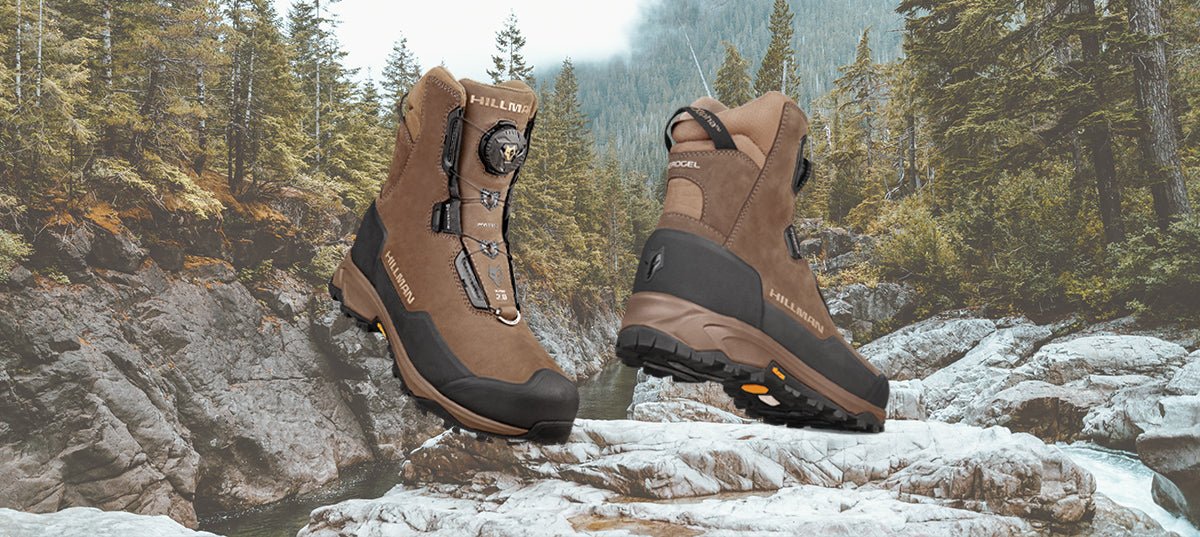
In my head, the trip begins halfway up a mountain. I can picture the climb more easily than the packing, and choosing new equipment gives that imagined morning something tangible. A great pair of boots is an appealing purchase. I have to remind myself that the same pair must bring me down again, possibly after several hours outside. The walk back rarely gets the best of my enthusiasm, but it deserves a say in what I buy.

For this Hillman guide, I spread the first ten miles in new hunting boots across shorter outings. The distance is a framework, not a promise that every boot will be ready afterwards. Fit and construction decide the pace. I want time to discover an awkward crease, reconsider my socks, and carry a realistic load before heading abroad. Those modest preparations belong to a successful hunting trip just as much as the arrangements I’m more excited about.

Before Mile One: Finding the Right Hunting Boots

Balkan and Alpine hunts with new hunting boots for men, waterproof hunting boots, insulated hunting boots

The fitting starts with the socks and insoles intended for the hunt, preferably later in the day when my feet may have swollen. Both boots go on. I walk indoors and use stairs, paying attention on the way down. What worries me is the little argument that begins when I like a model: perhaps that pressure will disappear. Perhaps another size will fix everything. With hunting boots for men, pressure across the forefoot may call for another width or shape; toes touching the front require a check of length and forward movement.

An online store may call its category mens hunting boots, but the label tells me little about internal volume. I need a seated heel, toe room, and a fastening that holds without excessive pressure. My perfect pair on paper can still be wrong for my foot. I keep the soles clean while deciding, check the returns policy, and resist buying extra length merely to gain width. That is a useful moment to be honest with myself, before affection for the purchase becomes an excuse to keep it.

Miles One and Two: Getting Acquainted with Hunting Footwear

My first route is deliberately unambitious: easy natural ground, little weight, and somewhere convenient to turn home. I may be thinking about the great outdoors, but the local path has enough to teach me about a new boot. I notice how the upper bends and whether the same spot rubs with each step. An unfamiliar feeling can be harmless; repeated irritation deserves a stop. Long distances can wait.

Taking a boot off beside the path feels faintly premature when I have barely started. Still, a folded sock is easier to address there than further on. I straighten it, reseat the foot, and make one adjustment before continuing. I also learn the closure properly while my hands are warm. The hunting experience I’m preparing for will involve enough unfamiliar things; I’d like this routine settled before I arrive.

Miles Three to Five: The Essential Features on a Descent

Balkan and Alpine hunts with new hunting boots for men, waterproof hunting boots

Before choosing the next route, I ask the guide what the terrain actually involves. Tracks, loose stones, and long hillside traverses suggest different preparation. “Alpine” or “Balkan” leaves plenty unanswered. On a manageable hill, I watch for forward movement downhill and try a gentle traverse both ways. Ankle support interests me as part of the whole fit: the upper, fastening, and sole must work together. A high collar alone cannot guarantee protection against injury. If the itinerary requires crampons, I settle compatibility before committing to footwear.

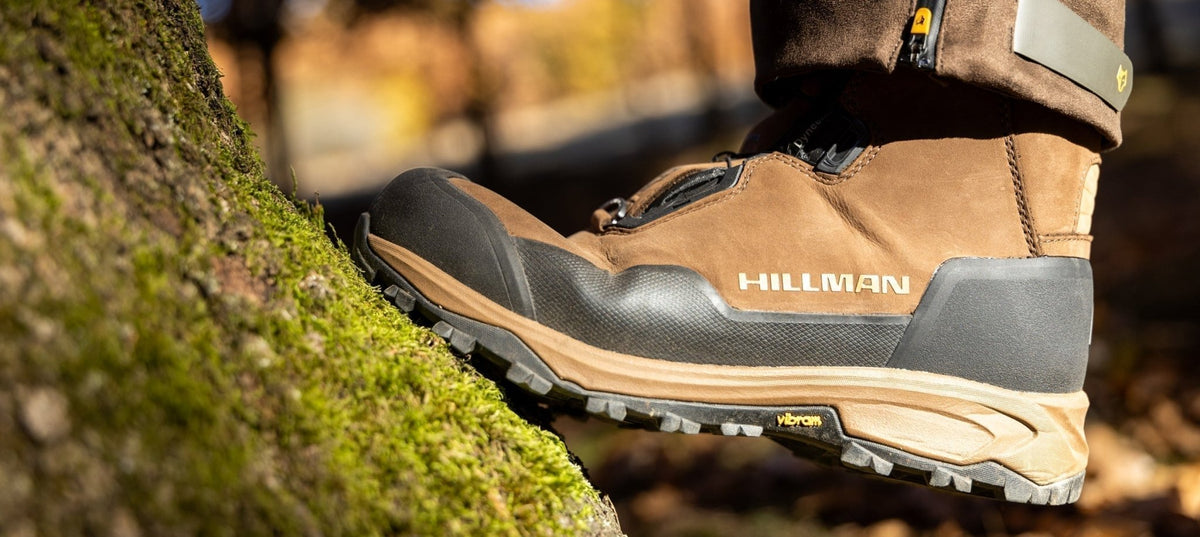
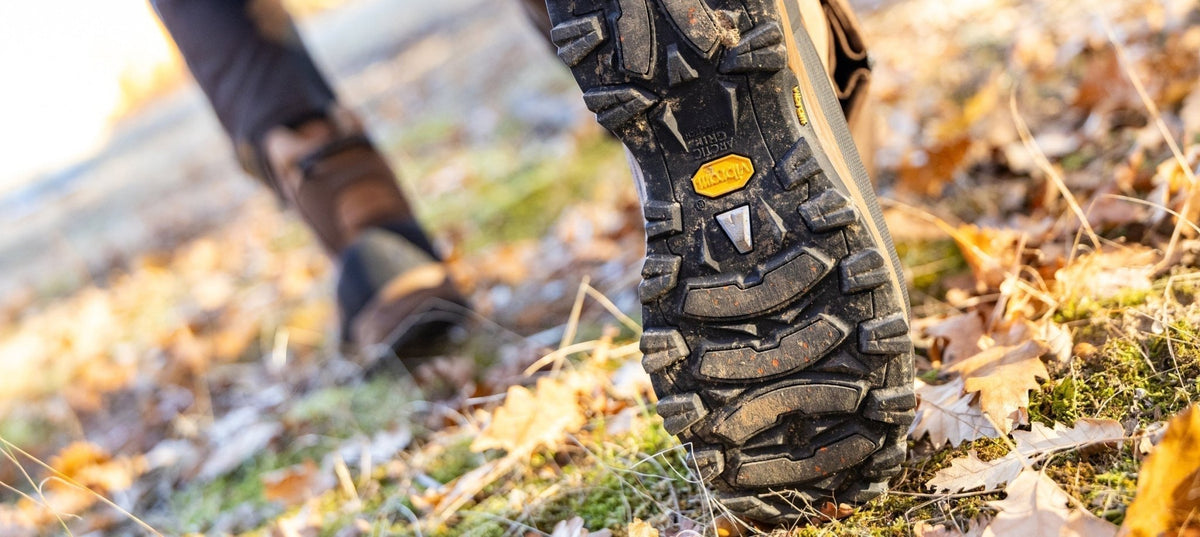
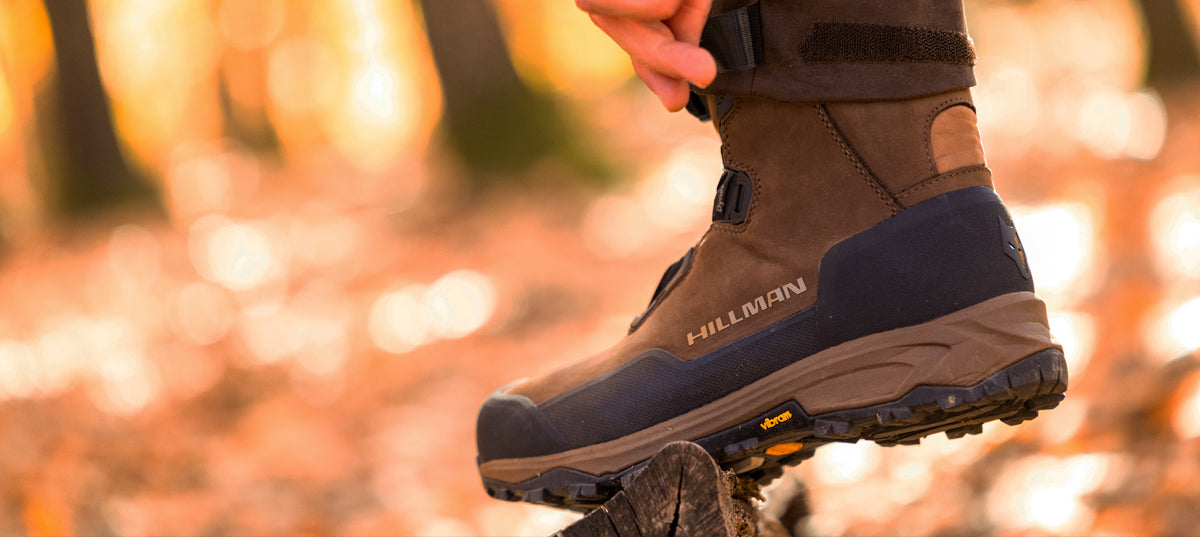
I also look beneath the boot. A Vibram sole can use different compounds: Megagrip targets wet and dry ground, while Arctic Grip is designed particularly for wet ice. Tread matters, too; deeper, spaced lugs can help on mud. None makes every surface secure. I want enough stability and support for rough terrain under the intended load, without assuming that maximum stiffness suits everyone. On wet roots, I still slow down. Confidence in the grip should leave room for judgement.

Miles Six to Eight: Waterproof Hunting Boots in Wet Grass

Balkan and Alpine hunts with new hunting boots for men, wide-fit waterproof hunting boots

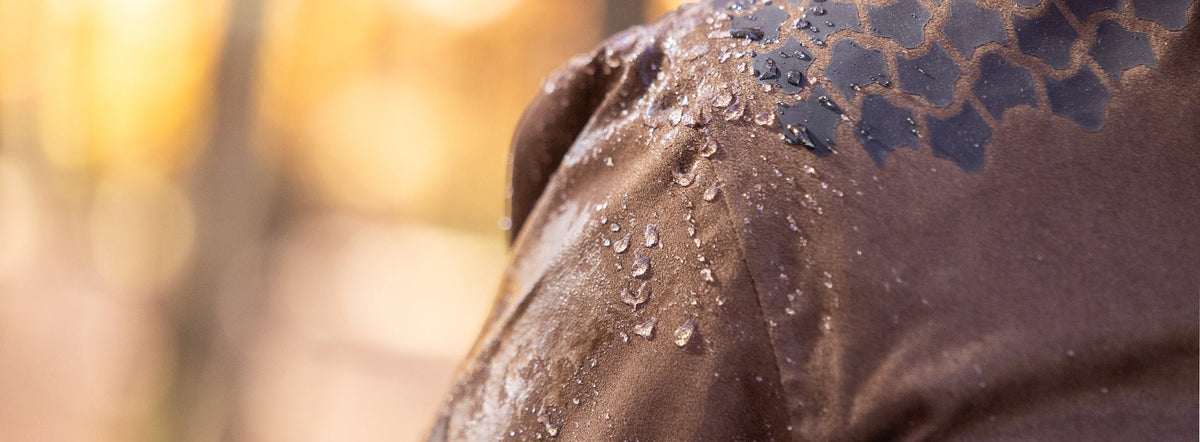
A damp morning lets me wear the trousers and gaiters planned for the trip. I check where the cuffs sit after climbing or stepping over low obstacles. It is easy to concentrate on waterproof boots and forget the opening at the top. With unpredictable weather conditions ahead, I want to see the entire clothing combination moving. I stay within the model’s specified waterproof limits rather than judge immersion depth from the visible upper.

Back home, I inspect the socks before they dry. Moisture near the cuff suggests a different enquiry from general dampness after exertion, although neither proves the cause. Keeping feet dry involves sweat management as well as resisting outside water. While cleaning, I examine the materials, seams, and edges. Full-grain leather can offer durability; a rubber rand helps protect the upper from abrasion. Even an upper cut from a single piece needs a closer look at its construction. I judge quality through such details rather than expecting a handsome finish to answer every question.

Miles Nine and Ten: Bring the Hunting Gear

new hunting boots for men, waterproof hunting boots, insulated hunting boots, merino socks

My packing list seems perfectly reasonable until it acquires weight. Water, optics, spare layers, and the smaller items all contribute. I build towards that load gradually, then take my hunting gear over familiar ground. A known descent makes changes easier to notice: pressure under the forefoot, a shifting heel, or a stride shortened to avoid discomfort. The right footwear must suit that loaded walk. Completing the mileage is of little interest if I’m already limping.

Then I stop somewhere suitable. I have to make room for this pause because walking feels productive and standing seems like an interruption. Yet waiting may occupy much of the day. Dampness can become more noticeable as activity falls, especially in cold conditions. A short pause gives only an initial impression of comfort; it cannot reproduce hours in a winter hide. For long hunts, I want a realistic understanding of both movement and rest before deciding I have the right gear.

Choosing Men's Shooting Boots for a Driven Hunt

Balkan and Alpine hunts with new hunting boots for men, waterproof insulated hunting boots, socks

My first question about a driven day concerns my role. Moving with the beating team and waiting on a stand make different demands under the same forecast. When comparing men's shooting boots, I consider the approach and the stationary period together. On an active autumn day, heavy insulation may feel excessive. A prolonged winter wait deserves another assessment. The weather conditions matter, but temperature alone cannot describe the day.

Insulated boots help retain body heat. Thinsulate is one example of footwear insulation, not a material I assume every model contains. To keep feet warm, I consider moisture and available space alongside insulation. Adding thicker socks can crowd the fit. I’m drawn to the reassurance of more warmth, but I still need the combination to wear comfortably during the approach. Unpredictable weather makes that compromise worth thinking through before departure.

Where Rubber Boots Fit into My Bag

I can understand wanting one pair for everything. There is less luggage and less equipment to dry. Still, rubber boots deserve consideration for waterlogged approaches, provided the particular model offers suitable fit, traction, and comfort. I ask the host whether the itinerary combines lengthy mountain walks with wet stationary days. That may justify two pairs. The useful range of a boot depends on its construction and intended use; the material alone doesn’t settle the choice.

Before the hunting trip, I clean and dry the footwear according to its instructions, away from direct heat, and inspect the soles and fastening. Any persistent discomfort needs another fitting conversation. I pack the socks and insoles that worked, resisting an untried last-minute improvement. My idea of maximum comfort is being able to give the ground and the hunt my attention without constantly adjusting my boots. That is the difference I hope these short outings make. Happy hunting.


Thomas Keller
Author

Thomas Keller

Senior Gear Tester / Field Performance Specialist

Thomas Keller deals mostly with the kind of gear hunters notice when the day gets long: boots, waterproof jackets, cold-weather layers and outerwear that has to keep working after hours outside. He has a practical eye for fit, grip, noise, drying time and the small weak points that rarely show up in studio photos. His articles usually come from one simple question: would this still feel right in mud, wind, wet grass or a slow winter stand?

Related blog posts

Balkan and Alpine hunts with new hunting boots for men, waterproof hunting boots, insulated hunting boots, merino socks

New Hunting Boots: The First 10 Miles Before a Hunt

Breaking in new hunting boots across a structured 10-mile trial allows hunters to evaluate fit, lace closures, sock compatibility, and downhill toe clearance under realistic pack weight before an overseas mountain hunt. Testing boots across varied terrain, including wet grass, steep descents, and stationary cold waits, helps surface minor pressure points, test waterproofing integrity, and confirm sole traction. Taking time to resolve fit issues and adjust insoles locally ensures maximum stability and comfort when navigating demanding Alpine or Balkan terrain.

Read more

packable vs all day hunting rain gear for mountains, wet forests: waterproof rain gear, rain jackets, pants, moisture-wicking mid, base layers

Packable vs All-Day Hunting Rain Gear for Mountains, Wet Forests

Selecting the right hunting rain gear depends on exposure time, physical exertion, and terrain demands rather than single test ratings. While packable jackets offer lightweight protection for sudden showers, all-day waterproof systems provide durable defense against continuous rain, wind, and abrasive vegetation. Proper ventilation, articulated construction, and a moisture-wicking layer system ensure you stay dry from both external precipitation and internal condensation.

Read more

waterproof hunting clothes with reinforced seams, waterproof hunting jacket with taped seams, waterproof hunting boots, pants

Why Seam Construction Matters in Waterproof Hunting Clothes

Waterproof hunting clothing is only as reliable as the way it is built, and seam construction plays a huge role in keeping rain out where fabrics alone cannot. This guide explains how seams, reinforced panels, articulation, membranes, and fit work together to keep hunters dry, comfortable, and moving naturally in demanding field conditions.

Read more

best hunting jacket for deer and boar hunting, waterproof leather hunting jacket, rain camo jacket

Small Hunting Jacket Details That Matter on Deer, Boar Hunts

The best hunting jackets are defined by small details that only show up once you're in the field. This guide explains how fit, pockets, cuffs, hoods, fabrics, and weather protection affect comfort, movement, and performance on deer and boar hunts.

Read more

how to break in hunting boots, best socks to break in boots: waterproof, insulated boots leather

How to Break In Hunting Boots Before a Serious Hunting Trip?

Breaking in hunting boots is not about forcing stiff leather to soften overnight. It is about learning how the boots behave before rough ground, wet weather, and long hours start exposing problems. A proper break-in gives you time to sort heel movement, pressure points, socks, and support before the hunt becomes serious.

Read more

Best Hunting Rain Gear for Hunters (2025 guide) - Hunting Boots - Winter, Waterproof Gear | Men's Hunt Clothes

Best Hunting Rain Gear for Hunters (2026 guide)

The article reviews the best hunting rain gear for 2026, tailored for the unpredictable and often extreme weather conditions across the UK and EU. It emphasizes the importance of breathable, lightweight, quiet, and durable gear for different hunting styles and terrains. Hillman’s rainwear is highlighted as a top performer, outscoring competitors in versatility and weather resistance. The piece also offers practical tips on layering, gear maintenance, and choosing the right setup for woodland stalking, hill stalking, and driven shoots.

Read more

best hunting boots for mixed terrain guide: waterproof, insulated, hiking boots

Best Hunting Boots for Mixed Terrain Trips: One Pair or Two?

For mixed terrain hunts, there’s no perfect boot - only the one that stays stable, dry, and supportive as conditions change. One pair works if it’s versatile and reliable, but two pairs help in wet environments where drying time matters. In the end, fit, break-in, and real-world performance matter more than labels or categories.

Read more

how to choose hunting boots for unknown terrain & conditions: waterproof insulated footwear with reliable grip, ankle support, socks

How to Choose Hunting Boots for Unknown Ground Conditions

Choosing hunting boots for unknown ground is about balance rather than labels or reputation. When grip, fit, waterproofing, insulation, and support work together, boots fade into the background and allow natural movement as conditions change. The right pair keeps feet dry, stable, and comfortable over long hours, even when terrain and weather refuse to behave as expected.

Read more

lightweight hunting gear for frequent travel, layering system: breathable base layers, waterproof hunting jackets, accessories

Lightweight Hunting Gear for Hunters Who Travel Frequently

This piece explains why lightweight hunting gear matters for frequent travel, stressing that excess weight drains energy, slows movement, and disrupts focus. It highlights how adaptable, breathable, and packable clothing improves comfort in changing conditions and makes travel logistics easier. Ultimately, it argues that lightweight gear becomes a long-term investment because it reduces friction, simplifies decisions, and supports better performance in the field.

Read more

best hunting jackets for extreme temperature swings: insulated cold-weather jackets, waterproof warm weather jackets

The Best Hunting Jackets for Extreme Temperature Swings

Hunting in countries with volatile temperatures demands jackets that adapt as conditions swing from cold mornings to warm middays and back again. The best modern shooting jackets balance insulation, breathability, weather protection and movement without constant adjustment. Ultimately, versatility and fit matter more than any single feature, allowing hunters to stay focused on the field rather than the forecast.

Read more

hunting gear evolution: tradition and technology, leather, wool, waterproof boots, footwear, jackets

The Evolution of Hunting Gear: From Tradition to Technology

Hunting gear has evolved from heavy wool and leather into lightweight, technical equipment that improves comfort, safety, and performance in the field. While tradition once shaped clothing as much as function, modern materials now prioritize weather protection, mobility, and efficiency. Today’s hunters balance heritage and technology, adapting to changing conditions without losing respect for the sport’s roots.

Read more

hunting gear guide for international trip: clothes, bags, boots, accessories

Hunting Gear Guide: What to Pack for a Trip Abroad

Preparing for a hunting trip abroad is about packing trusted, practical gear that keeps you comfortable, focused, and ready for unfamiliar conditions. Prioritize reliable clothing, boots, optics, and simple field essentials over unnecessary extras. Thoughtful packing protects your energy, sharpens decision-making, and lets you enjoy the experience wherever you hunt.

Read more

FAQs

How Do I Recognise the Best Hunting Boots for My Route?

I start with walking distance, slopes, load, and waiting time. Those details help me choose boots that suit the day. The fitting still decides whether a promising model works for me. Other hunters may need a different shape on the same route.

Do All Boots for Men Fit the Same Way?

No. Men's hunting boots vary in width, heel shape, and internal volume, even at the same labelled size. I apply the same fitting principles to ladies’ footwear: try the intended socks, walk, and check downhill toe room. A category label cannot establish individual fit.

Does a Gore-Tex Lining Make Boots Warm?

Gore-Tex waterproof footwear combines waterproof protection with breathability. Warmth depends on the complete construction, including any insulation. I check that distinction in the specification. A membrane is not itself a promise of warm feet during a long stationary wait.

Are the Best Shooting Boots Always Heavily Insulated?

I choose insulation according to expected activity and conditions. More is not automatically preferable during sustained effort. Waterproofing provides protection against outside moisture; insulation limits heat loss. I assess both, along with sock space, when preparing for a cold, wet day.

Can I Take New Shooting Boots Straight on a Hunt?

I leave time for short outings first, even when the manufacturer says traditional breaking-in is unnecessary. Familiarity with the fit and fastening is useful in its own right. Recurring rubbing or toe contact needs attention before the trip, regardless of mileage.

Should I Test New Hunting Boots with a Fully Loaded Pack?

Yes, but I build towards that weight over several shorter walks. Once the boots feel comfortable with a light load, I add the equipment intended for the hunt and repeat a familiar route. I pay particular attention on descents, where forward movement or pressure may become more noticeable. The pack should reflect what I will actually carry, including water.

Can I Change My Insoles Just Before the Hunt?

I would leave time to test the new combination. A different insole can change how the heel sits and how much room remains above the foot and around the toes. Even an apparently small adjustment deserves another walk in the intended socks, including a manageable descent. If the existing arrangement is comfortable, I am reluctant to change it on the evening before departure.