
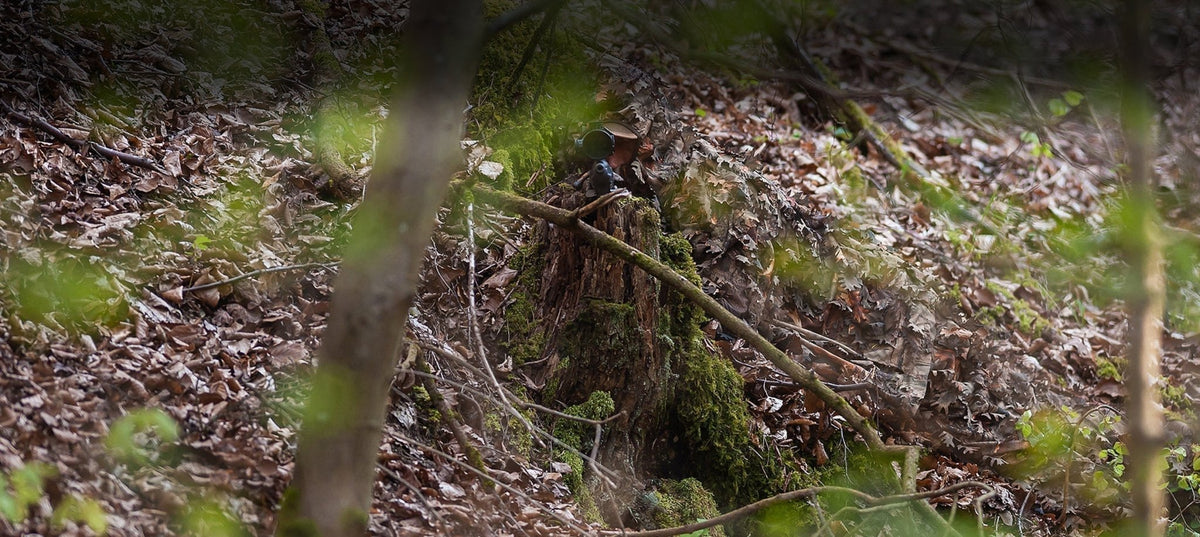
Quiet vs Durable Fabrics for Roe Deer Stalking and Driven Boar Hunts

A roe deer stalk tests clothing at walking speed. Trouser legs brush together, sleeves meet the body, and small adjustments happen close to alert game. A driven boar hunt can put the same gear through thorns, mud, hard movement and long waits.
The choice is not simply quiet or durable. Performance depends on fabric construction, surface and fit, together with the hunter’s role, terrain and weather. Footwear completes the system: light shoes can suit hard, dry fields, while wet ground and peat hags usually call for waterproof stalking boots with dependable tread and ankle support.
Quiet or Durable: What Changes Between the Two Hunting Styles?

The two hunts may take place in the same woodland, yet they test gear differently. The decisive factors are movement, distance from game and contact with dense cover. During a driven hunt, clothing needs also change between a shooter at a post and a moving beater or dog handler.
Roe Deer Stalking: Quiet Movement Close to Game
Stalking involves deliberate steps, pauses and changes of position. A soft face can reduce sharp rustling when sleeves touch the torso or trouser legs meet. Good fit matters too: excess material flaps in the wind, catches on scrub and creates more friction.
Even slow walking builds heat over a long approach. Clothing cannot prevent sweat, but breathable construction and ventilation help manage moisture before the final, quieter stage of the stalk.
Driven Boar Hunts: Why the Shooter’s Role Matters
A shooter at a post may walk briefly and then remain still in cold, rain or wind, making weather protection and insulation priorities. Beaters and dog handlers move through mud, bramble and woodland, placing more pressure on ventilation, seams and resistance to snagging and abrasion.
High-visibility orange clothing or vests are standard on group hunts in many European countries. Hunters must follow local law and the organiser’s rules; quiet camouflage should never replace required safety gear.
What Makes a Hunting Fabric Quiet?

Quietness is not determined by fibre alone. Yarn, fabric construction, surface finish, lamination and fit all affect sound.
How Surface, Stiffness and Friction Affect Sound
Movement and friction create fabric noise. A stiff shell tends to sound sharper when it bends, while a brushed or suede-like surface can soften contact. Research links higher bending rigidity and friction with higher sound levels, so “soft” means more than hand feel in a stalking jacket or stalking trousers.
A membrane does not automatically make clothing too loud. The face, backer and complete laminate determine the result. A brushed waterproof shell can be quieter than a smooth, rigid one, though no coated fabric is silent.
Why Fit, Fasteners and Pockets Matter
Quiet fabric becomes noisy when the cut is too loose. Test a jacket while raising a rifle and turning; test trousers with high steps and kneeling. Listen at the thighs, underarms and hood.
Zips, fasteners and pocket contents also matter. Metal objects may create more sound than the garment. Closures should operate quietly but remain secure through scrub.
What Makes Hunting Clothing Durable in Tough Terrain?

Durability is not one rating. Abrasion, tear, snag and puncture resistance describe different stresses, while sturdy construction also depends on seams, zips and reinforcement.
Abrasion, Snag, and Tear Resistance Are Different
A ripstop grid can limit the spread of a tear but does not make fabric thorn-proof. Denier alone cannot describe a garment; weave density, yarn strength, stretch, and seams all affect performance.
Targeted durability is more useful. Tougher panels belong at the knees, seat, lower legs, and shoulders. Using the heaviest textile everywhere may add noise, heat, and weight.
Where a Stalking Jacket and Stalking Trousers Need Reinforcement
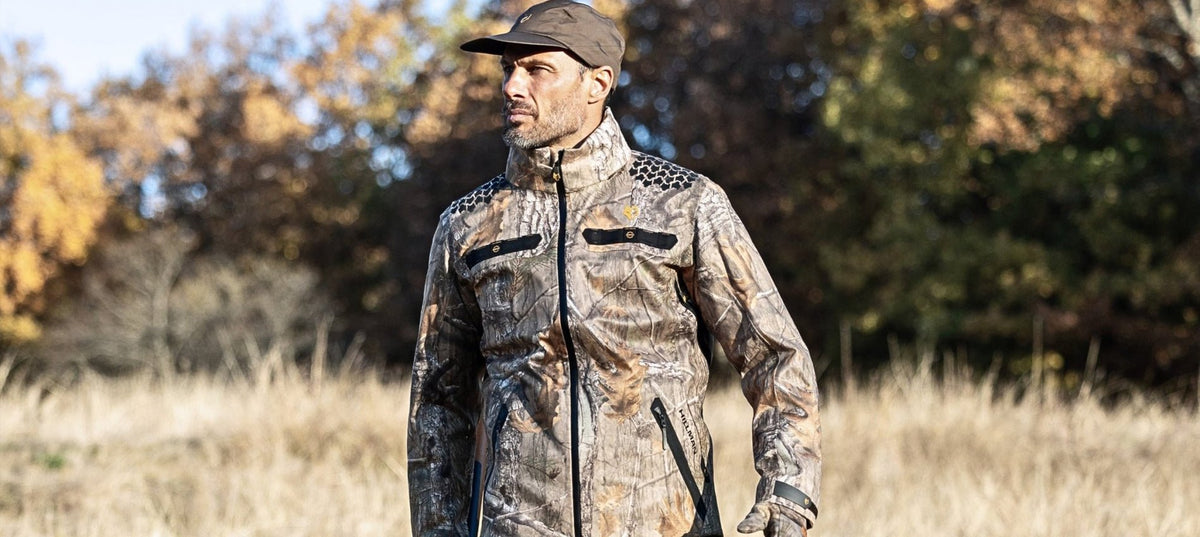
A stalking jacket needs freedom through the shoulders and protection where pack straps or a rifle sling rub. Stalking trousers work hardest at the knees, seat, inner legs, and ankles. Articulated knees support natural movement, while ankle adjustment limits catching without restricting a base layer.
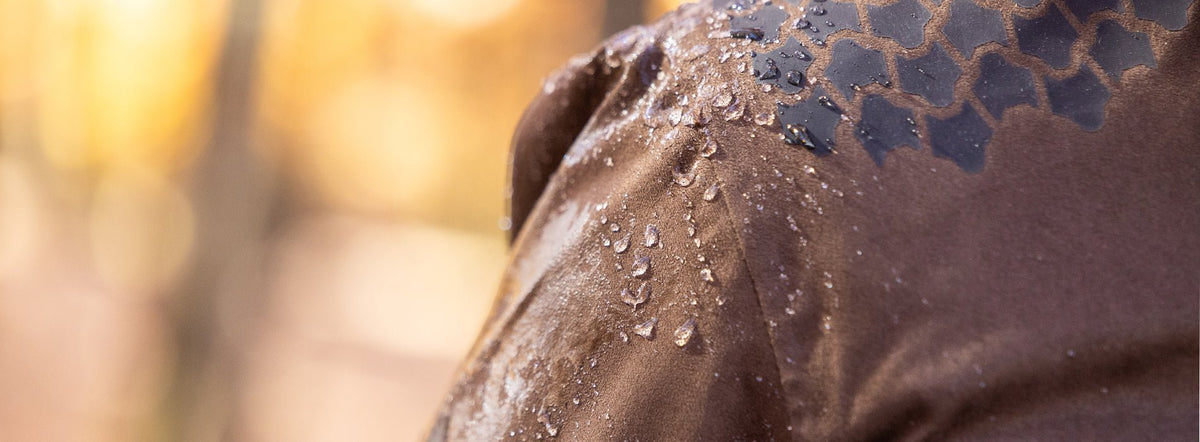
Hillman XPR Silent Hunting Pants show a warm- and mid-season approach. Cotton Suede® construction combines a heavily brushed polyester outer with a cotton inner layer; two side vents release heat, while dual DWR adds water resistance. DWR helps water bead but does not make unsealed trousers waterproof.
Why Breathable Fabric Clothes Matter During Active Hunts

Breathability and air permeability are different. Moisture-vapour transfer describes vapour movement; air permeability means direct airflow. Mechanical ventilation comes from openings such as pit zips and thigh vents.
Non-laminated breathable fabric clothes usually allow more airflow. Waterproof-breathable clothing protects against rain and wet vegetation but may need vents during hard climbs. Open them before the base layer is soaked.
Breathable Clothes for Men: Airflow, Moisture and Ventilation
Breathable clothes for men should be selected for workload, not marketing language. Use a moisture-managing base layer, match the outer layer to exposure and regulate heat before stopping.
Merino wool socks support temperature and moisture management, but cannot compensate for leaking boots or poor fit. A dry second pair helps on long wet days.
How to Choose a Stalking Jacket for Changing Weather

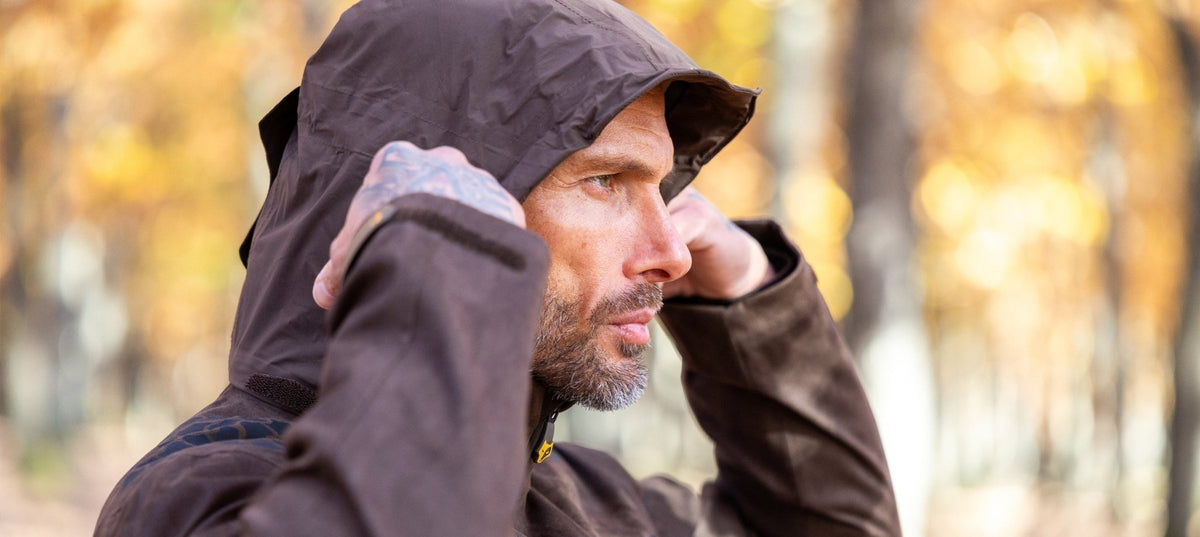
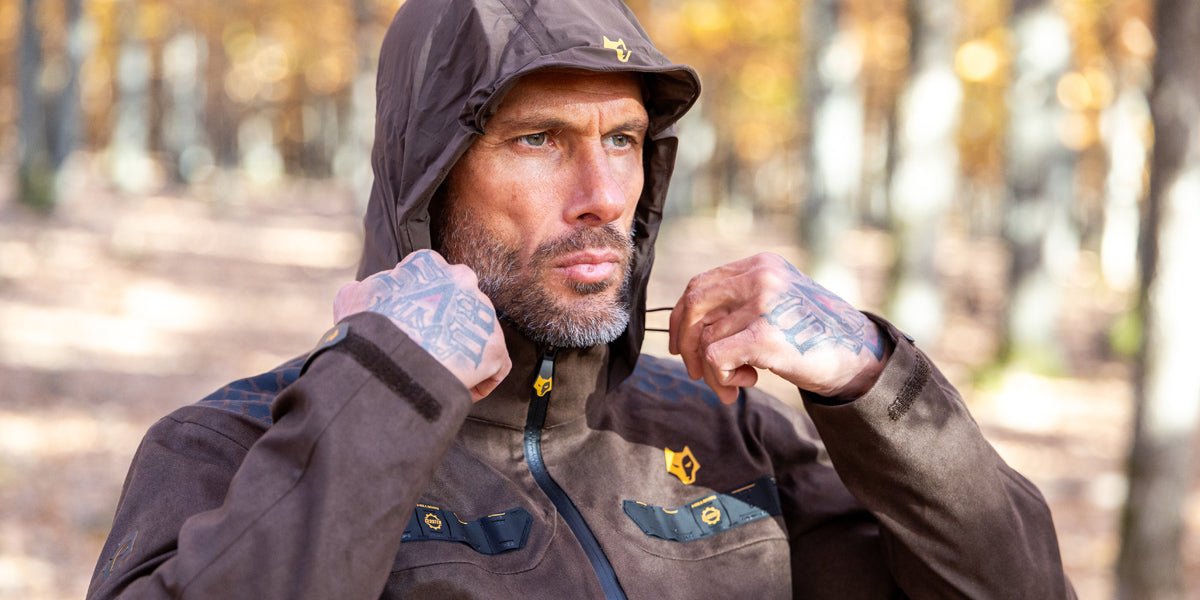
In mild weather, a quiet non-laminated stalking jacket offers airflow. Cold rain and soaked brush call for a waterproof shell. Water-resistant fabric sheds limited drizzle; waterproof construction needs a barrier, protected openings and sealed seams.
The AlphaShell 6OL combines a brushed Durasuede face with fully taped seams and underarm vents. Hillman publishes 11,000 mm hydrostatic head and 32,000 g/m²/24 h MVTR for its Dryhunt® membrane. These are manufacturer specifications, not a guarantee of equal comfort at every workload.
How to Choose Stalking Trousers for Quiet Movement and Tough Cover
Choose stalking trousers for the hardest part of the route. Soft, ventilated trousers suit dry slopes and active approaches; wet grass, steady rain and soaked vegetation call for waterproof protection.
Check inner-leg noise and knee movement. Pockets should work while kneeling, and lower-leg adjustment should sit properly over boots or gaiters.
What Are the Best Shoes for Stalking Deer?

The best shoes for stalking deer depend on moisture, gradient, stability, temperature and distance. Lightweight footwear suits dry terrain; waterproof boots suit mud, wet grass, steep woodland and prolonged rain.
Start with the ground, then assess support, fit, tread, protection and how quietly the sole places each step.
Lightweight Footwear for Hard, Dry Fields
On hard, dry fields, light breathable footwear reduces bulk and feels natural. Flexible soles help the wearer sense the ground but offer less protection and support.
Hillman Lightweight Hunting Shoes use non-laminated construction. They are breathable but not waterproof, so they do not suit soaked grass, mud or prolonged rain.
Stalking Boots vs Shooting Boots: What Is the Difference?
“Shooting boots” is a broad retail term, not a technical class. Stalking boots are judged more specifically on quiet placement, walking comfort, grip and ankle support, although one well-built boot may suit both.
Some footwear uses a Gore-Tex lining; other brands use proprietary waterproof-breathable membranes like Dryhunt. The name alone does not identify the right pair. Leather, tongue construction, laces, heel hold, toe space and sole stiffness all matter.
A snug fit secures the heel without compressing the toes. Try boots with your hunting socks. Heel lift or toe contact on descents signals the wrong size or shape.
Why Wet Ground and Peat Hags Need Grip and Ankle Support

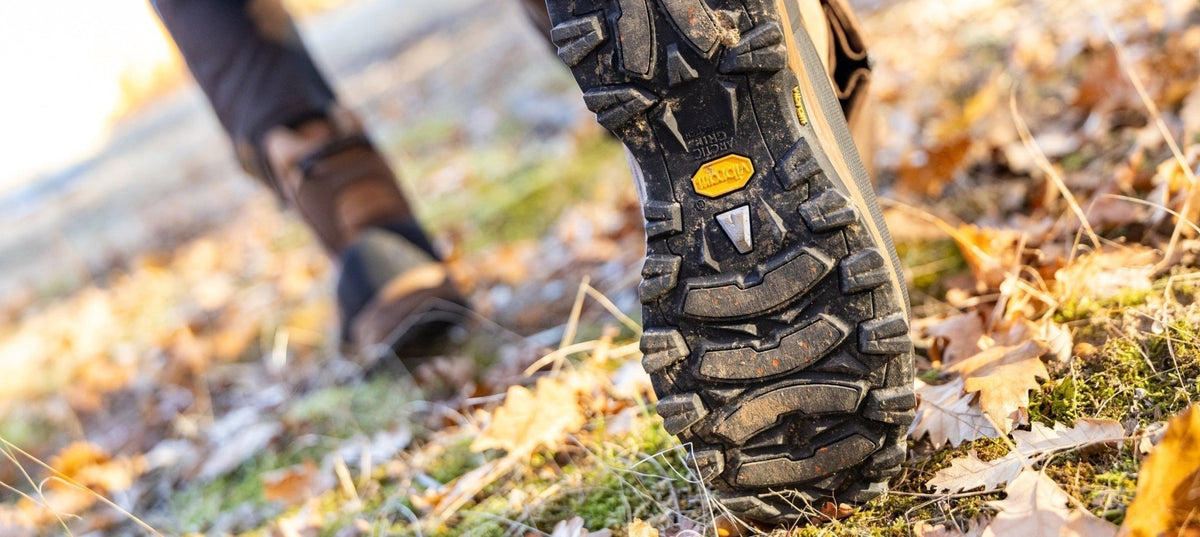
On wet ground, balance depends on tread and structure. Peat hags, wet leaves and mud favour deep, well-spaced lugs that release dirt. A stable heel and mid-to-high ankle support control lateral movement.
Wellingtons keep surface water out, but supportive stalking boots suit long, steep routes better. Gaiters help stop rain, mud and debris entering above the cuff.
How to Keep Feet Dry in Wet, Muddy Wooded Regions
In wet, muddy wooded regions, waterproof boots help prevent wet feet, but water may still enter over the cuff or through damage. Trousers and gaiters must overlap the boot without directing rain inside.
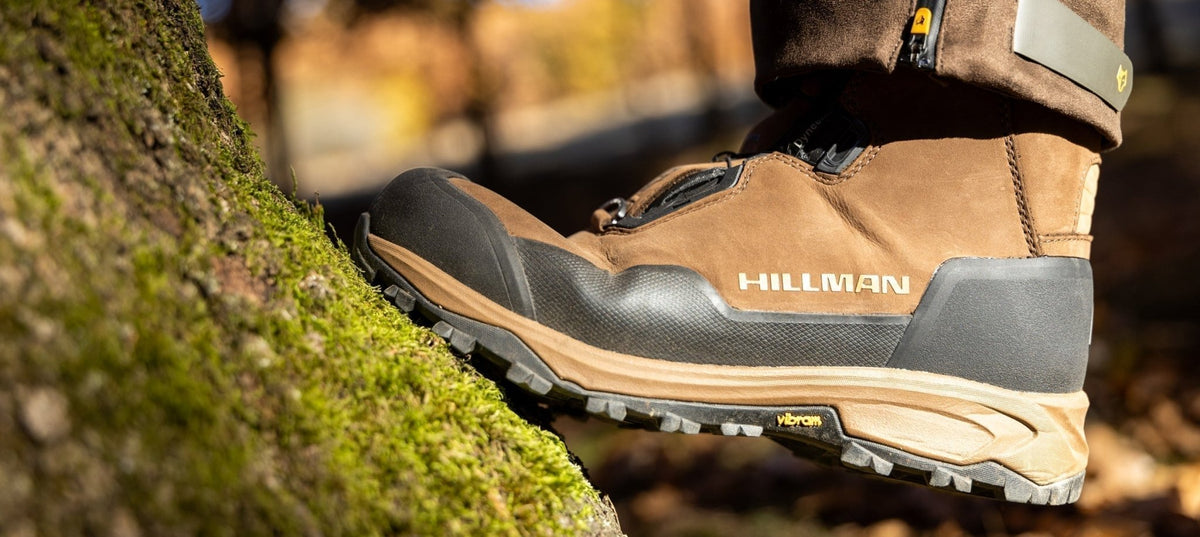
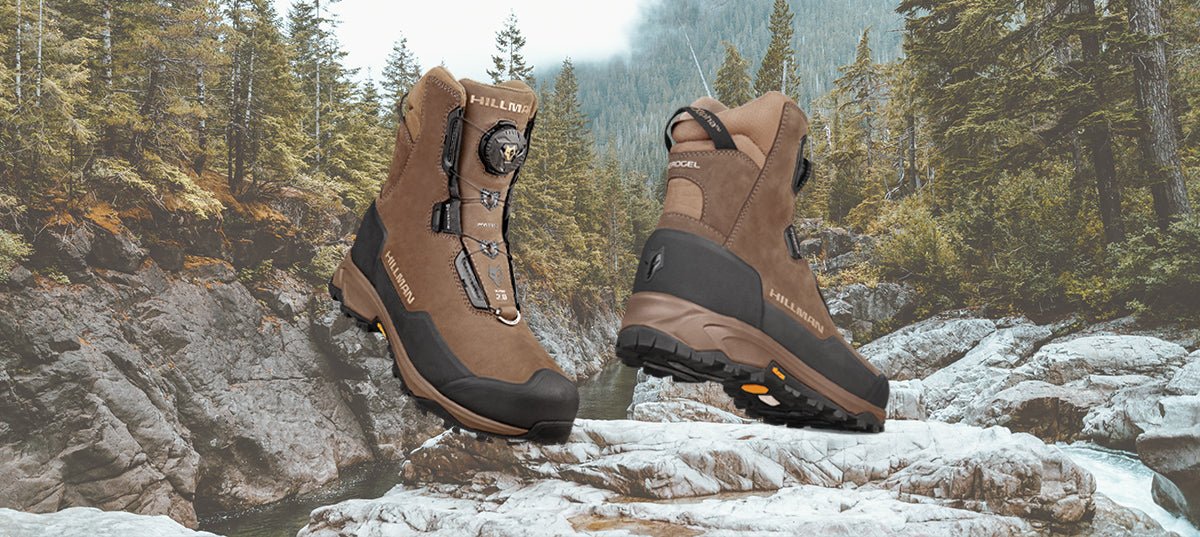
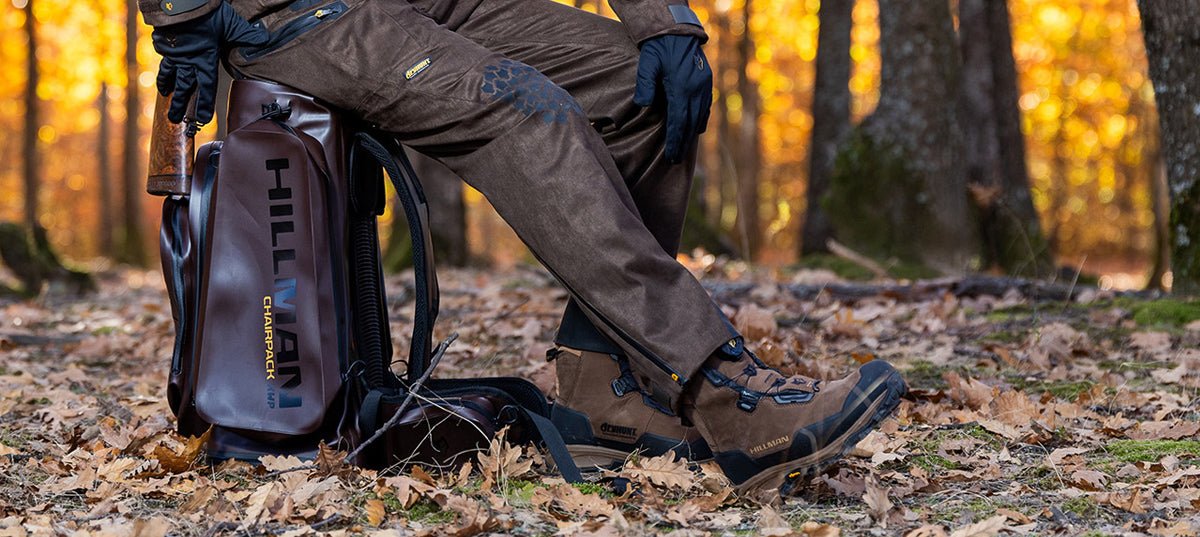
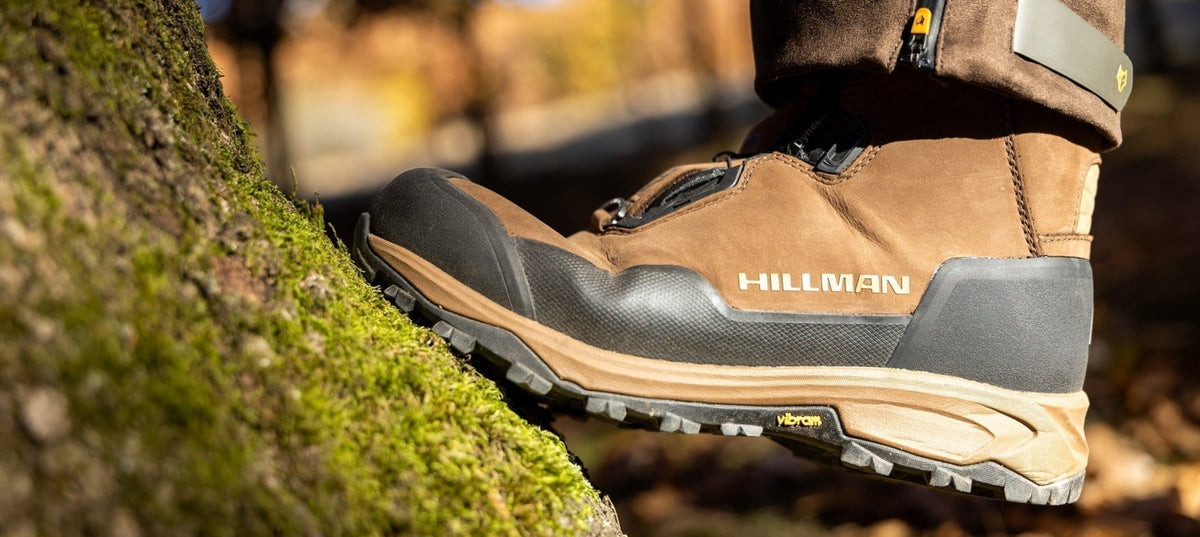
Hillman DryHunt 2.0 boots combine a Dryhunt® membrane, Vibram® Megagrip outsole, reinforced heel and toe, and a heel-stabilising insole. Hillman states that they are waterproof in water up to 12 cm deep; this does not make them wading boots.
For lasting water resistance, clean off mud, dry footwear away from direct heat and apply suitable treatment when needed. Check soles, stitching, tongue and lacing for wear, then store boots in a cool, dry place.
The Right Pair or a Second Pair for Different Terrain?

One versatile boot can cover much of a season, but a second pair makes sense for opposite extremes. A breathable low shoe and a waterproof supportive boot solve different problems and allow soaked footwear to dry properly.
If buying one pair, prioritise the worst regular ground. For UK stalking and comparable wet climates, waterproofing, grip and ankle support often matter more than minimum weight. Heavy boots make less sense on warm, hard terrain.
Can One Hunting System Suit Roe Stalking and Driven Boar Hunts?
A modular system can cover both hunts. Start with a breathable base layer, add quiet outerwear for stalking and carry rain protection. Cold driven hunts need insulation for time at the post; beaters and dog handlers need tougher panels and more ventilation.
Assess movement, exposure and vegetation contact, then choose footwear from the ground up. Explore Hillman’s range by function rather than expecting one jacket, pair of trousers or set of boots to suit every hunt.

Share: