
Water Repellency vs Waterproof Membranes for Wet Hunting Conditions

I have stopped trusting a jacket just because water beads on the sleeve during the first five minutes of rain. That used to impress me. A few drops would sit on the fabric like little glass balls, roll away, and I would think, fine, this jacket will do. Then the weather would settle in properly. Wet grass up to the thighs. Branches brushing against the arms. A long walk uphill. Sweat building under the mid layer. A cold wait after that. By the time the rain turned steady, the truth of the garment would show.
That is where the difference between water repellency and a waterproof membrane becomes more than a technical detail. In real hunting field conditions, water does not only fall from the sky. It comes from soaked brush, dripping trees, wet seats, muddy cuffs, damp straps, and the inside of the jacket when the body starts working hard. I have worn gear that looked convincing in light rain but gave up after a few hours. I have also worn waterproof hunting gear that was not flashy at all, but kept doing its job when the day turned miserable.
For me, good waterproof hunting rain gear is not about one feature. It is a system: face fabric, durable water repellent treatment, breathable membrane, sealed seams, proper hood, protected zips, ventilation, fit, and the quietness needed for hunting. Miss one part, and the weather usually finds it.
What Water Repellency Actually Does on Hunting Gear?

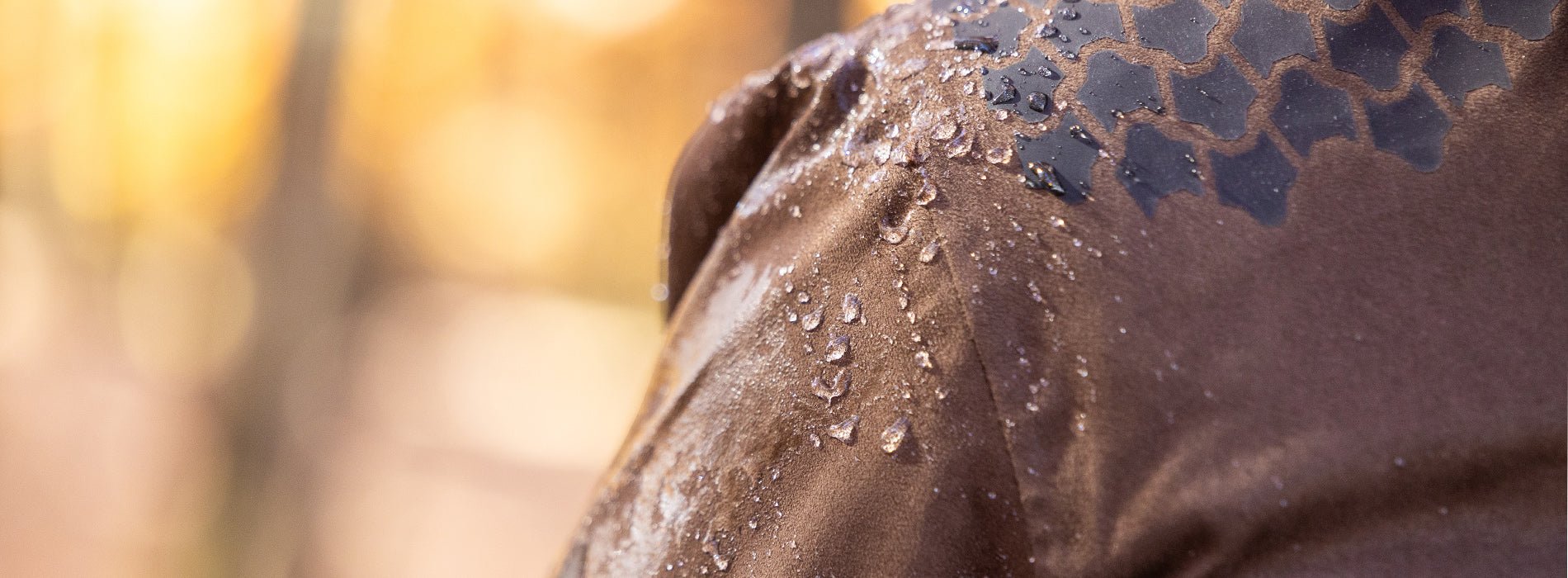
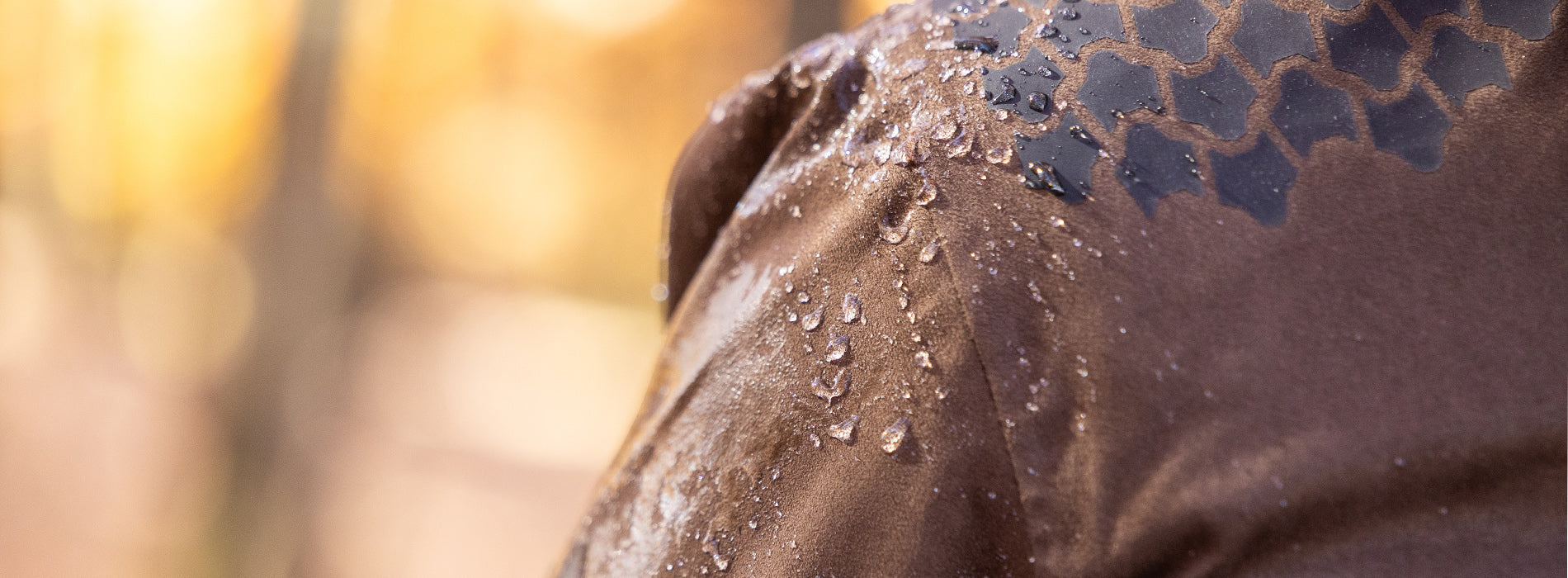
The first thing I notice on a rain jacket is usually the surface. If the fabric is treated well, water does not spread into it immediately. It beads, hesitates, then rolls away. That visible beading is water repellency at work. It is useful, and I want it. But I never confuse it with full waterproof protection.
A durable water repellent finish, often called DWR, is applied to the outer fabric so water has a harder time clinging to it. At the surface level, this comes down to chemistry and texture. Water-repellent surfaces have low surface energy, which means water is more attracted to itself than to the treated fabric. Some high-performance surfaces also use very fine, microscopic textures that help keep droplets rounded, with less contact between water and the material underneath. In the field, I do not need to think about the science. I just see the result: droplets form, bead, and roll.
That matters because once the face fabric becomes saturated, the whole garment feels worse. It gets heavier. It feels colder. It may still have a breathable membrane underneath, but breathability suffers when the outer layer is soaked. Moisture from sweat has a harder time escaping. That is when a jacket starts to feel clammy, even if rain has not technically leaked through.
So I value water repellency. It buys time in light rain, helps fabric stay light, and supports the performance of the whole garment. But I do not expect it to carry me through a hard downpour on its own.
A Simple Water Repellency Test Before the Hunt

Before a wet trip, I like to do a quick water repellency test at home. Nothing complicated. I put the jacket or trousers on a clean surface and sprinkle a little water over the fabric. If the droplets bead and roll off, the outer treatment is still doing its job. If the water spreads, darkens the fabric, or starts to soak in, the DWR is tired.
This test does not prove that the garment is fully waterproof. That is an important point. It only tells me how the face fabric behaves. A jacket can have a functioning waterproof membrane and still fail this surface test because the outer fabric has lost its treatment. In that case, the garment may not leak immediately, but it will wet out faster, feel heavier, and breathe poorly.
I have learned not to ignore that. A tired DWR finish can make good gear feel bad. Dirt, sweat, oils, abrasion, and the wrong detergent all reduce performance over time. If water no longer beads, I clean the garment properly and, when needed, use a spray-on or wash in treatment made for outdoor clothing. I avoid harsh detergents because they can strip performance faster than rain ever will.
It is a small piece of maintenance, but it gives me confidence before the weather turns. I would rather discover weak water repellency at home than halfway through a rough shooting day with wet sleeves and three more hours outside.
Why a Rain Jacket Can Repel Water Without Being Fully Waterproof?

A rain jacket can look convincing in light rain and still not be ready for serious hunting weather. That is where the confusion usually begins. Water-repellent and water resistant are not the same as waterproof. They may overlap in everyday language, but not when you are standing in heavy rain with cold water running off your hood.
Water resistant gear can handle splashes, drizzle, or short exposure to light rain. It has a place. For mild weather, quick outings, or low-risk conditions, it may be enough. But when I expect heavy rain, wet brush, or long hours outdoors, I look for a true waterproof jacket with a waterproof breathable membrane, sealed seams, and closures designed to keep water out.
The hydrostatic head rating helps explain this difference. It measures how much water pressure a fabric can withstand before it starts to leak. In outdoor clothing, 5,000 mm is often treated as an entry-level waterproof figure, while 10,000 mm and above gives me more confidence for heavier rain and longer exposure. It is not the only thing that matters, but it tells me something useful.
Still, a number on its own does not hunt. A backpack strap pressing water into the shoulder, a soaked branch dragged across the sleeve, or sitting on wet ground can test clothing harder than clean vertical rain. That is why I care about the whole construction, not only whether the label says waterproof.
Hunting Rain Gear Needs More Than Surface Treatment

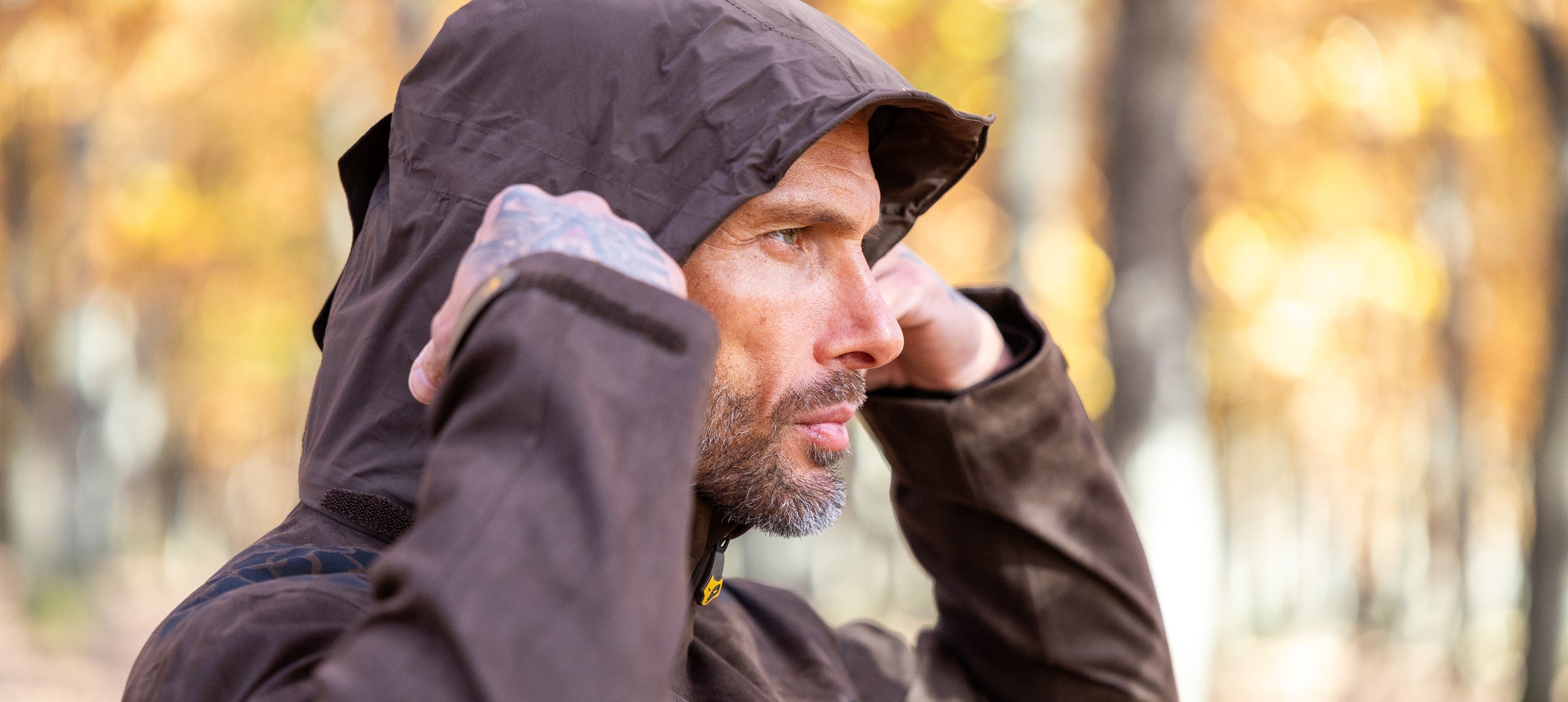
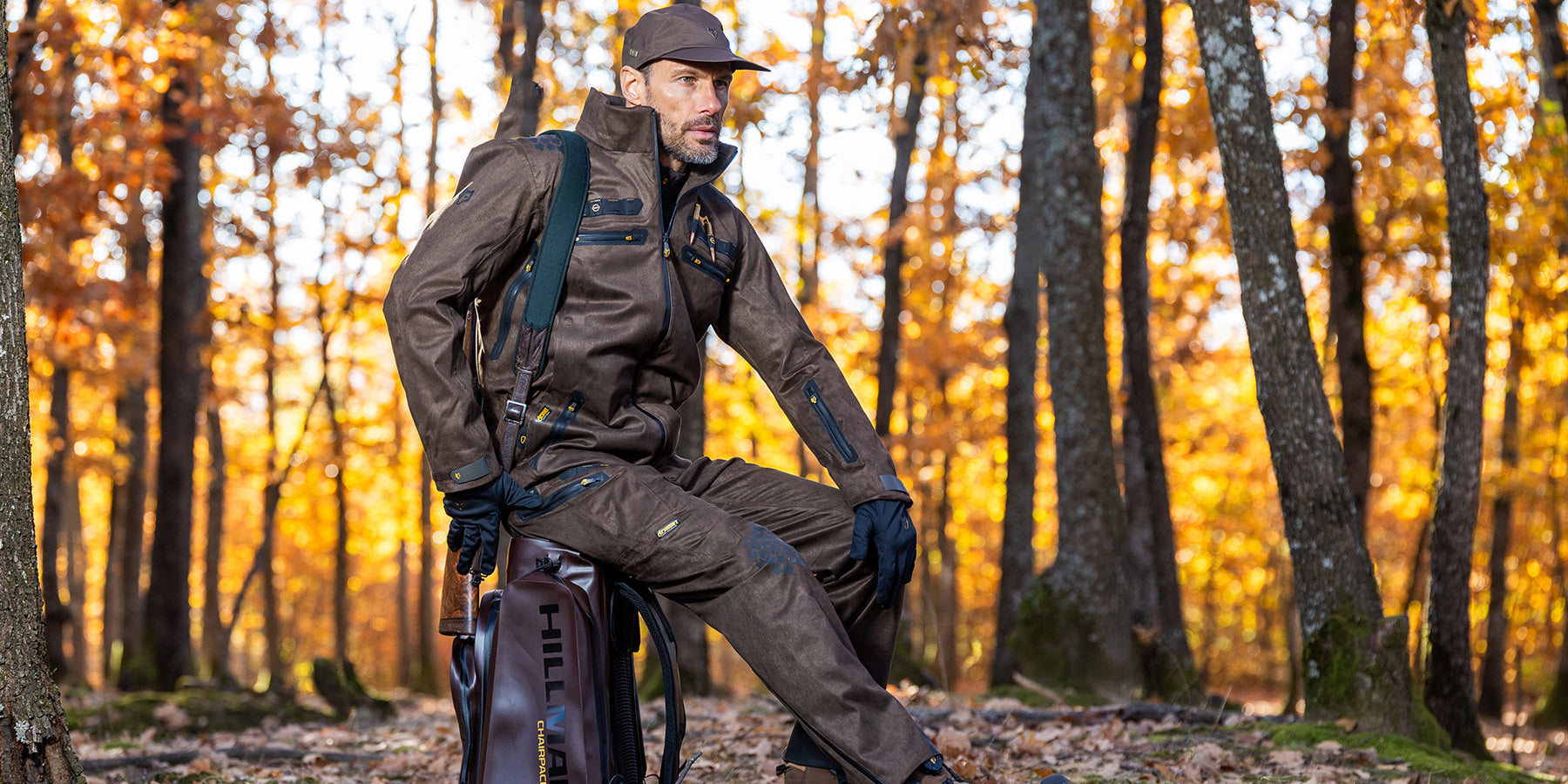
Good hunting rain gear is different from casual rain gear because the use is rougher and quieter. I may be walking hard one hour and waiting completely still the next. I may be pulling through brush, carrying a pack, raising the gun, kneeling, sitting, or pushing through wet cover. The garment has to protect without turning noisy, stiff, or hot.
This is why surface treatment alone is not enough. A high-performance hunting setup usually has several layers working together. The face fabric is treated with durable water repellent so rain beads and rolls away. Beneath that, a breathable membrane blocks liquid water but allows moisture vapour from the body to escape. Inside, the lining should help move moisture away rather than trapping it against the body.
That balance matters. If a jacket keeps rain out but traps sweat inside, I will still end up wet. Not from the weather, but from my own effort. I have had that happen on long walks, especially when climbing in mild rain. The outside looked fine. Inside, the jacket felt like a bag.
For serious wet weather, I want waterproof hunting rain gear that understands hunting movement. I want protection from rain, but also from wet branches, long waiting, and repeated changes in pace. I want to stay dry without overheating every time I move.
What Makes a Waterproof Jacket Truly Waterproof?

A waterproof jacket is not waterproof just because the main fabric is waterproof. That is only the beginning. Water looks for weak points. It finds seams, zips, cuffs, hood edges, pocket openings, and places where fabric is under pressure. If those details are poor, the membrane alone will not save the day.
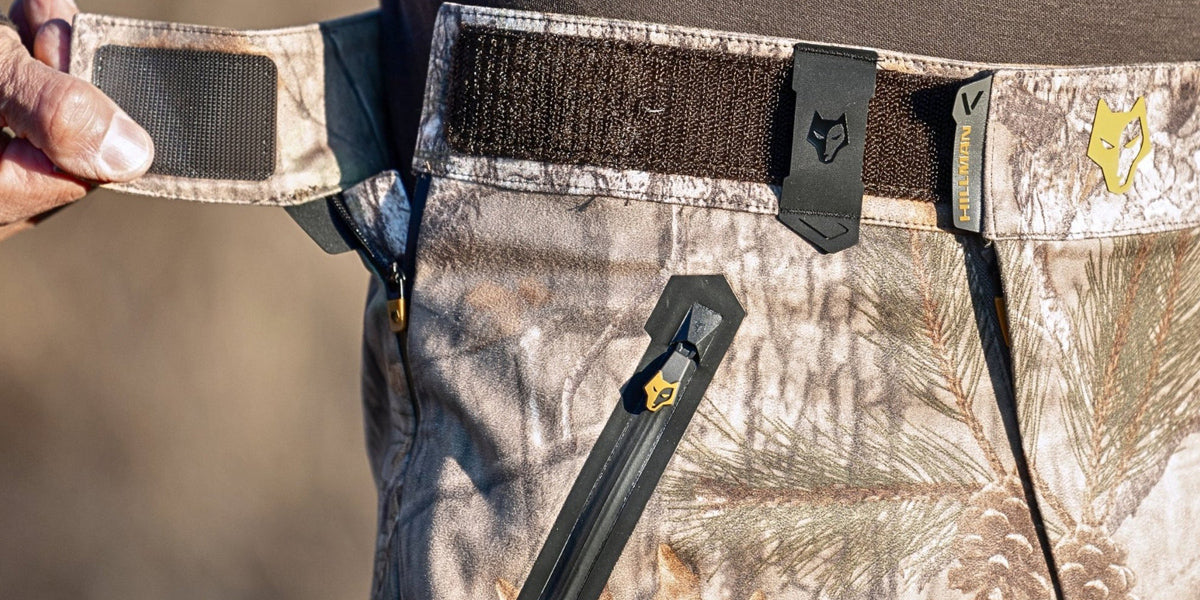
When I look at a waterproof shooting jacket, I pay attention to the construction. Are the seams taped? Are the zippers protected? Does the hood stay where it should when I turn my head? Can I close the cuffs over gloves or under them, depending on the weather? Does the hem stop water from running inside when I bend or raise my arms?
The breathable membrane is the heart of the jacket, but fit gives it practical value. If the jacket is too tight over a mid layer, movement becomes restricted and moisture builds faster. If it is too loose, it catches wind and brush. The perfect fit for hunting is not a fashion fit. It allows space for layering, room for shooting movement, and enough adjustment to seal out bad weather.
This is where waterproof hunting gear earns trust. It does not rely on one impressive material. It combines membrane performance, durable outer fabric, sealed construction, ventilation, and field-ready design.
Rain Gear in Light Rain, Heavy Rain, and Heavy Downpours

I choose rain gear differently depending on the kind of wet I expect. Light rain is forgiving. A treated outer fabric, good layering, and a short exposure may be enough. I still want the jacket to bead water, but I may not need the heaviest shell in the collection.
Heavy rain changes the decision. So do heavy downpours. Once water is constant, I want a proper waterproof membrane, sealed seams, a hood that actually protects the head, and zips that do not become entry points. In those conditions, water resistant clothing rarely holds up for long.
Hunting adds another problem: wet vegetation. Wet brush can be worse than rain because it presses water directly into the fabric again and again. The sleeve brushes against branches. The lower jacket touches soaked grass. The shoulders take pressure from pack straps. Even if the rain is not dramatic, the contact is constant.
That is why I rarely judge gear only by the forecast. I think about the ground, the cover, the hours outside, and how much I will move. A mild drizzle on open ground is one thing. A wet woodland with dense cover is another.
Shooting Jackets and Breathability During Movement
I have more respect now for breathability than I used to. When I was younger, I mostly asked one question: will this keep rain out? Now I ask another: will it let sweat out while I am working?
Good shooting jackets need to protect during stillness and perform during movement. Rough shooting, stalking, and long walks all create heat. Even in cool weather, the body warms quickly under layers. If a jacket has poor breathability, moisture builds inside. Then, when I stop, that dampness cools. The result is not comfort. It is that unpleasant chill that starts between the shoulder blades and slowly moves everywhere.
Ventilation helps. Pit zips, side vents, mesh-backed openings, and smart pocket placement can all release heat without forcing me to stop and rebuild my layers. I like being able to open a vent on the move, especially during a climb, then close it again when I reach a waiting point.
For a waterproof shooting jacket, breathability is not a luxury. It is part of staying dry. Rain outside and sweat inside are different problems, but they often meet in the same garment.
Durable Water Repellent Care: When to Wash, Reproof, or Retire It

A durable water repellent treatment does not last forever. Field use wears it down. Brush rubs against it. Dirt blocks it. Sweat and oils affect it. Washing can help if done correctly, but harsh detergents can make the problem worse.
I treat rain clothing more carefully than ordinary clothing. If the jacket looks dirty or water no longer beads, I clean it with a product made for technical outerwear. Sometimes proper washing and drying are enough to restore the surface performance. Other times, the garment needs a spray-on or wash in treatment to bring back the beading.
I also avoid storing wet gear in a bag for too long. That is a bad habit. A garment that stays dirty, damp, and compressed will lose performance faster. After a wet hunt, I let the jacket dry, check the high-wear areas, and look at the shoulders, cuffs, elbows, and pocket openings. Those places usually show tired water repellency first.
At some point, if the fabric wets out quickly even after cleaning and reproofing, or if seams and zips begin to fail, I stop pretending the jacket is still fit for serious weather. Old gear can still work for light use. But I do not trust it for long hours in rain.
Water Resistant Is Useful, but It Has Limits

Water resistant clothing has its place. I am not against it. For short outings, light rain, dry cold, or days when the forecast is stable, water resistant gear can be lighter, quieter, and more comfortable than a full waterproof shell. Sometimes that versatility is an advantage.
The mistake is expecting water resistant clothing to behave like waterproof clothing. It will not. Once the weather turns into a steady downpour, or once wet brush keeps pressing water into the fabric, the limits appear. The garment may slow the water at first, but it is not built to keep it out for long.
For hunting, that difference matters because discomfort builds slowly. First the sleeve feels damp. Then the shoulders. Then the mid layer. Then I start moving differently because I am cold or distracted. By that point, the gear has already failed its real purpose.
So I still use water resistant pieces, but I choose them honestly. They are for lighter weather, lower exposure, and situations where I do not expect to stand or walk in wet conditions for hours.
Choosing Waterproof Hunting Gear for Real Field Conditions
When I choose waterproof hunting gear, I do not look for one magic feature. I look for a system that matches the way I hunt. The outer fabric should repel water and resist abrasion. The membrane should be waterproof and breathable. The seams should be sealed. The zips should be protected. The hood should move with the head. The cuffs and hem should adjust properly. The fabric should be quiet enough for hunting, not just waterproof enough for walking to the car.
I also think about layering. A rain jacket has to work over a mid layer without feeling tight. It has to allow a full range of movement for shooting. It has to protect while waiting, but not trap too much heat while walking. The best gear gives me options. Vent when moving. Seal down when waiting. Add warmth underneath when the weather turns cold.
That is what I expect from serious waterproof hunting rain gear. Not a jacket that only performs in a shower test, but clothing that holds up when rain, sweat, wet brush, pressure, and time all work together.
In the end, water repellency is the first sign I look for, but not the final answer. Beading water is good. A strong breathable membrane is better. Proper construction is essential. And real trust comes only after the garment has been tested where hunting actually happens: in wet grass, rough cover, changing weather, long walks, and those quiet hours when staying dry is not about comfort alone, but about patience, focus, and confidence.

Share: