
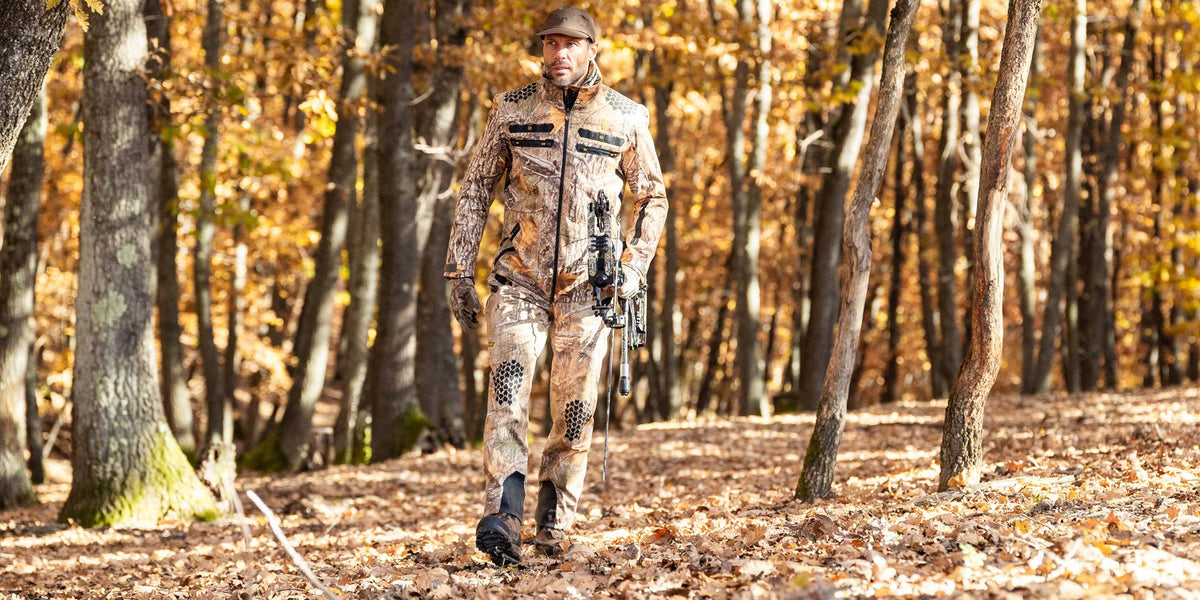
How to Choose Hunting Trousers for Wet Grass, Brush, and Long Walks

I have ruined more than one good day by wearing the wrong trousers. Not in some dramatic way. Nothing tore open in the first hour, nothing failed like in an advert. It was slower than that. Wet grass first. Then the brush started catching around the knees. After a few miles, the fabric felt heavier. When I sat down, the cold came through the seat. By midday, I was still hunting, but part of my mind had already left the woods and gone straight to my legs. That is usually how bad field clothing shows itself. Quietly, then all at once.
I do not choose hunting trousers by looking at them clean and folded. I think about where they will suffer. Wet fields before sunrise. Dense undergrowth. A long walk back when the legs are tired. Kneeling on rough ground. Standing in a high seat with cold air pushing through the fabric. The best trousers for hunting are not the ones with the loudest list of features. They are the ones that keep doing their job when the day gets uncomfortable.
Hunting Trousers Are Tested from the Ground Up

The jacket often gets the attention, but the trousers usually take the first hit. Grass soaks the lower legs before rain even starts. Mud gathers around the cuffs. Thorns and rough stems pull at the fabric. The knees bend, scrape, press into the ground, then do it again. After a few hours, ordinary outdoor trousers begin to show what they were not made for.
Proper hunting trousers need to resist wear without turning stiff. I look for reinforced panels in the places that actually work: knees, seat, inner legs and lower cuffs. Those are the areas that meet brush, boots, frozen ground, bark and mud again and again. If the fabric cannot resist abrasion, it may still look fine in the beginning, but it will not hold up over several seasons.
There is another thing I care about, and it is harder to judge in a shop: shape. Some trousers feel fine when I stand still, then start pulling strangely when I climb or kneel. A durable pair should hold its shape after use. It should not sag at the knees, twist at the leg or feel baggy after a few long days outside. Hunting asks for movement, but it also asks for patience. Clothing has to handle both.
Shooting Trousers Designed for Movement, Not Posing
I do not need trousers that look good only when I am standing straight. I need them to behave when I step over a fallen branch, drop slowly to one knee, shift my weight without making noise, sit for a while and then move again without feeling the fabric drag across my legs.
That is where shooting trousers designed for the field are different from casual outdoor trousers. Fit matters more than people admit. Too tight, and every climb becomes annoying. Too loose, and the fabric catches, flaps or rubs. Around the waist, I want security without pressure. Through the thigh, enough room. At the knee, a cut that understands the body bends there.
Articulated knees are not just a technical phrase on a label. They change how the trousers move. Stretch panels help too, especially on uneven terrain or when shifting position carefully. I notice it most when I kneel or climb. If the trousers stay with me instead of pulling against me, I forget about them. That is a good sign.
The same goes for reinforced knees and the seat. A soft pair may feel pleasant in the beginning, but if I am kneeling in damp leaves or sitting on rough timber, I want more than softness. I want durability where the pressure lands.
Waterproof Trousers Are Not Only for Rain

Some of the wettest days I have had did not begin with rain. They began with wet grass. That kind of moisture is sneaky. It brushes the lower legs over and over until the fabric gives in. Add a bit of mud, a damp seat, a kneeling position and one longer walk, and suddenly the trousers that were “water-resistant enough” are not enough at all.
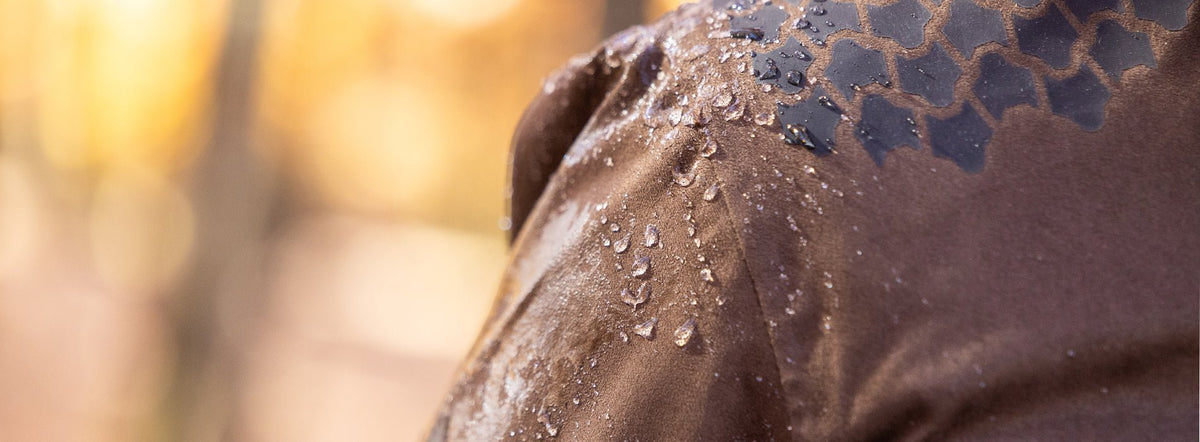
That is why I take waterproof hunting trousers seriously. Not because I expect to stand in heavy rain every time, but because wet conditions rarely come from one direction. Water comes from grass, ground, brush, drizzle, snow, mud and sometimes from my own sweat if the trousers do not breathe.
Good waterproof trousers need a proper balance. A waterproof breathable membrane helps keep water out, but the trousers still have to let heat escape. During a long climb or active stalk, I warm up quickly. If moisture stays trapped inside, the trousers become clammy even though the rain has not entered. That is a strange kind of discomfort, and it usually gets worse as the day goes on.
Ventilation zips are one of those details I used to underestimate. Now I look for them, especially in wet weather trousers meant for active use. Being able to release heat while walking, without stopping to change layers, is useful. Mesh-backed vents can help too. Waterproofing is important, but breathability is what keeps waterproof clothing wearable for more than an hour of real movement.
For me, the best waterproof hunting trousers are not simply the driest pair. They are the pair that can handle water, walking, sweat, brush and still remain quiet enough for hunting.
Brush, Thorns and Rough Ground Tell the Truth

Brush has a way of exposing weak trousers. Rain tests the membrane. Brush tests everything else. The fabric, stitching, panels, cut and noise all get judged when the legs start pushing through dense undergrowth.
I pay close attention to the front of the thighs, the knees and the inner legs. These areas take more abuse than the rest. Reinforced panels around the knees and lower legs are worth having in rugged terrain, especially where thorns, roots and rough stems are part of the day. The fabric does not need to feel like armour, but it should not feel fragile either.
Abrasion resistance matters because wear does not always happen suddenly. It happens in small scrapes. A branch here, a rock there, boots rubbing against the cuffs, wet brush dragging across the leg. After one outing, it may not look like much. After a season, weak trousers start telling the story.
This is also where I think Hillman trousers make sense as part of a hunting system rather than just another pair of outdoor trousers. The stronger fabrics, reinforced zones and field-minded cuts are not there for decoration. They are there because hunting is hard on clothing in a very specific way. It is not hiking on a clean trail. It is slower, rougher, wetter and quieter.
The Right Pair Has to Work with Hunting Boots
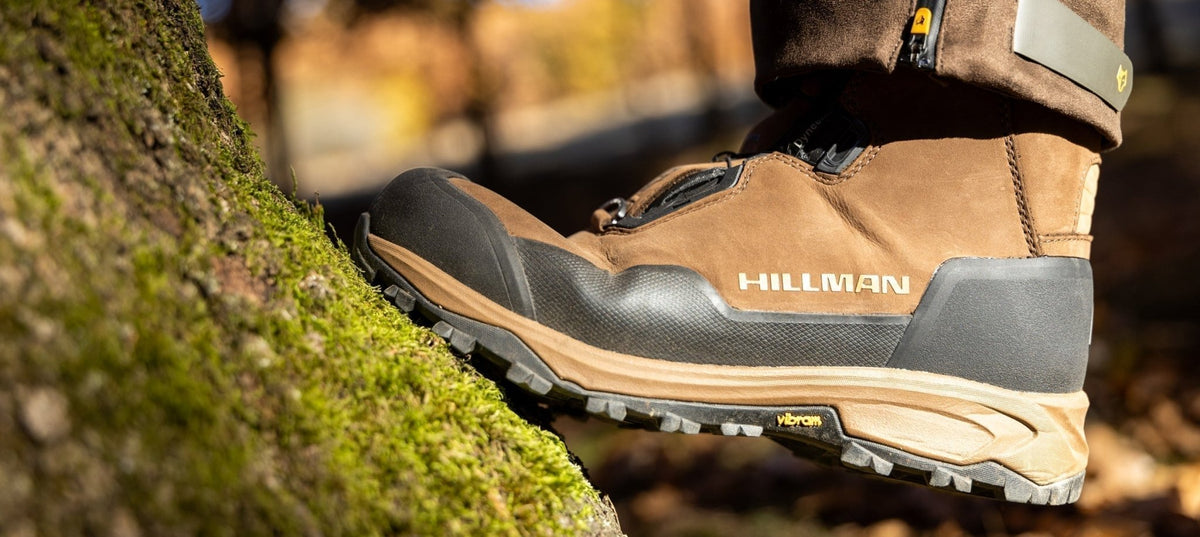
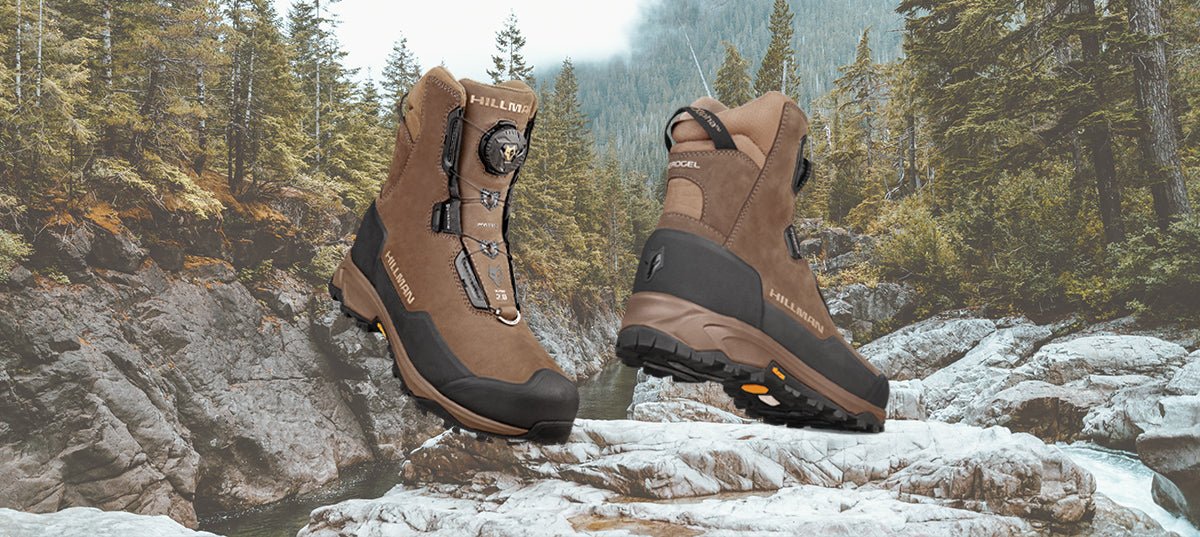
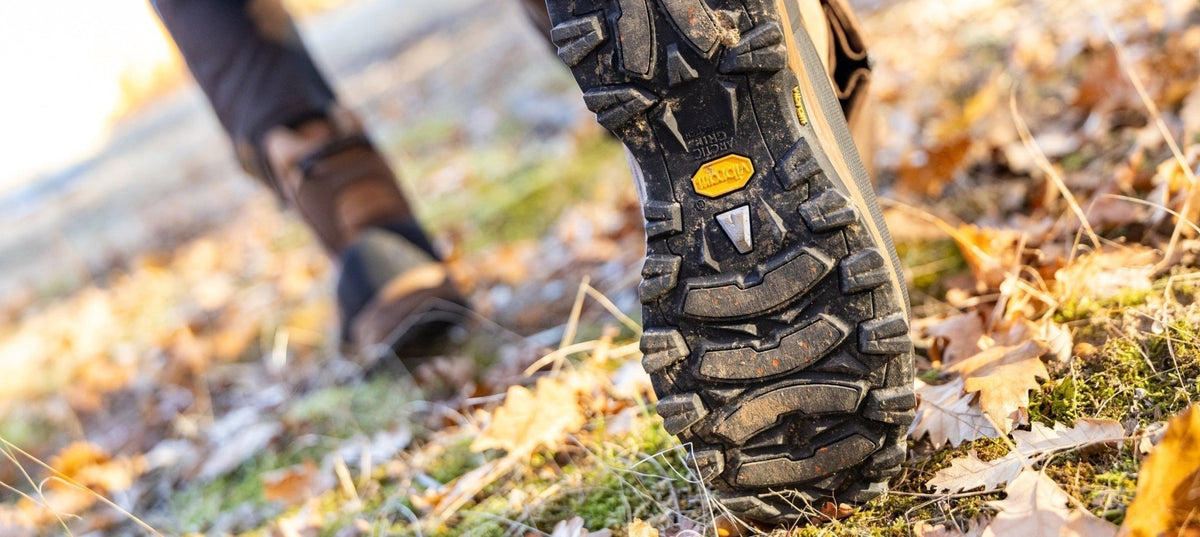
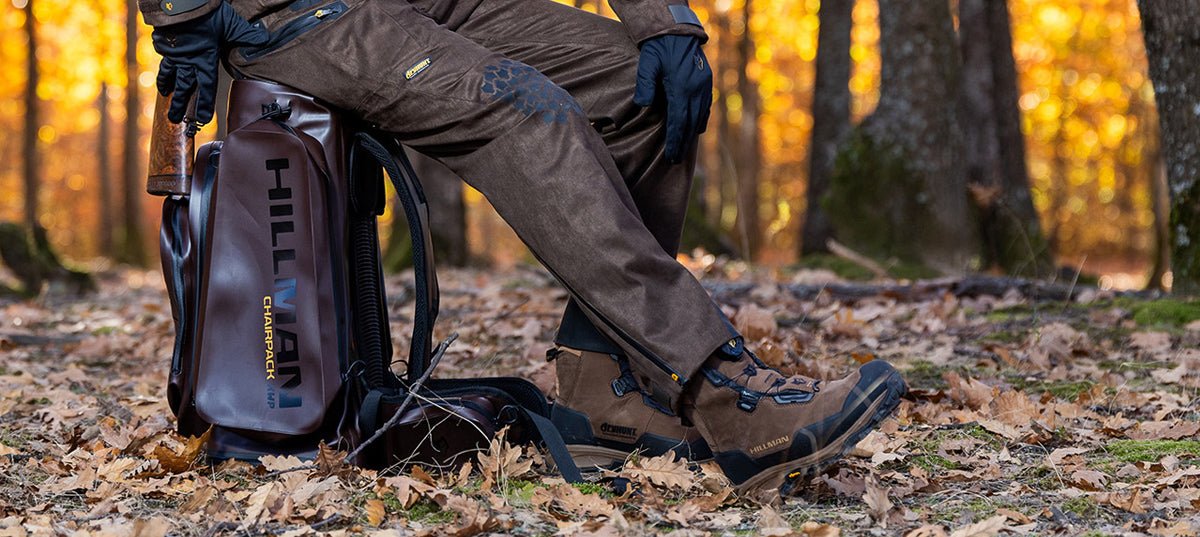
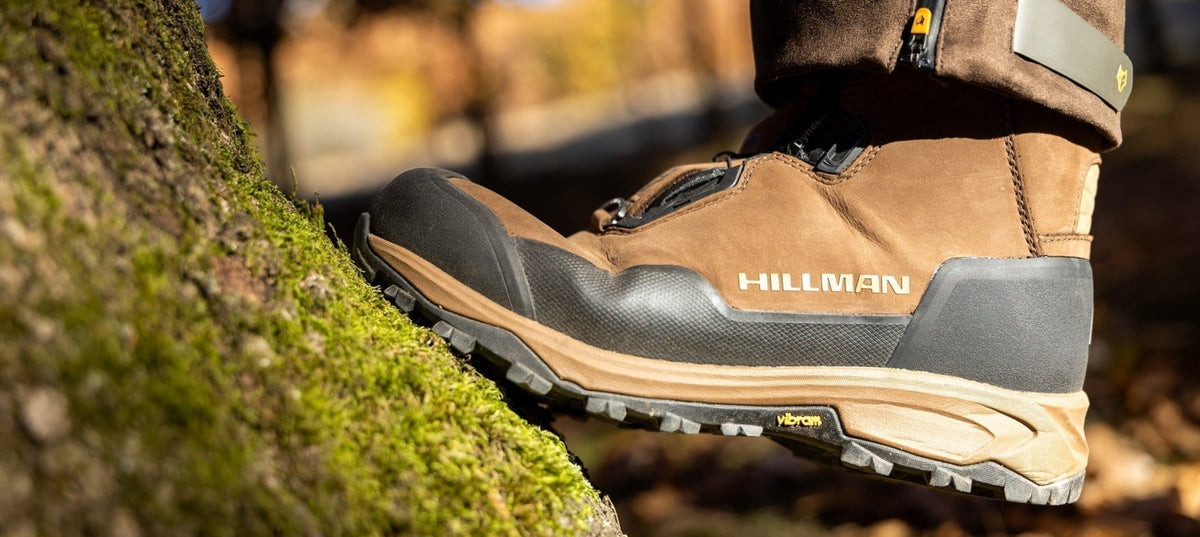
I never separate trousers from boots. It sounds like a small thing, but the lower leg can make or break comfort in wet ground. If the cuff sits badly over hunting boots, water and mud find gaps. If the lower leg is too narrow, winter boots feel awkward. If it is too loose, the fabric catches on brush or moves too much with every step.
A good overlap matters, especially in wet grass. I want the trousers to sit cleanly over the boot, without dragging or riding up. Adjustable cuffs, side zips or boot-friendly openings can make a difference, depending on the season. In winter, I may wear heavier boots. In early season, I may want something lighter and more breathable. The trousers should not fight those changes.
This is why I am careful with ordinary walk trousers. They may feel great on a dry path. That does not mean they are ready for hunting. Long walks are only part of the job. The trousers also need to deal with mud, brush, stalking, silence, moisture, boots and awkward movement. Walking comfort is useful. Field protection is something else.
Pockets Should Help, Not Get in the Way

I like pockets, but only when they behave. Too many badly placed pockets are worse than a few useful ones. I do not want gear bouncing against my leg while I walk. I do not want noisy closures when I am trying to move carefully. I do not want to dig for a knife, a small tool or cartridges with cold fingers while the fabric crackles every time I touch it.
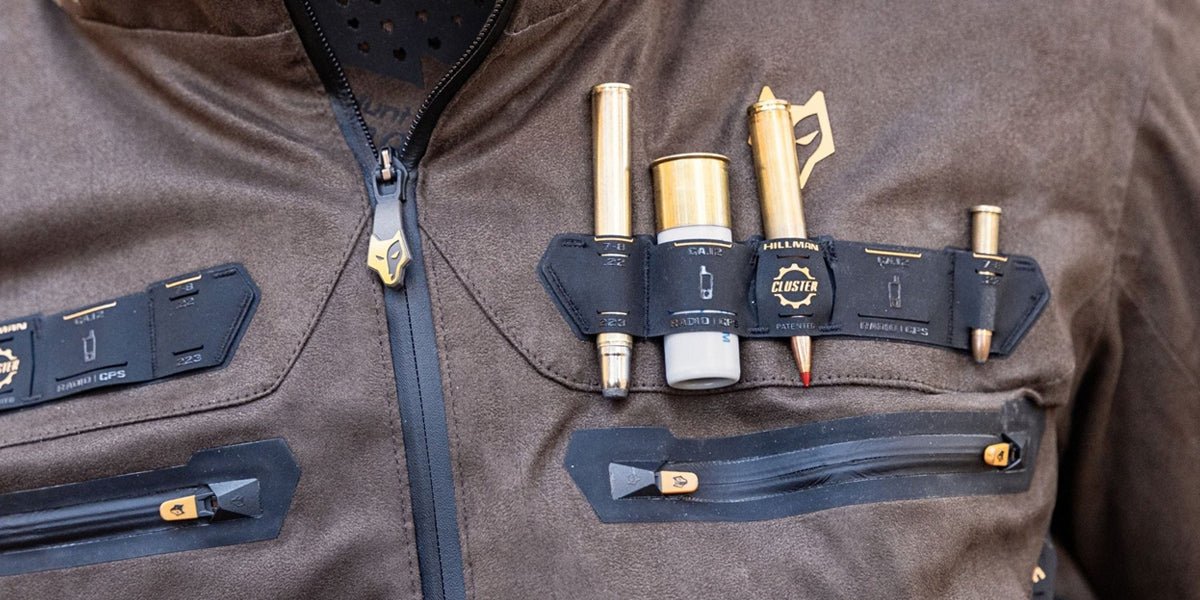
Good shooting trousers often have multiple pockets, but the important part is not the number. It is access. Large thigh pockets can be useful if they sit flat and do not swing. Zipped compartments are better for things I cannot afford to lose. Some hunting-specific pockets are made for cartridges or tools, and that can be helpful depending on the kind of shooting. But I still prefer pockets that stay quiet, secure and simple.
The waist is another overlooked feature. An adjustable waist can save a lot of irritation. Layers change through the season. Some days I wear a warmer base layer. Some days I want a lighter setup. After hours of sitting, standing, climbing and bending, a fixed waistband that felt fine in the morning can become annoying. Small details like that rarely sell trousers, but they often decide whether I enjoy wearing them.
Early Season, Wet Weather and Winter Need Different Thinking

I do not believe in one pair for every day, at least not if the hunting is varied. Early season has its own demands. The weather may be mild, the walking longer, the stalking more active. In that case, breathable fabrics, lighter construction and quiet movement matter more than heavy warmth. I still want protection from brush and wet grass, but I do not want to overheat before the day has properly started.
Wet weather asks for another kind of trust. Then I look harder at waterproofing, sealed construction, water-repellent fabric and ventilation. If the trousers can keep moisture out but trap every bit of heat inside, they are not going to feel good on long walks. Temperature regulation matters. So does the ability to open vents and keep moving.
Winter is different again. Frozen ground, cold seats and long periods of waiting make warmth important. Wind-resistant fabric or dense softshell materials can help when I am on open hillsides or elevated ground, where cold air works through weak clothing quickly. Still, too much insulation during active movement can lead to sweat, and sweat becomes cold later. That is the balance every outdoor enthusiast learns, usually through one or two uncomfortable mistakes.
Silent Movement Matters More Than It Sounds

There is a particular kind of fabric noise that starts to bother me before anything else does. A scrape at every step. A swish when the thighs touch. A dry rustle when I kneel. It may not sound dramatic indoors, but in still woodland it becomes impossible to ignore.
Silent movement is not a romantic idea. It is practical. Animals react to sound, and even when they do not spook, noise changes how I move. I become slower in the wrong way. More tense. Less natural.
Soft brushed fabrics, quiet technical materials and wool-based blends can help. I am not saying trousers need to be silent in some perfect laboratory sense. They just need to avoid that sharp, artificial sound that carries through brush. When stalking through dense undergrowth, quiet fabric can matter as much as weather resistance.
Colour has its place too. Green, brown, olive and grey tones usually make sense because they sit more naturally in the landscape. But colour will not save loud trousers. If I can hear myself every time I shift position, I assume the game may hear me too.
How I Know I Have Found the Right Pair?

I know I have found the right pair when I stop making little mental complaints. No wet cuffs after the first field. No tight pull across the knees when I climb. No cold seat after five minutes of sitting. No noisy scrape in brush. No trapped heat building during a long walk. No pocket bouncing against my thigh. No waistband reminding me it exists.
That is what the best trousers for hunting do. They do not make the day perfect. They just remove a long list of small problems. They keep the legs protected, dry enough, quiet enough, and free enough to move. They work with boots, layers, and the season instead of forcing me to adapt to them.
And when I think about the best waterproof hunting trousers, I judge them the same way. Not by whether they sound impressive on paper, but by what happens after several hours outside. Wet grass, brush, mud, wind, sitting, kneeling, walking, and waiting. If the trousers handle all that without asking for attention, they are doing their job.
In the end, hunting trousers are not just something I wear below the jacket. They are part of the kit that takes the first punishment from the ground. When they are right, I can stay patient. I can move quietly. I can walk longer. I can focus on the hunt instead of my legs. That is worth investing in.

Share: