Small Hunting Gear Adjustments Hunters Should Make
Table of Contents
Small Hunting Gear Adjustments Hunters Should Make During the First Hour in the Field
The first hour in the field is when hunting gear begins to behave differently from the way it did beside the vehicle. Body heat rises, the pack settles, socks shift, and small pressure points become noticeable. This is a practical checkpoint, not a fixed deadline. A seasoned hunter may need to stop earlier if something feels wrong. Correcting a warm back, moving heel, or loose strap now can prevent wet layers, sore feet, restricted movement, and distracting noise later. That ability to adapt to changing weather conditions is one of the clearest signs of quality hunting gear.
Why the First Hour Reveals What Your Hunting Gear Needs
A trailhead fit check can confirm that every buckle closes and each garment feels comfortable. It cannot recreate a steep climb, wet brush, rough terrain, or the repeated movements of stalking through thick cover.
After a sustained walk, five areas deserve attention: heat, pressure, movement, noise and access. Is warmth building beneath the jacket? Are the boots pressing against one part of the foot? Has the pack begun to sway? Can you hear loose straps or objects moving inside a pocket? Can you reach water, navigation, and the next layer without unpacking everything?
Each correction should prepare the system for the next phase of the hunt rather than the ground already covered. The best time to correct a small gear problem is when it first becomes noticeable, not when it has already changed the hunt.
Adjust Hunting Clothing Before Sweat Becomes the Problem
A warm neck, damp back, or sudden feeling of trapped heat is an early warning. It usually means the pace and insulation no longer match. Waiting until the base layer is wet makes temperature control more difficult, especially when active movement is followed by a long static wait.
Open mechanical ventilation first. Use pit zips, trouser vents or the front zipper to release heat while retaining the necessary waterproof protection. If the weather permits, remove an unnecessary mid layer before sweat begins to collect.
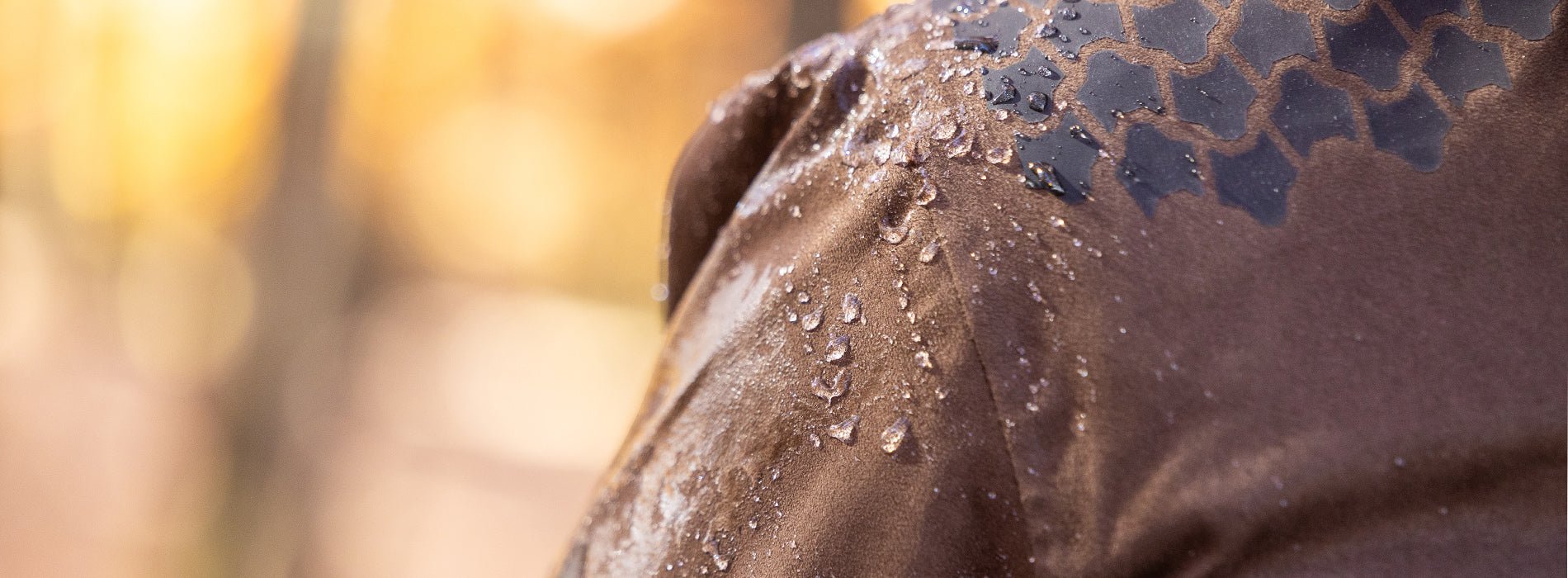
A waterproof membrane can help moisture vapor escape, but it cannot compensate indefinitely for excessive insulation during a hard climb. Even effective waterproof hunting gear requires active management when physical effort, humidity and limited airflow combine.
Outer layers protect against wind and rain while allowing moisture to escape, but they still need to be adjusted to the conditions and the hunter’s level of exertion. Opening a full zip or a pair of pit zips before the inner clothing becomes wet can make the difference between staying comfortable and carrying trapped moisture into the next, colder stage of the hunt.
Check Base Layers While They Are Still Managing Moisture
Base layers should move perspiration away from the skin without holding more warmth than the activity requires. A lightweight T-shirt may be enough in summer, while winter hunting usually calls for a system that balances moisture control with insulation.
Natural fibers can make all the difference in next-to-skin comfort, but the fiber name alone does not determine performance. Merino wool is breathable and tends to retain less odor than polyester. A carefully constructed bamboo-viscose blend can feel soft against sensitive skin and help manage moisture during warm-weather use. Fabric weight, fit, construction and the layers worn above it remain equally important.
Hillman’s 1UL Bamboo T-shirt is specified as quick-drying, moisture-wicking, breathable and UV-blocking. Its seamless shoulder yokes are intended to reduce pressure beneath a backpack or rifle. These are characteristics of this particular garment, not automatic properties of every bamboo shirt.
The 2BL Merino-Bamboo Base Layer combines merino wool, bamboo viscose, organic cotton and elastane. It is designed to manage moisture, dry quickly and help hunters stay warm when temperatures fall. Natural fibers can improve the comfort of hunting apparel, but their field performance still depends on how the complete clothing system is built and used.
Use a Full Zip and Vents Before Removing a Layer
A full zip gives the hunter more control than an all-or-nothing choice between wearing and removing a jacket. Opening it partially may be enough on a sheltered climb. Pit zips can release heat while the shell continues to cover the torso in rain, wind, or wet vegetation.
Vent gradually and reassess after the pace changes. Before stopping, close the openings and add dry insulation while the body is still warm. This is easier than trying to recover warmth after perspiration has cooled against the skin.
Reset Hunting Jackets for Weather, Movement and Visibility
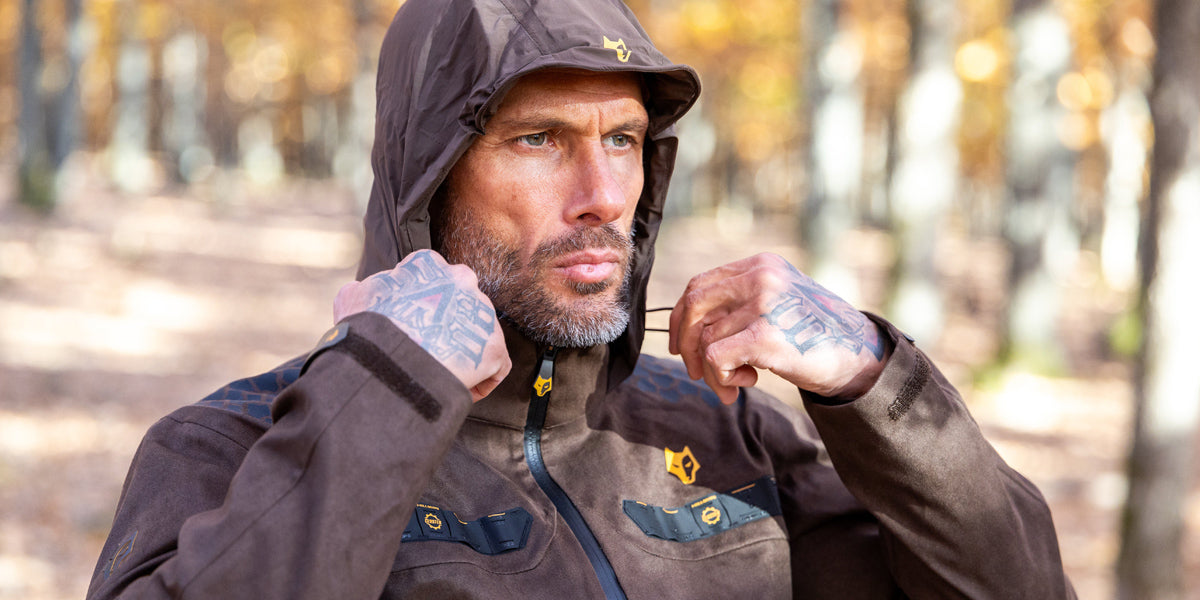
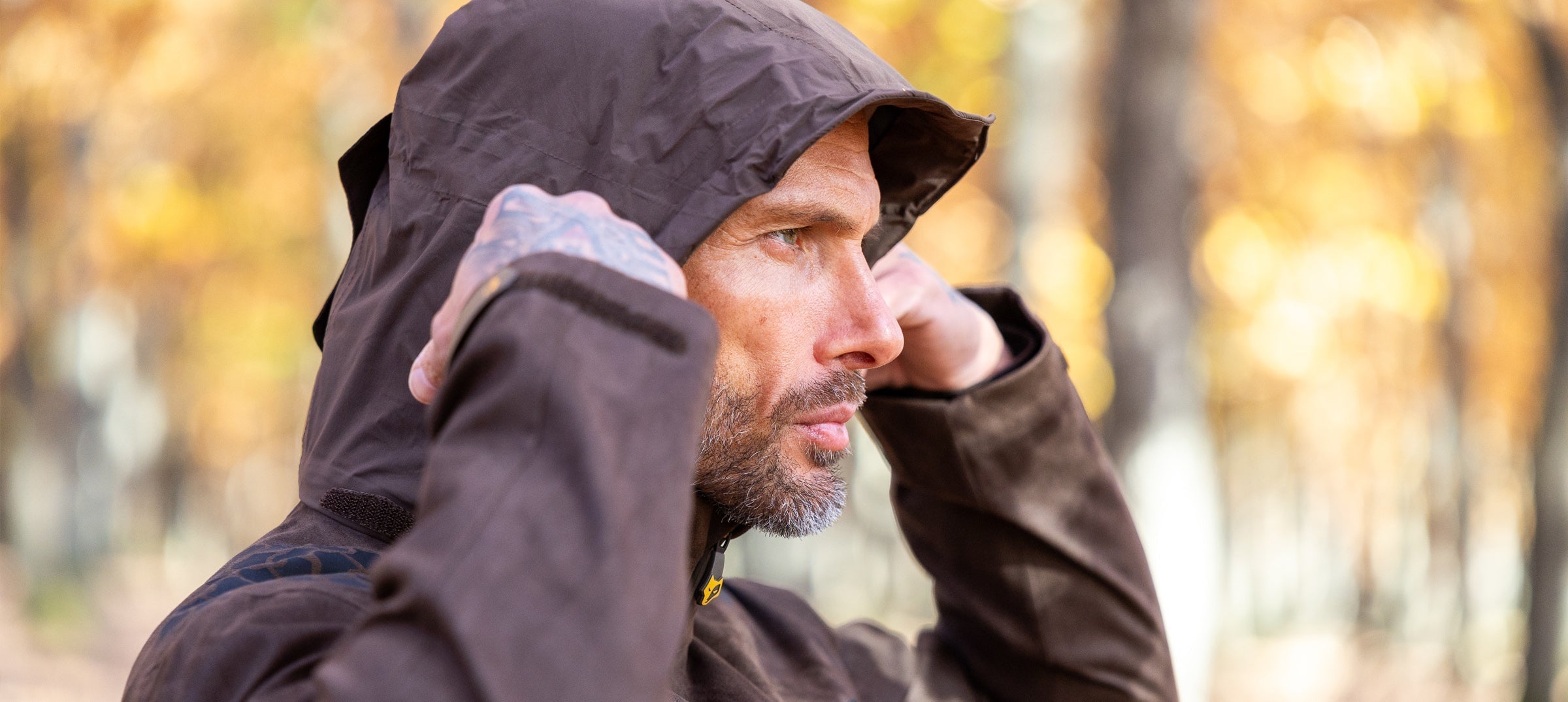
Hunting jackets should be checked through movement, not only while standing upright. Turn your head with the hood raised. Shoulder the firearm safely. Kneel, reach forward and rotate through the upper body. The hood should follow the head without narrowing peripheral vision, while the shoulders should allow movement without pulling the cuffs upward.
Check whether rain can enter at the wrists and whether the hem remains covered when the pack is worn. Tightening every adjustment is rarely the answer. Overly close cuffs can trap heat, while an aggressively cinched hood may interfere with hearing or vision. The aim is to keep the hands dry without sealing the sleeves so tightly that ventilation is lost.
The AlphaShell 5WL Rain Jacket provides a practical example. Its Dryhunt nanomembrane, fully taped seams and waterproof AquaGuard zippers are designed to prevent external water from entering, while pit zips and a two-way front zipper allow the hunter to manage excess heat. Its adjustable hood, cuffs and hem make it possible to alter protection without removing the shell.
That combination becomes particularly useful when persistent coastal moisture, wet vegetation or sudden showers are followed by active movement. In summer rain, the lightweight AlphaShell 5WL provides waterproof protection without functioning as an insulated winter jacket. Its Durasuede surface is designed to reduce fabric noise while maintaining the durability needed around thorns and demanding vegetation.
Check the Waist and Knees at the Same Time
Run the same movement test at the waist, knees and ankles. Crouch, climb and kneel to identify fabric that gathers behind the knees, pulls across the thighs or rises above the boots.
Selected Hillman trousers use articulated knees and stretch construction to follow these movements more naturally. The 5WL Lightweight Waterproof Hunting Pants also include the Varilock waist system, which allows stepless adjustment across approximately one size. The fit can therefore be tailored to a lighter summer setup or to additional winter base layers without relying on a rigid waistband.
Retension the Pack After the Load Settles
A pack that felt secure at the start may begin to pull away from the back once its contents settle. Sway on uneven ground, excessive pressure on the shoulders, or a sternum strap that affects breathing all indicate that the load needs attention.
Start with the hip belt so the hips carry the main weight. Adjust the shoulder straps next, followed by the sternum strap and stabilizers. The sternum strap should hold the shoulder straps in position without restricting the chest. Stabilisers can be tightened for greater control on broken terrain or eased slightly for airflow and freedom of movement on easier ground.
Secure loose strap ends and separate hard accessories that knock together. If the pack still moves after adjustment, the problem may be internal load placement rather than strap tension.
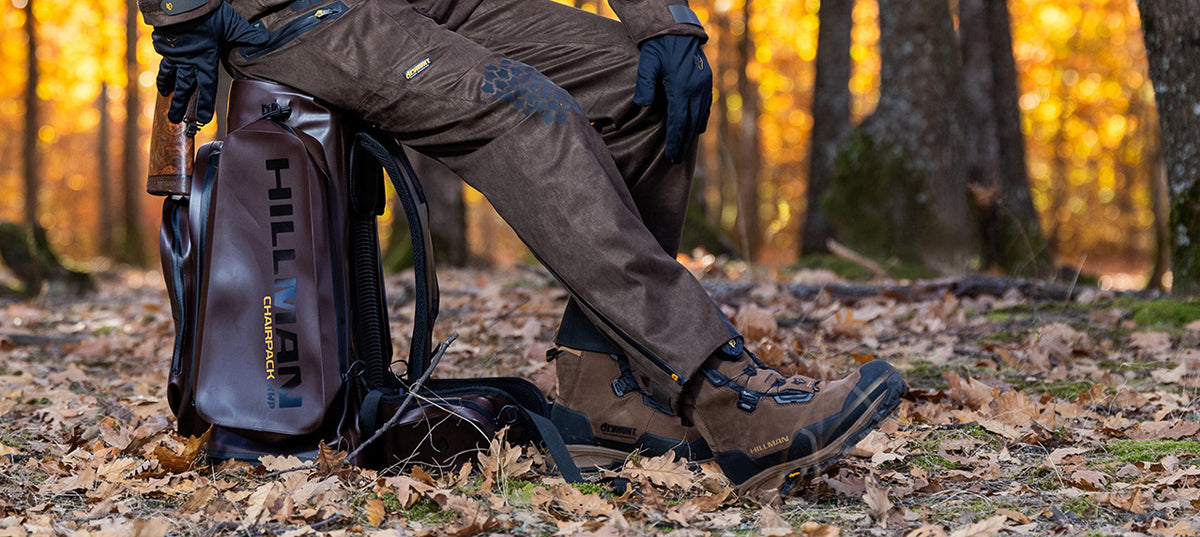
The Chairpack XWP40 includes six-point weight-distribution adjustments, a ventilated back and organized external storage. These features still need to be set for the individual hunter, the carried load and the terrain.
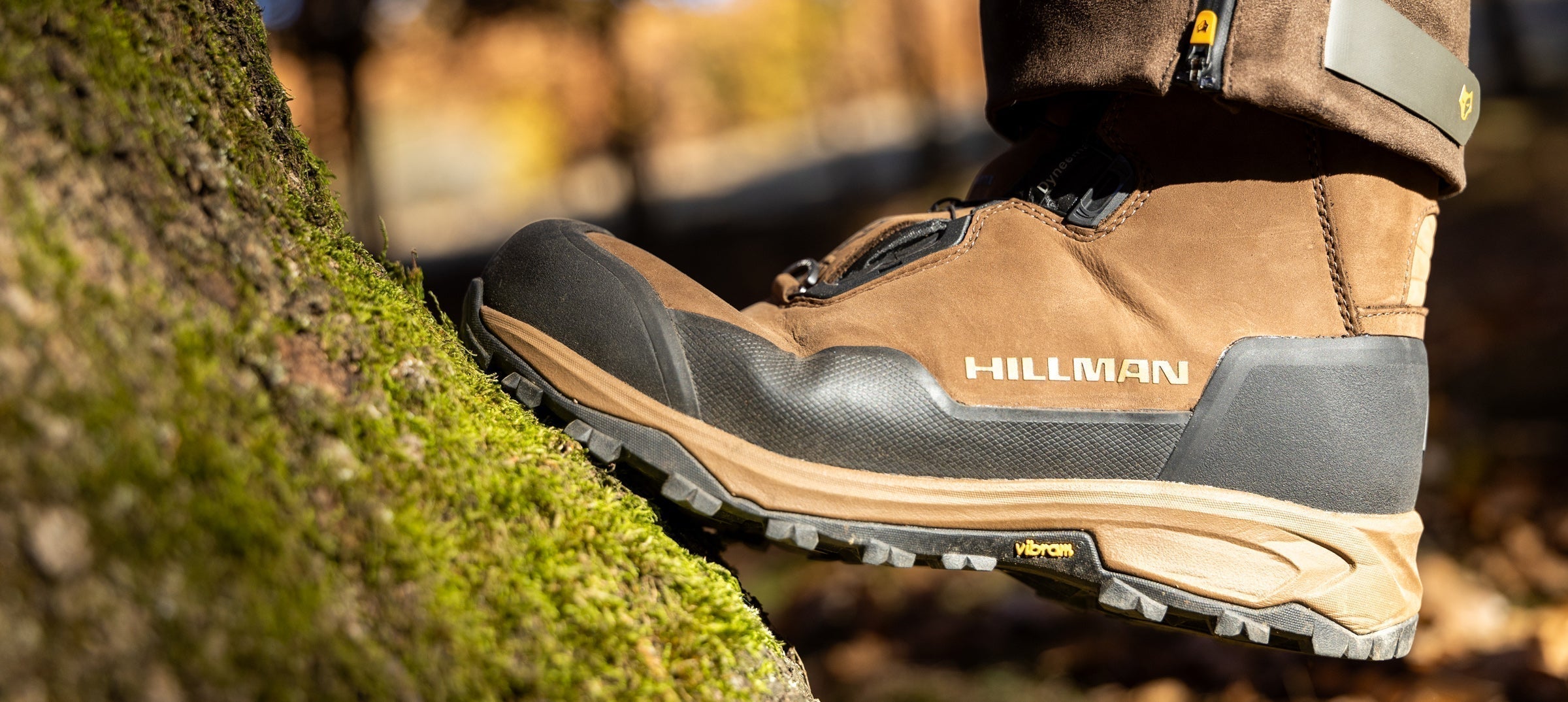
Stop and Adjust Hunting Boots at the First Pressure Point
A hot spot is useful information. It is the moment to stop, not something to tolerate until the next planned break. Heel lift, pressure across the forefoot, a sock wrinkle, or burning in one small area can develop into a much larger problem over full days in the field.
A small laboratory study found an average 1.4% increase in foot volume after ten minutes of treadmill walking. The research was not conducted with hunters in mountain conditions, so the number should not be treated as a universal fitting rule. It does, however, help explain why a pair of hunting boots may feel different after movement begins.
Take the pressure off the foot and smooth the sock before altering the boot. With conventional lacing, tension can often be adjusted locally to stabilize the heel without compressing the toes. With a mechanical closure, release and reset the system evenly. More tension is not always more support.
Before judging a pair of boots by its insulation alone, check whether the heel is controlled and the toes retain enough room for circulation. In winter, that circulation is as important as insulation when the aim is to keep the feet warm. Moisture-wicking socks and waterproof boots can help keep feet dry, but neither can correct a mismatch in shape or size.
Why the Best Hunting Boots Still Need a Field Fit Check
The best hunting boots for a particular hunter must suit foot shape, terrain, temperature and activity. Waterproofing, insulation and traction cannot compensate for poor fit.
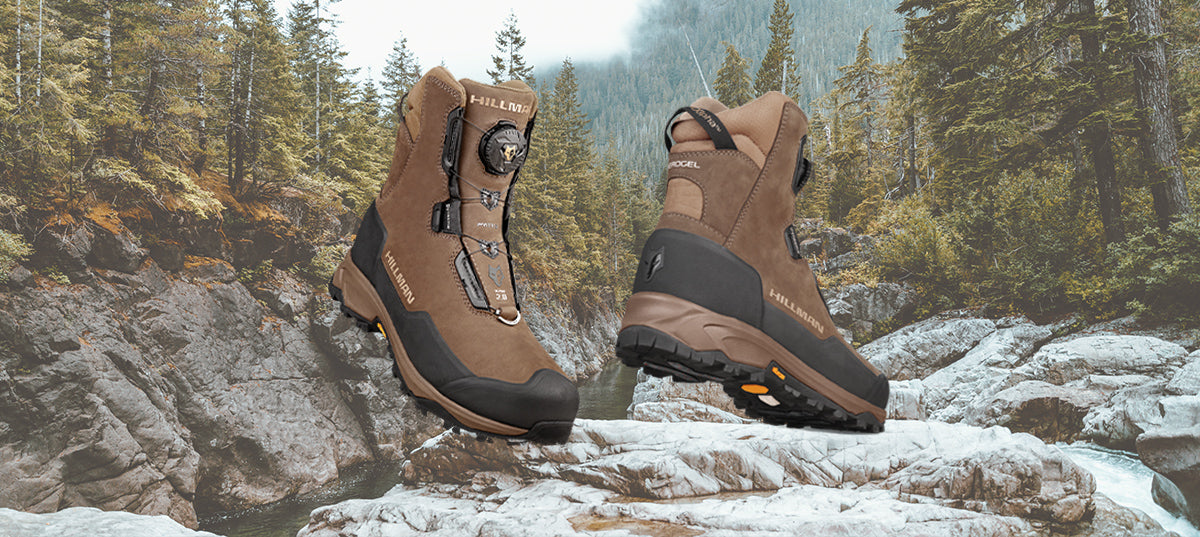
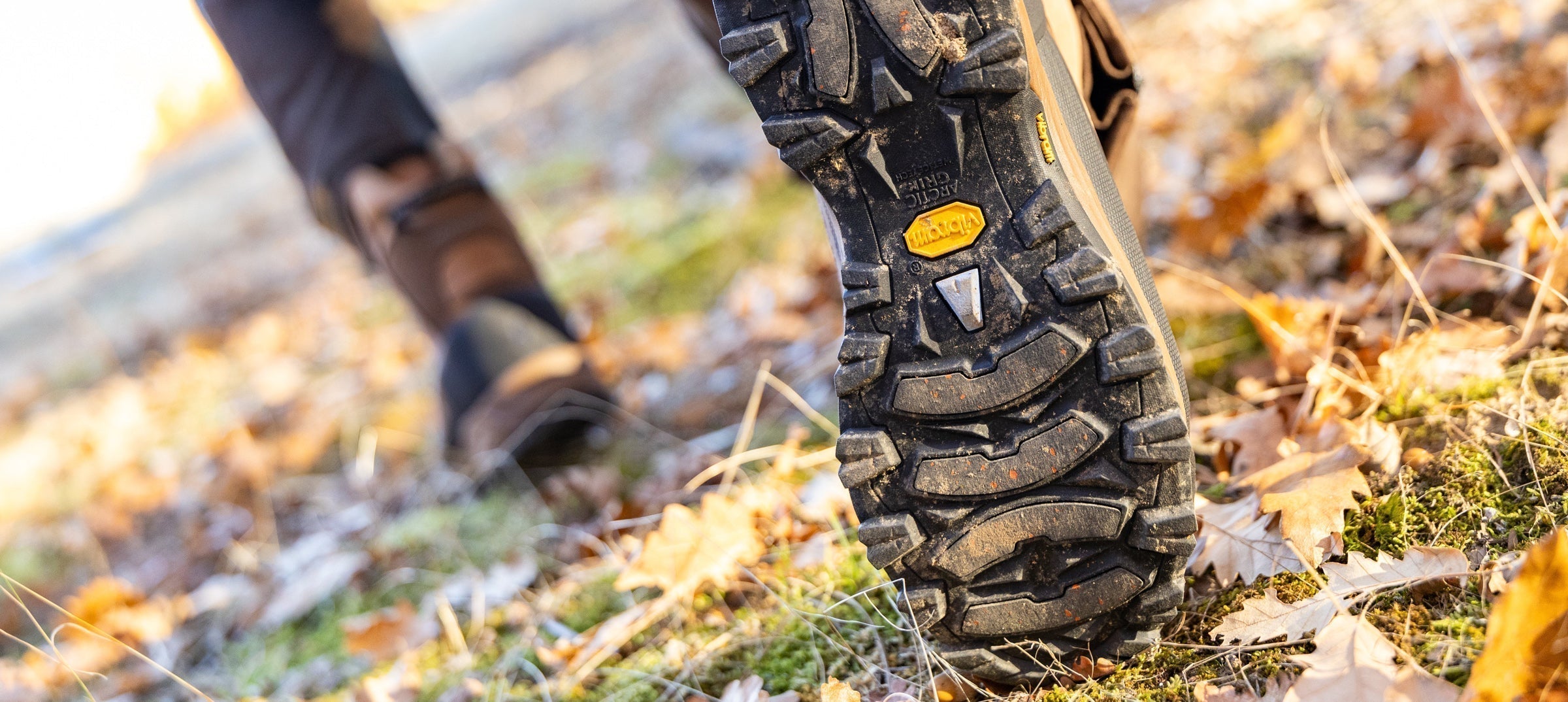
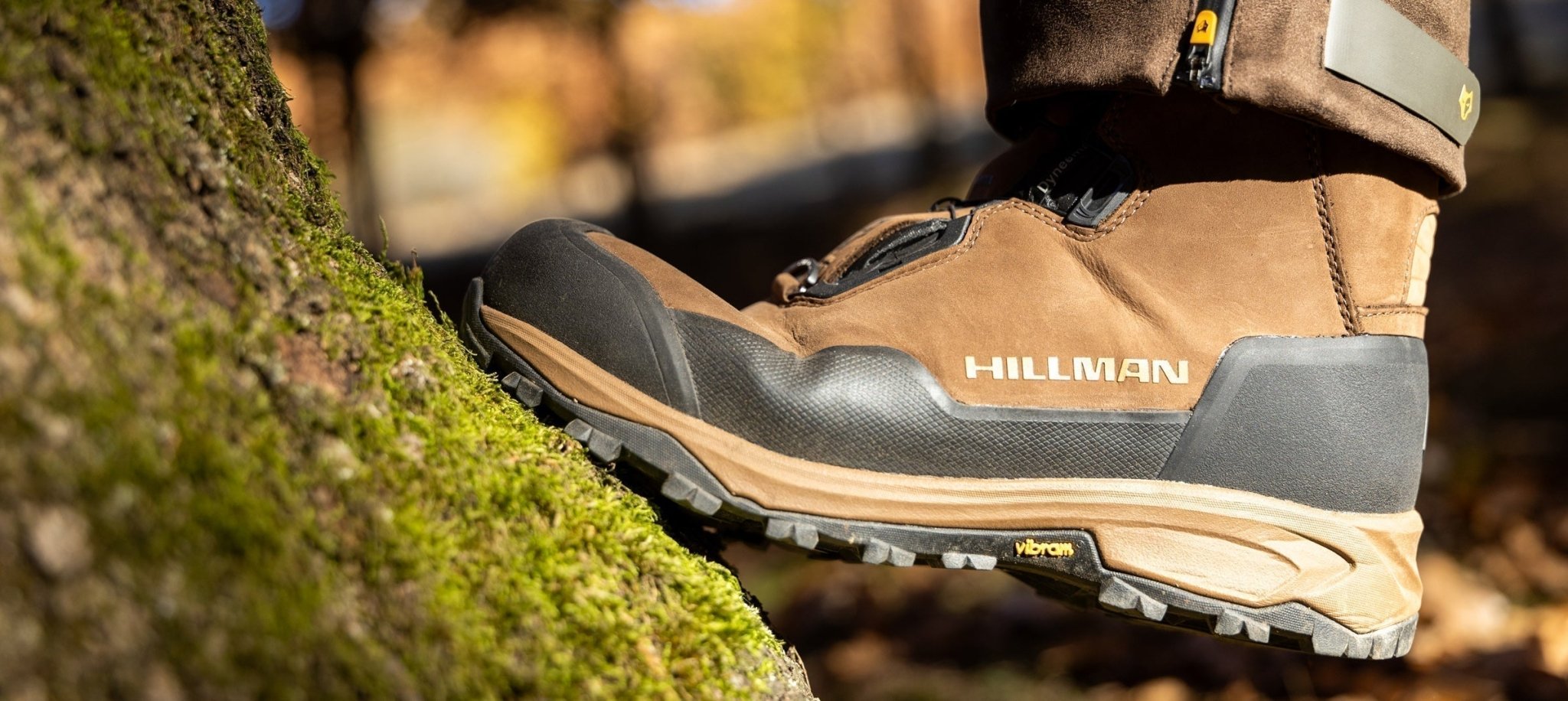
Features should also be attributed to the correct model. The Aerogel 2.0 Insulated Hunting Boots, for example, use a Dryhunt membrane, Matrix and Aerogel insulation, a FreeLock closure and a Vibram Arctic Grip outsole.
This construction differs from boots that describe warmth through a conventional insulation weight of 200 or 400 grams. Comparing those figures directly would not explain how the Aerogel 2.0 is built. What matters during the first-hour check is whether the closure keeps the heel controlled without creating pressure across the front of the foot.
Quiet Your Hunting Clothes Before Entering Thick Cover
The first walk often reveals noises that were impossible to hear while dressing. A zipper pull may tap against metal. Loose webbing may brush the jacket. Cartridges, keys or other accessories may move inside a pocket. Hunting trousers can also gather around the knees or catch at the top of the boots.
Correct the source rather than accepting the sound. Secure strap ends, separate hard objects and reposition pocket contents. Adjust trouser hems so they continue to cover the boots without restricting the ankle. Check that the jacket, binocular harness and backpack straps do not compete for the same space around the shoulders.
Fabric choice helps, but silent hunting clothes are still part of a complete system. Durasuede and other brushed surfaces can reduce clothing noise; they cannot silence poorly organized equipment or unnecessary movement. Hillman uses a woven, brushed Durasuede shell on selected garments to combine quieter movement with resistance to thorns and rough vegetation.
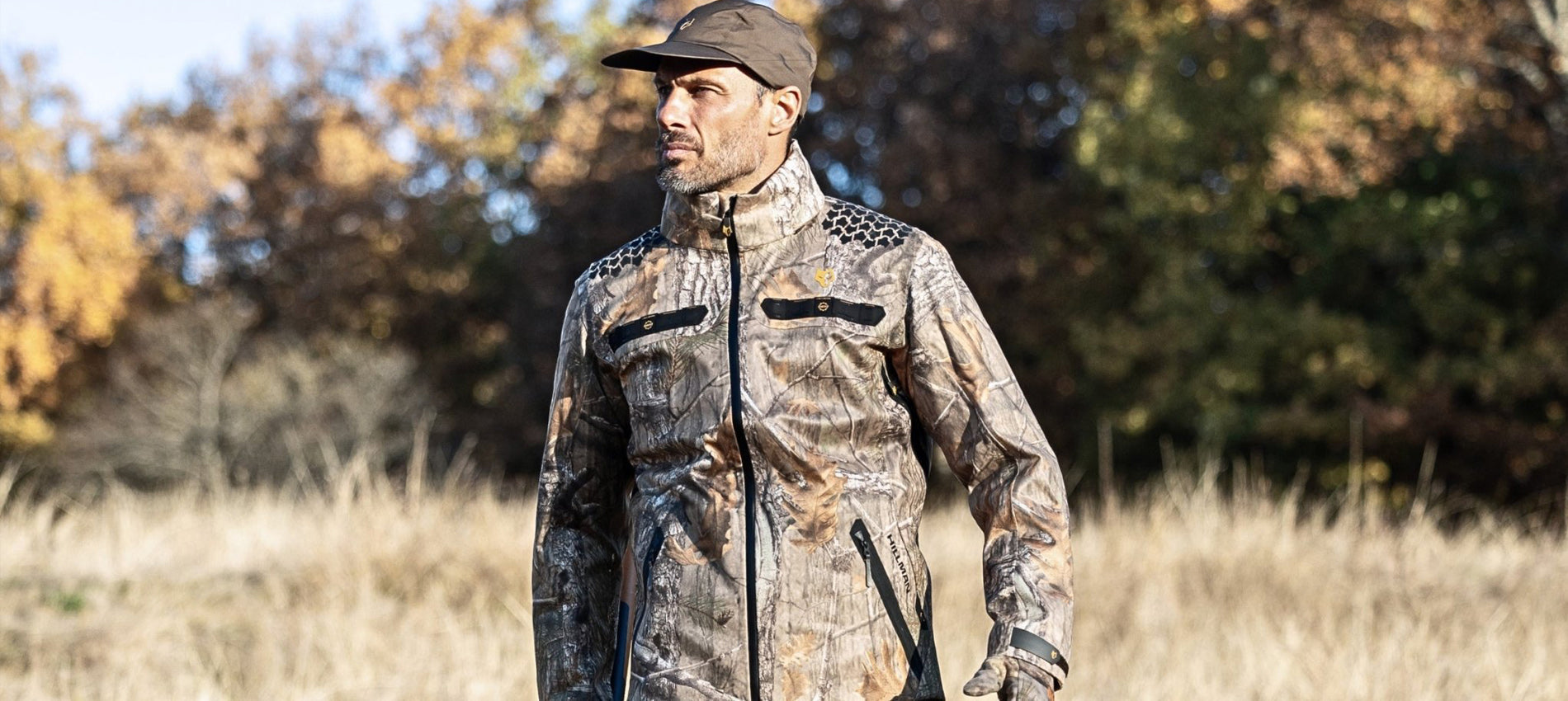
Camouflage works best when its scale and contrast correspond to the surrounding cover and help break up the human outline. Bright, strongly contrasting colors can make movement more visible to game, including deer, but concealment never takes priority over safety. High-visibility requirements differ by country, hunting method, and season, so the locally prescribed safety clothing must always be worn.
Reposition Essential Hunting Gear for Faster, Quieter Access
After the first stretch of movement, you know which items are being used and which are getting in the way. Water, navigation tools, an optics cloth, gloves, and the next required layer should be reachable without unloading the entire pack.
This does not mean placing everything in external pockets. Frequently used outdoor hunting gear needs a clear access hierarchy, while emergency equipment should remain in a consistent, known location. Waterproof storage should be reserved for items that must stay dry rather than used as an excuse for disorganized packing.
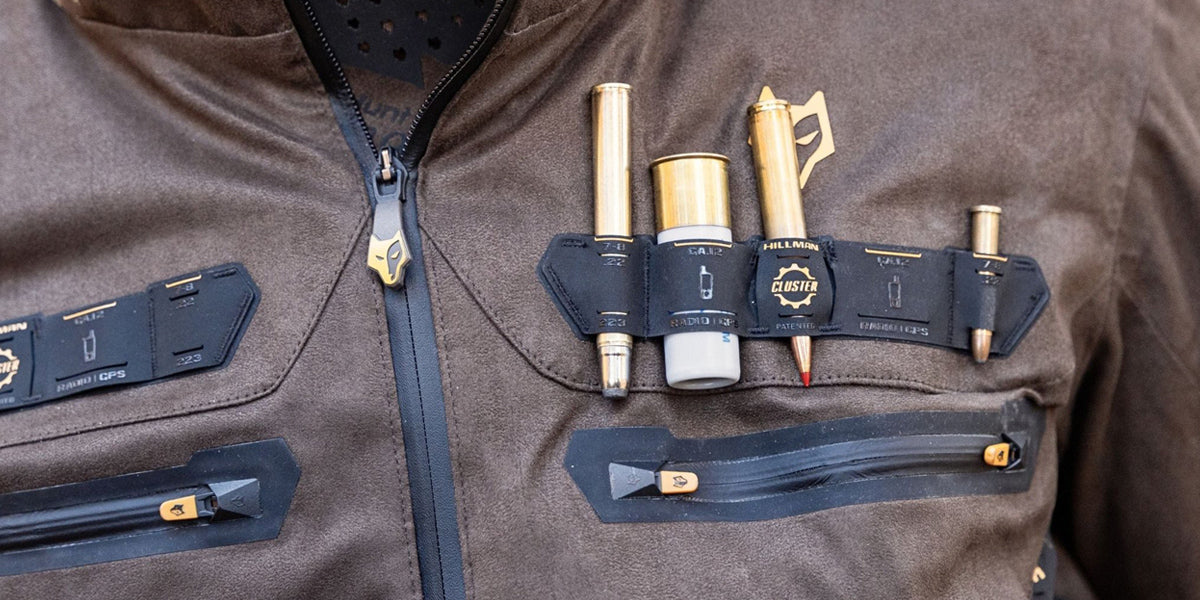
Access can also be moved from the pack to the body. Hillman’s Cluster system positions ammunition, a radio, GPS device or another compatible item at chest level. This can reduce the need to search through jacket pockets, provided the mounted equipment does not interfere with the firearm, backpack straps or freedom of movement.
An adjustable Hillman Cartridge Belt keeps ammunition organized and accessible during game shooting. For longer stationary periods, the Chairpack combines carrying capacity with a built-in field seat, allowing the hunter to move from walking to waiting without adding a separate chair to the load.
Test every access point with the pack on. If reaching a pocket requires an awkward twist, or opening it produces unnecessary noise, reposition the item before continuing deeper into the hunting area.
The Best Hunting Clothes Adapt to the Next Part of the Hunt
The correct setup changes when movement becomes waiting. Clothing opened for a warm approach will offer less protection once the hunter stops producing the same amount of metabolic heat.
Before a high-seat wait or a stationary position on a driven hunt, close the ventilation and add a dry insulating layer while warmth remains in the body. Protect the hands, feet, head and exposed areas. Several comfortably fitted layers usually allow better adjustment than one restrictive garment.
If active stalking continues, keep enough ventilation to stay cool without exposing vulnerable areas to rain or wet cover. The best hunting clothes are not necessarily the clothes that feel perfect beside the vehicle. They are the garments that can follow a change in pace, weather and terrain without forcing the whole system to be rebuilt.
What Hillman Hunting Gear Lets You Adjust in the Field
We develop Hillman hunting gear for the practical demands of stalking and game shooting, where weather protection, durability, comfort and quieter movement must work together.
Dryhunt waterproof-breathable membranes and taped seams address rain protection. Pit zips and full-length openings give hunters more control over ventilation. Durasuede surfaces are designed to reduce noise without sacrificing resistance to difficult vegetation. Cluster gear access and Varilock waist systems solve different problems involving organization, fit and movement.
The AlphaShell 5WL allows heat to be released through its front zipper and pit zips. The Aerogel 2.0 boot combines an adjustable mechanical closure with waterproof protection, insulation and a terrain-specific outsole. The Chairpack XWP40 supports load adjustment, organized access and comfortable field seating.
No single product is the answer to every condition. Even the best waterproof hunting gear must be matched to the hunter’s pace, climate and layering system. Advanced materials become useful when their controls can be understood and operated in the field, including with cold or gloved hands.
The Three-Minute Hunting Gear Check
Begin with heat. Open or close ventilation according to the next stage of the hunt. Check pressure at the feet, waist and shoulders. Move through a safe kneeling, turning and firearm-mounting range to find restrictions. Listen for loose webbing, zipper pulls and hard objects. Finally, confirm that water, navigation and the next layer are accessible.
Firearm control remains the priority throughout the reset. Keep the muzzle pointed in a safe direction, keep the finger outside the trigger guard, and follow the applicable local safety rules before removing a pack or adjusting equipment.
The best hunting gear is not gear that never needs attention. It is a system that allows a developing problem to be corrected before it takes control of the hunt.
Reset the System Before the Small Problem Grows
A warmer back, moving heel or loose strap may seem insignificant at first. Over several hours, it can affect comfort, concentration and movement. Use the first-hour reset to identify what the current system cannot correct.
Explore the Hillman waterproof hunting gear collection, jackets, trousers, boots, base layers and accessories according to the adjustment your setup is missing: better ventilation, reliable waterproofing, quieter movement, warmer footwear or faster access.
When comparing brands, price or style, begin with the conditions in which the product will be worn and the problem it needs to solve. Explore our men's outdoor hunting gear and build a system that can be adjusted as the terrain, pace and weather change.
Sources of Information
Independent Sources
The Effects of Loaded Versus Unloaded Activities on Foot Volume – Journal of Geriatric Physical Therapy
Friction Blisters of the Feet: A Critical Assessment of Current Prevention Strategies – Journal of Athletic Training
How to Prevent and Treat Blisters – American Academy of Dermatology
Heat Stress and Workers – NIOSH
Cold and Work: Types, Causes and Preparation – NIOSH
Sweat and Odor in Sportswear: A Review – Applied Microbiology and Biotechnology
Thomas Keller deals mostly with the kind of gear hunters notice when the day gets long: boots, waterproof jackets, cold-weather layers and outerwear that has to keep working after hours outside. He has a practical eye for fit, grip, noise, drying time and the small weak points that rarely show up in studio photos. His articles usually come from one simple question: would this still feel right in mud, wind, wet grass or a slow winter stand?
Selecting the right hunting rain gear depends on exposure time, physical exertion, and terrain demands rather than single test ratings. While packable jackets offer lightweight protection for sudden showers, all-day waterproof systems provide durable defense against continuous rain, wind, and abrasive vegetation. Proper ventilation, articulated construction, and a moisture-wicking layer system ensure you stay dry from both external precipitation and internal condensation.
Waterproof hunting clothing is only as reliable as the way it is built, and seam construction plays a huge role in keeping rain out where fabrics alone cannot. This guide explains how seams, reinforced panels, articulation, membranes, and fit work together to keep hunters dry, comfortable, and moving naturally in demanding field conditions.
The best hunting jackets are defined by small details that only show up once you're in the field. This guide explains how fit, pockets, cuffs, hoods, fabrics, and weather protection affect comfort, movement, and performance on deer and boar hunts.
Breaking in hunting boots is not about forcing stiff leather to soften overnight. It is about learning how the boots behave before rough ground, wet weather, and long hours start exposing problems. A proper break-in gives you time to sort heel movement, pressure points, socks, and support before the hunt becomes serious.
The article reviews the best hunting rain gear for 2026, tailored for the unpredictable and often extreme weather conditions across the UK and EU. It emphasizes the importance of breathable, lightweight, quiet, and durable gear for different hunting styles and terrains. Hillman’s rainwear is highlighted as a top performer, outscoring competitors in versatility and weather resistance. The piece also offers practical tips on layering, gear maintenance, and choosing the right setup for woodland stalking, hill stalking, and driven shoots.
For mixed terrain hunts, there’s no perfect boot - only the one that stays stable, dry, and supportive as conditions change. One pair works if it’s versatile and reliable, but two pairs help in wet environments where drying time matters. In the end, fit, break-in, and real-world performance matter more than labels or categories.
Choosing hunting boots for unknown ground is about balance rather than labels or reputation. When grip, fit, waterproofing, insulation, and support work together, boots fade into the background and allow natural movement as conditions change. The right pair keeps feet dry, stable, and comfortable over long hours, even when terrain and weather refuse to behave as expected.
This piece explains why lightweight hunting gear matters for frequent travel, stressing that excess weight drains energy, slows movement, and disrupts focus. It highlights how adaptable, breathable, and packable clothing improves comfort in changing conditions and makes travel logistics easier. Ultimately, it argues that lightweight gear becomes a long-term investment because it reduces friction, simplifies decisions, and supports better performance in the field.
Hunting in countries with volatile temperatures demands jackets that adapt as conditions swing from cold mornings to warm middays and back again. The best modern shooting jackets balance insulation, breathability, weather protection and movement without constant adjustment. Ultimately, versatility and fit matter more than any single feature, allowing hunters to stay focused on the field rather than the forecast.
Hunting gear has evolved from heavy wool and leather into lightweight, technical equipment that improves comfort, safety, and performance in the field. While tradition once shaped clothing as much as function, modern materials now prioritise weather protection, mobility, and efficiency. Today’s hunters balance heritage and technology, adapting to changing conditions without losing respect for the sport’s roots.
Preparing for a hunting trip abroad is about packing trusted, practical gear that keeps you comfortable, focused, and ready for unfamiliar conditions. Prioritise reliable clothing, boots, optics, and simple field essentials over unnecessary extras. Thoughtful packing protects your energy, sharpens decision-making, and lets you enjoy the experience wherever you hunt.
The best leather hunting boots balance comfort, durability, and protection across any terrain or climate. Hillman’s handcrafted designs combine premium leather, waterproof membranes, and superior ankle support to keep hunters steady, warm, and dry through every season. Built for endurance rather than luxury, they turn harsh ground into steady footing and long hunts into lasting comfort.
When should I make the first hunting gear adjustment?
Use the first hour as a practical reminder, but respond sooner if you notice trapped heat, pressure, pack movement or noise. The right moment is when the problem first becomes repeatable.
Should base layers feel damp during an active hunt?
A slightly humid microclimate can occur during intense activity. A wet or clinging base layer suggests that sweat production is exceeding the system’s ability to move moisture. Reduce insulation or increase ventilation before stopping.
Should I open the full zip or remove my hunting jacket?
Start with controlled ventilation when rain, wind, or wet cover still require protection. Remove a layer when opening the front zipper and vents do not release enough heat.
Do the best hunting boots still need retightening?
They may need a small fit correction once the sock, foot, and closure system settle. Retightening should stabilize the heel without compressing the toes or restricting circulation.
How can I tell whether waterproof hunting gear is leaking or trapping sweat?
Interior dampness alone does not prove that water has crossed the membrane. Consider exertion, ventilation, collar and cuff openings, visible seam entry and the condition of the outer fabric. Repeated wetting beneath the same external area may point to a protection problem.
What hunting gear should remain accessible without removing the pack?
Water, navigation, an optics cloth, gloves, and the next clothing layer should be easy to reach. First-aid and emergency items must remain in a fixed, clearly known location.
How should hunting clothes change when walking becomes waiting?
Close the vents and add dry insulation before you begin to feel cold. Making the change while the body is still warm helps preserve heat during a long stationary period.
Customer support that make your experience exceptional.
Fast Free Shipping
Enjoy free delivery on all EU orders over €299
Hassle-free delivery
Zero custom taxes and zero hidden fees to all EU countries. Streamlined process.
100% Secure
Highest Level Security Processing of Payment and Personal Information
Hillmanhunting.com is our official online hunting shop in English, dedicated to hunters from Austria, Belgium, Bulgaria, Croatia, Cyprus, Czechia, Denmark, Estonia, Finland, France, Germany, Greece, Hungary, Ireland, Italy, Latvia, Lithuania, Luxembourg, Malta, the Netherlands, Poland, Portugal, Romania, Slovakia, Slovenia, Spain, Sweden, Norway, Iceland, the United Arab Emirates, Russia, Serbia, Israel, Armenia, Turkey, and Lebanon. You may also visit Hillman's websites in
German,
French,
Български,
Română, and in English:
Hillman North America |
Hillman UK.
Choosing a selection results in a full page refresh.



Share: