Clothes for Deer or Boar Hunt on Wet Mornings, Cold Evenings
Table of Contents
What to Wear for a Wet Morning and Cold Evening on a Deer or Boar Hunt
Layering waterproof hunting clothes and insulation for wet morning stalks and cold evening hunting stands. Waterproof jackets and trousers for deer and boar hunts
Wear a moisture-managing base layer beneath an uninsulated waterproof shell during the wet, active part of the hunt. Carry the insulating layer dry in your pack and put it on as soon as the walking ends, before the evening cold starts working through damp clothing.
This approach separates two problems that are often treated as one. Rain calls for a weather barrier. A cold wait calls for insulation. Wearing everything at dawn usually leaves the hunter overheated on the climb and chilled once the pace drops.
A practical waterproof hunting clothing system follows the changes in exertion rather than the temperature alone. Our field rule is straightforward: block external moisture, vent internal heat early, and reserve dry insulation for periods with little movement.
Why One Heavy Set of Outdoor Clothing Gets the Day Wrong?
One heavy outfit cannot regulate the heat produced during a climb and the cold felt during a stationary evening watch.
A hunter moving uphill through brush may generate enough body heat to feel uncomfortable in winter clothing within minutes. At a fixed position later in the day, that heat production falls sharply. Wind reaches the body more easily, damp fabric begins to feel cold, and frozen ground draws warmth through the boots, knees, and seat.
Sweat is often the turning point. It may seem harmless during the approach, especially under a warm jacket. The problem becomes clear after stopping. The CDC notes that chilling caused by rain or sweat can contribute to hypothermia even at comparatively mild temperatures.
Ventilation works best before the base layer becomes wet. Open the jacket, use the pit zips or remove a mid layer at the first sign of overheating. Waiting until sweat is running down the back leaves the membrane with far more moisture to move.
Good outdoor clothing should keep the hunter within a manageable temperature range. Feeling slightly cool during the first few minutes of walking is usually preferable to starting the hunt already dressed for the coldest hour of the evening.
Build Waterproof Hunting Clothing Around the Hunt
The shell stops rain, but the layers beneath it determine what happens to perspiration and trapped heat.
A synthetic base layer suits high-output stalking because it moves moisture and dries quickly. Merino wool offers a different balance: warmth, odour control and a less clammy feel when slightly damp. Cotton absorbs perspiration readily and releases it slowly, which makes it a poor choice for a day that combines movement, rain and cold waiting.
The mid layer holds warm air. Fleece, wool and packable synthetic insulation can all perform this job, yet they do not need to be worn throughout the approach. Keep the warmest layer inside a dry bag or a protected section of the pack. It remains useful for the evening only if it has not already absorbed rain or sweat.
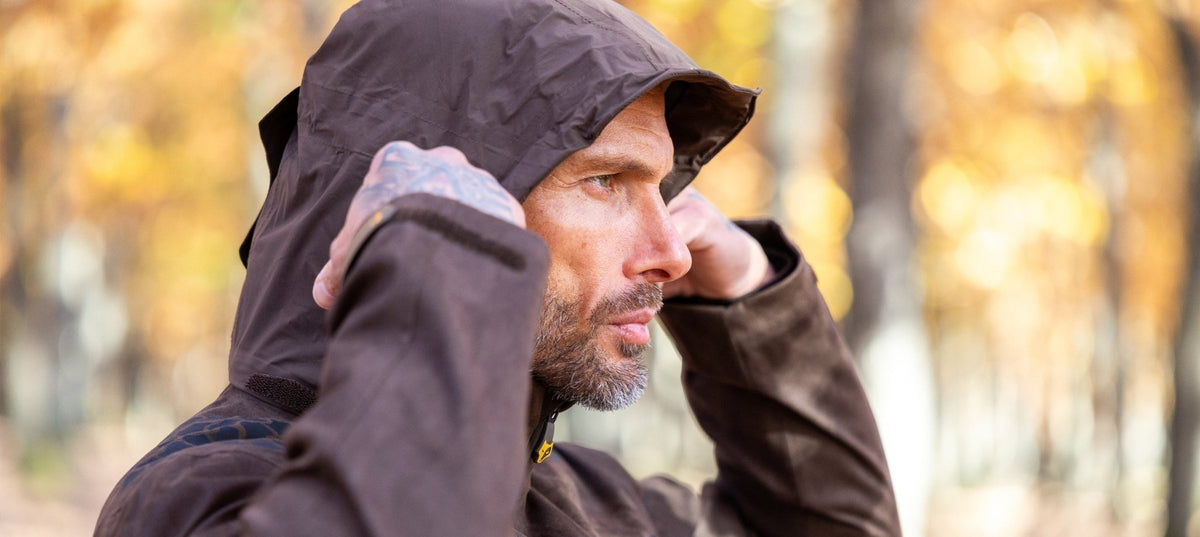
The outer shell deals with rain, wet vegetation and wind. During the active morning phase, a base layer and uninsulated shell may be enough. Once the hunter stops, the same shell should fit over the added insulation without tightening across the shoulders, hips or lower back.
Check the complete combination before the hunt. Raise the rifle, kneel, climb a step and reach across the body. A jacket that pulls across the back can alter the gun mount. Trousers that bind at the hips or knees make rough ground harder to cross. Extra room for layering is useful; loose fabric that catches on branches or bunches beneath a pack is not.
Waterproof Jackets: What Matters Once the Rain Settles In
A waterproof hunting jacket has several possible points of failure. Water can pass through unsealed stitching, work into the cuffs, collect around the front closure, or run beneath a poorly adjusted hood.
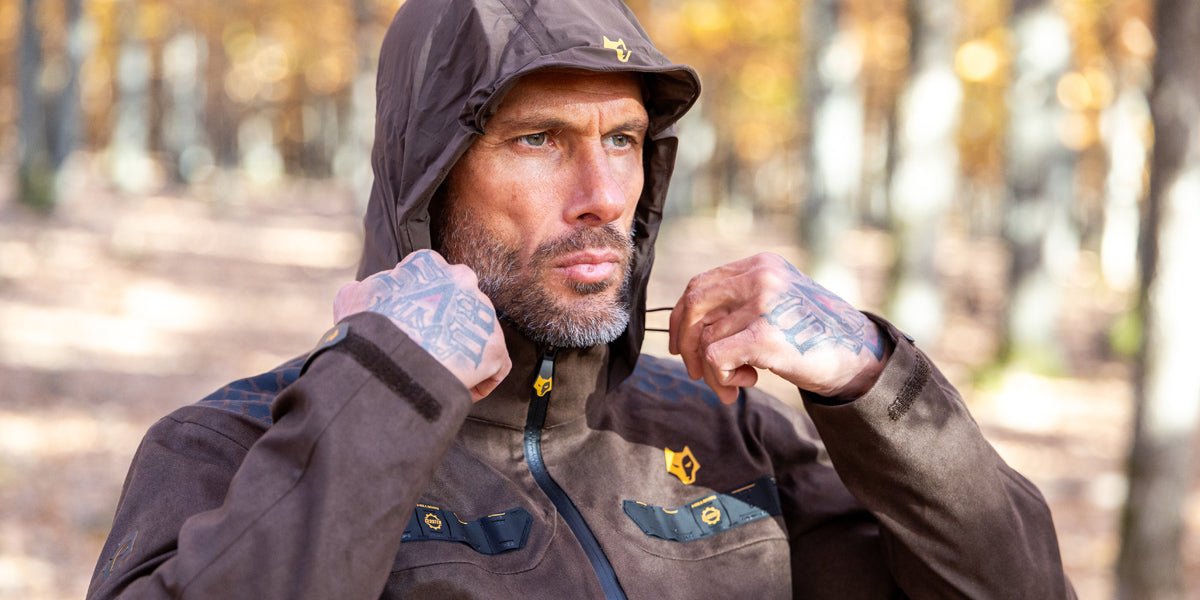
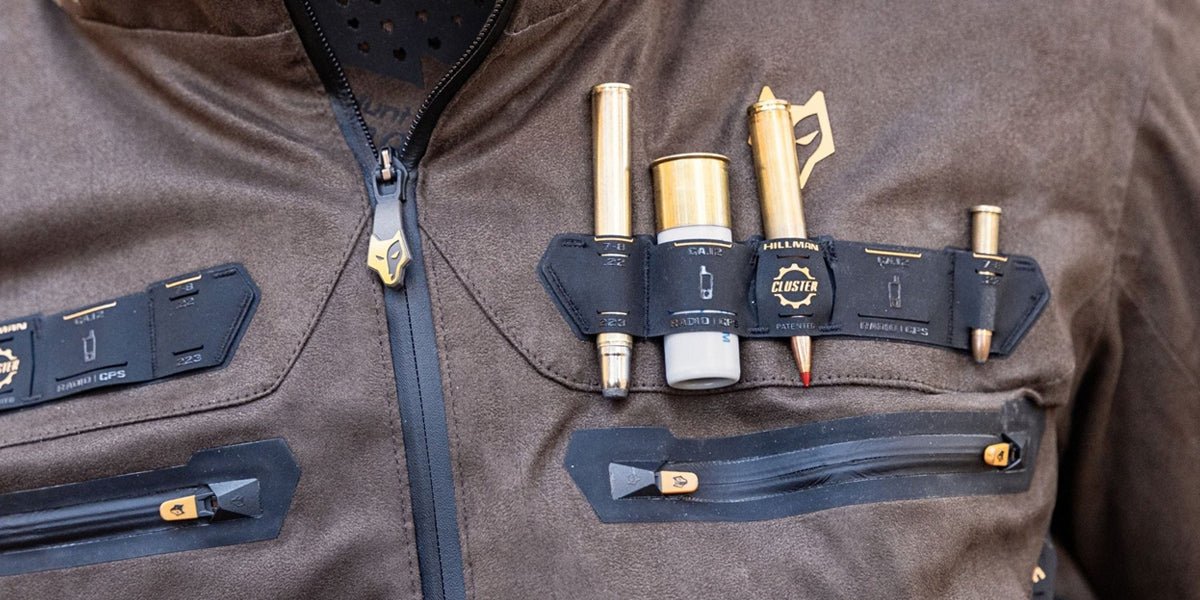
A waterproof membrane is only one part of the construction. Persistent rain also calls for taped seams, protected zippers, adjustable cuffs and a hood that follows head movement without blocking peripheral vision. Pit zips or a two-way front zipper give the hunter a mechanical way to release heat when the membrane cannot move perspiration quickly enough.
Published waterproof and breathability figures need context. Hillman lists an 11,000 mm water column and an MVTR of 32,000 g/m²/24 h for the AlphaShell 5WL. Those numbers describe material performance under stated test conditions. They do not show how the hood fits, how the seams are sealed or how much heat a particular hunter will produce. Breathability tests can also differ between manufacturers, so figures are better used as technical references than absolute comparisons.
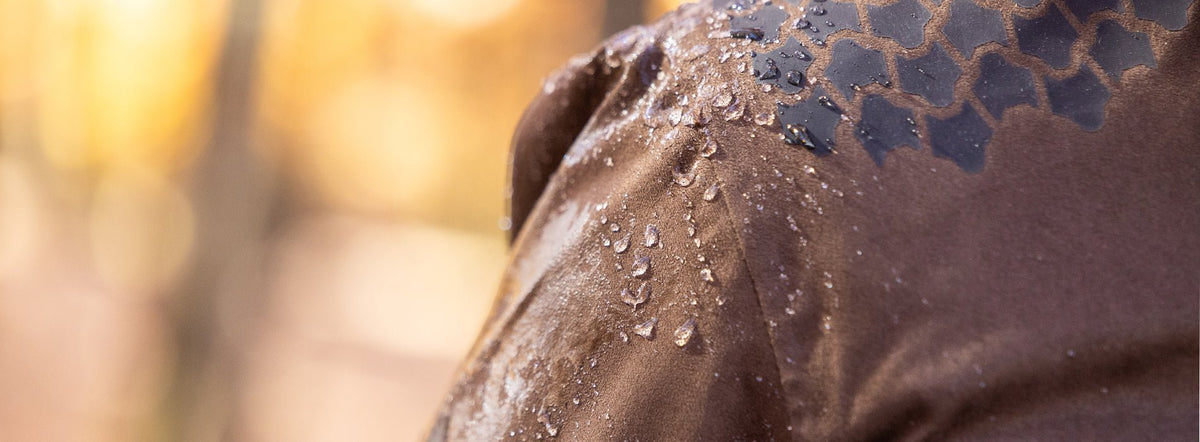
DWR has a separate function. The treatment helps rain bead on the outer surface instead of saturating the face fabric. It is not the membrane. A jacket may remain waterproof after the outer fabric wets out, but it will usually feel heavier and release moisture less readily.
Three-layer construction suits frequent contact with branches, rock and pack straps because the outer fabric, membrane and protective backing are bonded together. Lighter shells can pack smaller, though their suitability for rough cover depends on the face fabric and reinforcement.
The AlphaShell 5WL Waterproof Jacket is an uninsulated shell intended for this type of changing day. Its published specification includes a Dryhunt® membrane, C0 DWR treatment, fully taped seams and YKK AquaGuard zippers. Pit zips, a two-way front zipper and gusseted underarms address the heat and movement problems that appear during active stalking.
Waterproof Shooting Jacket or Traditional Shooting Jackets?
A waterproof shooting jacket is built around prolonged exposure to rain. Many traditional shooting jackets are designed first for warmth, pocket access and country styling. Tweed and treated fabrics may cope with drizzle, but water resistance should not be confused with a membrane-backed, seam-taped garment.
The cut matters during shooting. Men’s shooting jackets need enough room through the shoulders and upper back for a natural mount, without lifting at the hem. Cartridge pockets should remain reachable when wearing a backpack, binocular harness or waist belt. More pockets do not automatically make a jacket more practical; their position and opening direction decide whether they can be used without breaking stance.
Noise also changes the choice. Stiff shell fabric may be acceptable on a driven shoot where concealment is less demanding. During a close deer stalk, repeated rustling against vegetation can betray movement. Brushed polyester and microsuede-style shells reduce the hard, plastic sound associated with basic rainwear.
The best shooting jackets for wet conditions combine weather protection with the cut, pocket layout and acoustic properties required by the particular shoot. No single design is equally suited to a quiet stalk, a driven day and several hours beside an exposed stand.
When Is a Camouflage Waterproof Jacket Useful?
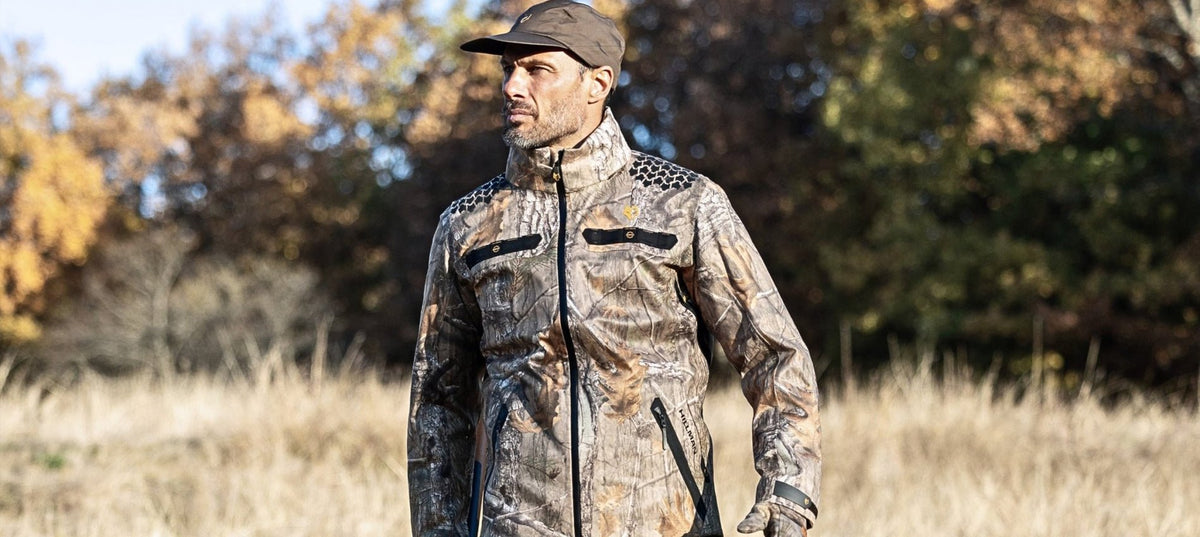
A camouflage waterproof jacket is useful when the pattern matches the vegetation and concealment is part of the hunting method.
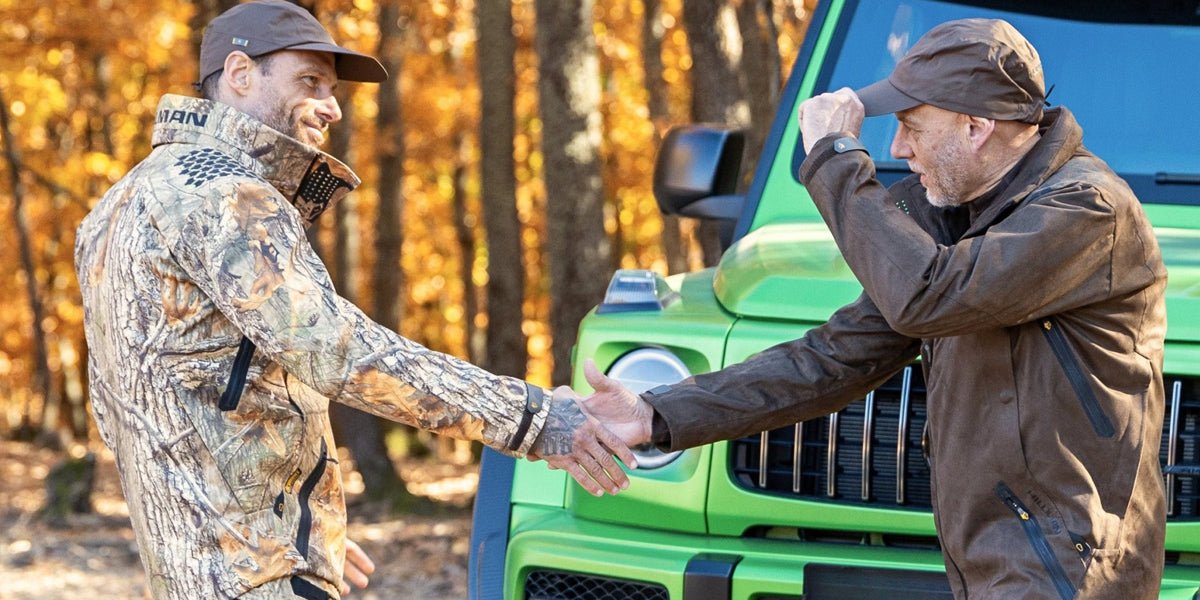
In broken woodland, camouflage can interrupt the recognisable outline of the shoulders and upper body. On open ground, slow movement, shadow and position may have a greater effect than the pattern itself. A mismatched print can create a strong block of contrast rather than reduce visibility.
Driven boar hunting adds a safety requirement. Local law, the estate or the hunt organiser may require orange clothing or another high-visibility element. Those instructions take precedence over concealment. Camo can remain part of the hunting apparel, but it cannot interfere with clear identification between shooting positions.
Hunting Trousers for Wet Ground and Cold Stops
Wet grass often soaks the legs before rain reaches the upper body. Each step presses moisture against the knees, thighs and lower legs, while kneeling adds pressure at the points closest to the ground.
Lightweight waterproof hunting trousers are usually easier to regulate during an active approach than insulated pants. They block rain and wind without holding as much heat around the large working muscles of the legs.
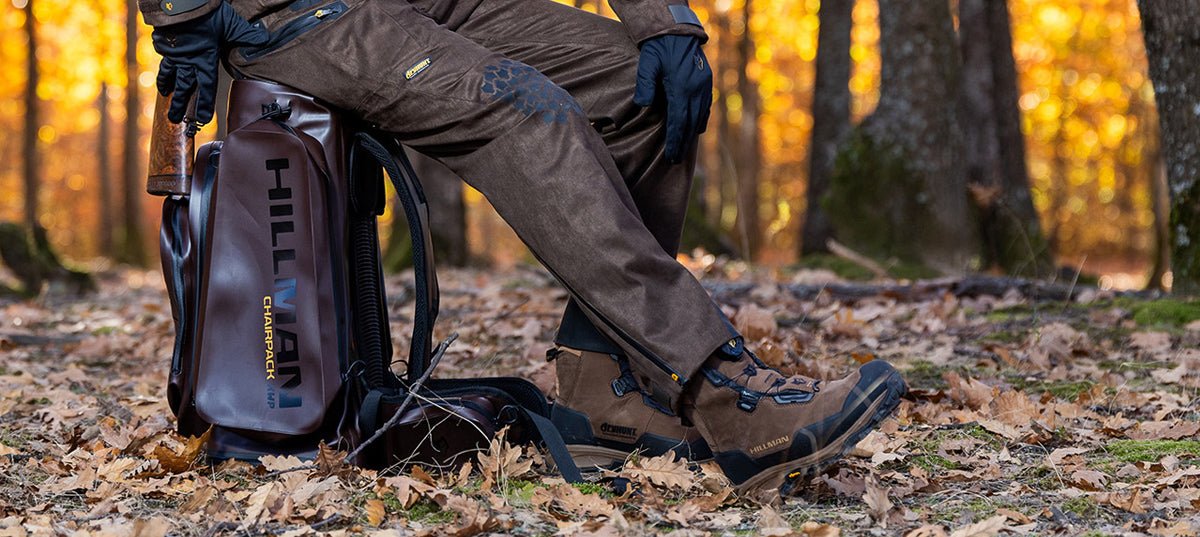
Full-length side zippers solve a practical problem: the trousers can be put on over hunting boots when the weather changes. Partly opening those zippers also releases heat on steep ground. Reinforced knees, articulated shaping and adjustable ankles help the garment move cleanly without leaving excess fabric around the boot.
The AlphaShell 5WL Waterproof Pants are non-insulated and weigh 560 g in the listed reference size. Their specification includes an 11,000 mm water column, fully taped seams, full-length YKK AquaGuard side zippers and a high-waist ventilation point. Reinforced anti-slip knees protect an area exposed to repeated contact with wet or uneven ground.
Why Ordinary Shooting Trousers May Fall Short
Traditional shooting trousers can be comfortable during dry autumn days, light drizzle or less demanding field use. Steady rain and repeated contact with soaked brush expose the limits of a water-resistant fabric.
A DWR-treated textile may delay saturation, but it does not replace a waterproof membrane and sealed seams. Wet snow is particularly demanding because it remains in contact with the garment around the knees, thighs and seat rather than running off immediately.
Construction still needs restraint. Reinforcement should protect high-wear areas without turning the leg into a stiff panel. Articulated knees should follow the body during climbing and crouching. Seams placed directly over pressure points can become uncomfortable during a long kneel, even if the fabric itself performs well.
When Waterproof Insulated Hunting Pants Become Worth the Weight
Insulated trousers earn their place when the hunt includes a long cold stop, wet snow, frozen ground or little opportunity to move.
The legs produce considerable heat while walking. Once the hunter stands still, that output falls and the lower body begins cooling through wind and contact with the ground. A warm jacket cannot fully compensate for trousers that are wet or poorly insulated.
Fusion Hunting Pants occupy the lighter end of insulated waterproof clothing. They use an Atmotec® waterproof and breathable membrane, taped seams, DWR treatment and Duraheat® hollow-fibre insulation. This construction suits moderately cold conditions where some movement remains part of the day.
The AlphaShell 6OL Winter Hunting Pants are intended for colder, less active hunts. Their insulated, waterproof construction and extended upper-body coverage are more appropriate for snow, exposed stands and prolonged waiting than for a strenuous uphill approach.
Do not wear waterproof insulated hunting pants simply because the forecast looks cold. Match them to the least active part of the day and decide whether they can be carried or changed into before that phase begins.
How Deer and Boar Hunts Change the Clothing Choice
Deer stalking places a premium on quiet movement, low bulk and heat control. The hunter may climb, glass, crouch, move again and spend only part of the day waiting. An uninsulated shell worn over adjustable layers usually gives more control than a heavy hunting suit worn continuously.
Fabric noise becomes more noticeable at close range. The jacket should remain quiet as the rifle is raised, while the trousers need enough articulation for low steps and kneeling. Carry the insulation during the active phase and add it before glassing for an extended period or settling at the final position.
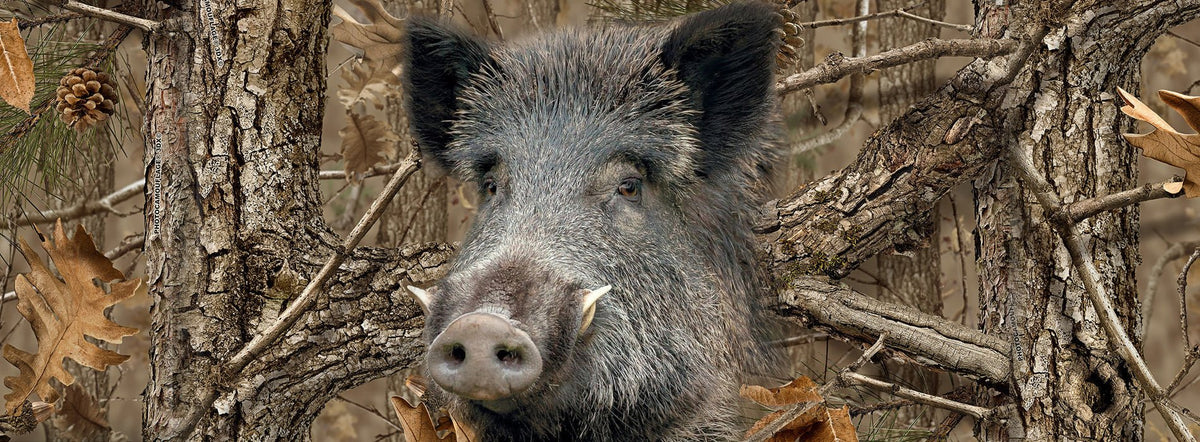
Boar hunting can be harder on clothing. Thorns, mud and dense cover increase abrasion around the knees, lower legs, shoulders and forearms. Reinforced panels and protected zippers carry more practical value here than low weight alone.
A driven hunt may include a short walk followed by hours at a stand. Open the jacket or reduce the layers during the approach, even if the morning air feels cold. Restore the insulation immediately after reaching the assigned place. Check the organiser’s visibility rules before choosing green, brown, blue or camouflage outerwear.
Add Warmth Before the Cold Evening Arrives
Add the dry insulating layer when the active phase ends, not after shivering begins.
The body still holds warmth during the first minutes after walking. Use that window. Put on the mid layer, close the pit zips, adjust the hem and cuffs, and cover the head and neck. This preserves heat already produced by the body.
A wet base layer changes the calculation. Adding more clothing over it may trap the moisture close to the skin. If the pack allows, carry a dry top in a waterproof bag and change before the evening wait. Dry gloves, a hat and wool socks take little space compared with the comfort they can restore.
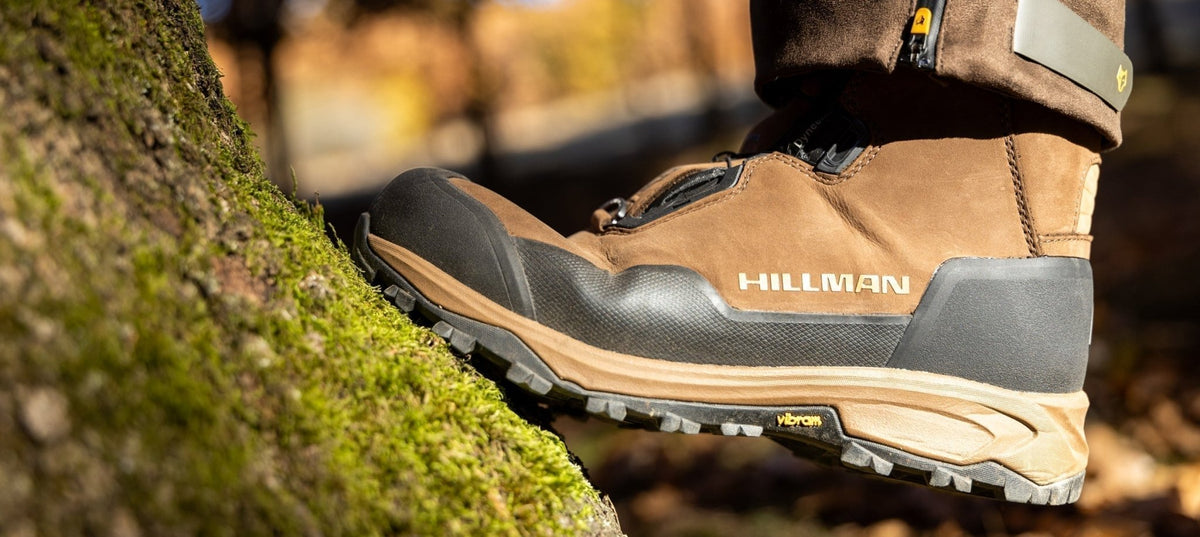
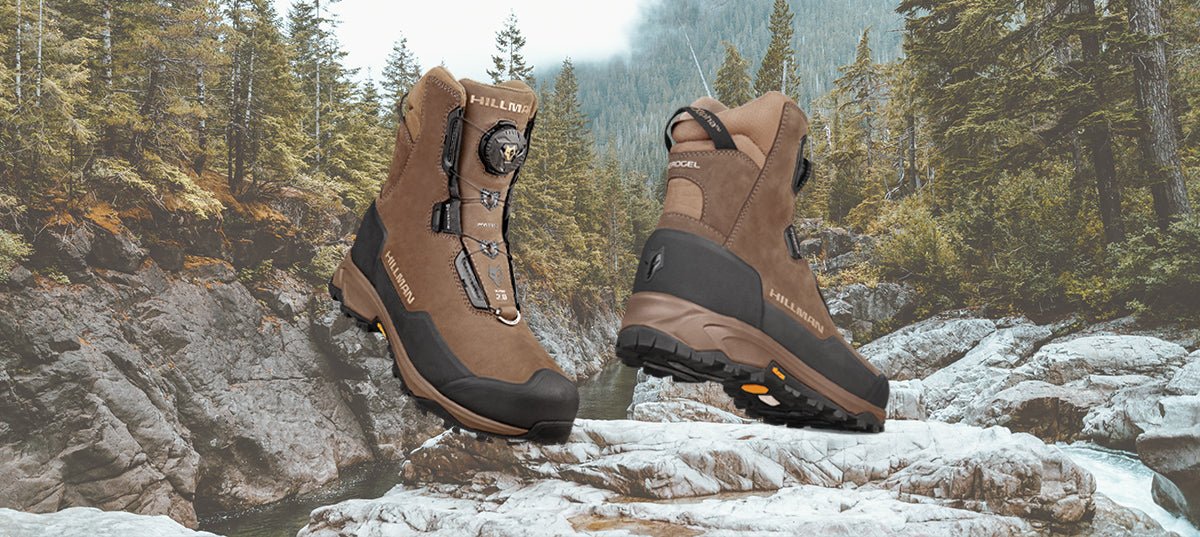
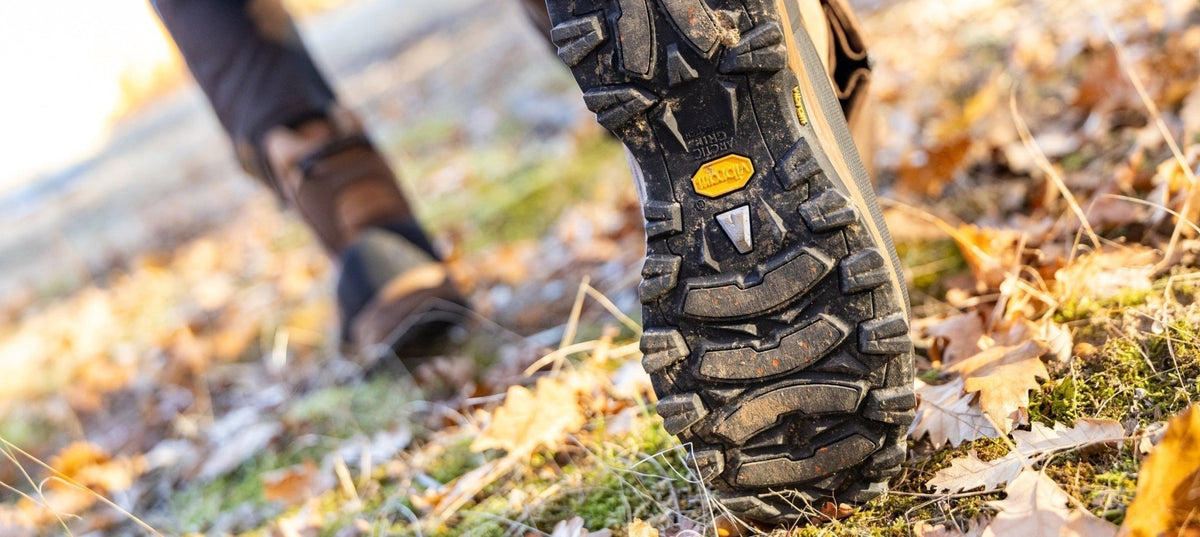
Treat the legs with the same care. Change into insulated waterproof pants before sitting or standing near frozen ground. Boots need waterproof protection, suitable insulation and traction for mud, snow or ice. The NIOSH cold-stress guidance recommends layered loose clothing, waterproof insulated boots and spare socks, gloves, hats and outer garments for prolonged exposure to cold conditions.
Is the Best Extreme Cold Weather Hunting Gear the Heaviest?
No. The best extreme cold weather hunting gear is the combination that limits sweating during movement and retains heat during the longest stationary period.
A thick jacket worn through a demanding approach may leave its lining and the layers beneath it damp. It can also interfere with shoulder movement, pack fit and quiet handling of the rifle. More insulation has little value if it is used at the wrong stage of the hunt.
Wind protection deserves separate attention. Insulation slows heat transfer, while a windproof shell protects the pocket of warm air surrounding the body. Exposed stands, ridges and open woodland can feel much colder than sheltered terrain at the same measured temperature.
Plan around the coldest low-output period, then decide how the gear will reach that point dry. A packable insulating jacket, warm trousers, gloves and spare socks may serve the evening better than wearing a heavy suit since dawn.
What to Check Before a First Order of Waterproof Outdoor Clothing
Begin a first order with the actual hunt rather than a general temperature label. Estimate the distance and elevation of the approach, the expected rainfall, wind exposure, and the time spent without movement.
Read the technical specification rather than relying on terms such as “weatherproof” or “all-season.” Check the membrane, water-column figure, seam construction, ventilation, insulation and outer fabric. Look at the hood adjustment, cuff design and pocket access as carefully as the main material.
Fit must be checked with the intended layers underneath. Use the size chart for the specific model and compare it with body measurements. Cuts can differ between hunting jackets and trousers within the same brand. If long johns or thicker insulation will be worn, that extra volume needs to be considered before choosing the size.
Check current stock on the product page, particularly when assembling a complete jacket-and-trouser set. A sale price is useful only when the garment fits the planned layering system and the conditions in which it will be worn.
Care affects later performance. Follow the label, close hook-and-loop fasteners, and avoid fabric softener when the manufacturer prohibits it. Once water stops beading on the face fabric, the DWR may need cleaning, heat activation, or renewal according to the garment instructions.
Dress for the Next Part of the Hunt
Start the wet morning in a moisture-managing base layer and lightweight waterproof shell. Keep the insulation protected inside the pack.
Vent at the first signs of excess heat. At the end of the active phase, add the dry layer while the body is still warm. Use insulated trousers when the evening involves wind, snow, frozen ground or a long fixed position.
That is the working purpose of waterproof hunting clothing. The clothing system changes with the hunt: rain protection during movement, controlled ventilation on the climb and dry warmth for the cold hours that follow.
Pieter Van Dalen looks at hunting clothing from the inside out. Fabrics, membranes, insulation, seams, ventilation, zippers and wear resistance are the details he pays attention to, especially when they affect comfort in rain, cold or heavy movement. He writes for hunters who want to understand why one jacket breathes better than another, why some boots stay dry longer, and why material choice matters after the first season of use.
Selecting the right hunting rain gear depends on exposure time, physical exertion, and terrain demands rather than single test ratings. While packable jackets offer lightweight protection for sudden showers, all-day waterproof systems provide durable defense against continuous rain, wind, and abrasive vegetation. Proper ventilation, articulated construction, and a moisture-wicking layer system ensure you stay dry from both external precipitation and internal condensation.
Waterproof hunting clothing is only as reliable as the way it is built, and seam construction plays a huge role in keeping rain out where fabrics alone cannot. This guide explains how seams, reinforced panels, articulation, membranes, and fit work together to keep hunters dry, comfortable, and moving naturally in demanding field conditions.
The best hunting jackets are defined by small details that only show up once you're in the field. This guide explains how fit, pockets, cuffs, hoods, fabrics, and weather protection affect comfort, movement, and performance on deer and boar hunts.
Breaking in hunting boots is not about forcing stiff leather to soften overnight. It is about learning how the boots behave before rough ground, wet weather, and long hours start exposing problems. A proper break-in gives you time to sort heel movement, pressure points, socks, and support before the hunt becomes serious.
The article reviews the best hunting rain gear for 2026, tailored for the unpredictable and often extreme weather conditions across the UK and EU. It emphasizes the importance of breathable, lightweight, quiet, and durable gear for different hunting styles and terrains. Hillman’s rainwear is highlighted as a top performer, outscoring competitors in versatility and weather resistance. The piece also offers practical tips on layering, gear maintenance, and choosing the right setup for woodland stalking, hill stalking, and driven shoots.
For mixed terrain hunts, there’s no perfect boot - only the one that stays stable, dry, and supportive as conditions change. One pair works if it’s versatile and reliable, but two pairs help in wet environments where drying time matters. In the end, fit, break-in, and real-world performance matter more than labels or categories.
Choosing hunting boots for unknown ground is about balance rather than labels or reputation. When grip, fit, waterproofing, insulation, and support work together, boots fade into the background and allow natural movement as conditions change. The right pair keeps feet dry, stable, and comfortable over long hours, even when terrain and weather refuse to behave as expected.
This piece explains why lightweight hunting gear matters for frequent travel, stressing that excess weight drains energy, slows movement, and disrupts focus. It highlights how adaptable, breathable, and packable clothing improves comfort in changing conditions and makes travel logistics easier. Ultimately, it argues that lightweight gear becomes a long-term investment because it reduces friction, simplifies decisions, and supports better performance in the field.
Hunting in countries with volatile temperatures demands jackets that adapt as conditions swing from cold mornings to warm middays and back again. The best modern shooting jackets balance insulation, breathability, weather protection and movement without constant adjustment. Ultimately, versatility and fit matter more than any single feature, allowing hunters to stay focused on the field rather than the forecast.
Hunting gear has evolved from heavy wool and leather into lightweight, technical equipment that improves comfort, safety, and performance in the field. While tradition once shaped clothing as much as function, modern materials now prioritise weather protection, mobility, and efficiency. Today’s hunters balance heritage and technology, adapting to changing conditions without losing respect for the sport’s roots.
Preparing for a hunting trip abroad is about packing trusted, practical gear that keeps you comfortable, focused, and ready for unfamiliar conditions. Prioritise reliable clothing, boots, optics, and simple field essentials over unnecessary extras. Thoughtful packing protects your energy, sharpens decision-making, and lets you enjoy the experience wherever you hunt.
The best leather hunting boots balance comfort, durability, and protection across any terrain or climate. Hillman’s handcrafted designs combine premium leather, waterproof membranes, and superior ankle support to keep hunters steady, warm, and dry through every season. Built for endurance rather than luxury, they turn harsh ground into steady footing and long hunts into lasting comfort.
Should I wear a waterproof hunting jacket throughout the hunt?
Wear it when rain, wind or wet vegetation creates real exposure. Open the ventilation during hard movement and remove the shell briefly if the weather and terrain allow. A breathable membrane cannot compensate indefinitely for excessive insulation or a pace that produces heavy sweating.
Do I need insulated waterproof pants for an active deer stalk?
Usually not during the active section. Lightweight shell trousers allow easier heat regulation. Insulated pants become more useful after the stalk, during extended glassing or when the final position is exposed to wind and cold ground.
How do I reduce sweating inside waterproof hunting clothes?
Begin with fewer layers, open the ventilation before feeling hot, and keep the pace controlled on steep sections. Carry the insulation rather than wearing it during the entire approach. A dry spare base layer is worth packing when the evening will be cold.
What should I look for in the best shooting jackets for wet weather?
Check for a waterproof membrane, taped seams, protected zippers, a hood that preserves peripheral vision and enough shoulder mobility for the gun mount. Pocket access and fabric noise should match the shooting method.
Are waterproof jackets necessary for UK hunting conditions?
A waterproof shell is a sensible part of UK shooting clothing because persistent rain, wind and wet vegetation can occur during much of the season. The jacket still needs enough ventilation for walking and a cut that works with the firearm and field equipment.
Is camouflage waterproof clothing necessary for boar hunting?
No. Terrain, shooting method and local visibility rules are stronger deciding factors. Organised driven hunts may require orange or another high-visibility colour, even when the rest of the outfit uses camouflage.
How often should waterproof hunting clothing be washed?
Wash it when dirt, perspiration or residue begins affecting comfort or water repellency. Follow the instructions for the individual garment. Avoid unsuitable detergents and fabric softeners, and renew the DWR only with a product approved for that fabric.
Customer support that make your experience exceptional.
Fast Free Shipping
Enjoy free delivery on all EU orders over €299
Hassle-free delivery
Zero custom taxes and zero hidden fees to all EU countries. Streamlined process.
100% Secure
Highest Level Security Processing of Payment and Personal Information
Hillmanhunting.com is our official online hunting shop in English, dedicated to hunters from Austria, Belgium, Bulgaria, Croatia, Cyprus, Czechia, Denmark, Estonia, Finland, France, Germany, Greece, Hungary, Ireland, Italy, Latvia, Lithuania, Luxembourg, Malta, the Netherlands, Poland, Portugal, Romania, Slovakia, Slovenia, Spain, Sweden, Norway, Iceland, the United Arab Emirates, Russia, Serbia, Israel, Armenia, Turkey, and Lebanon. You may also visit Hillman's websites in
German,
French,
Български,
Română, and in English:
Hillman North America |
Hillman UK.
Choosing a selection results in a full page refresh.



Share: